Pause Bench Press
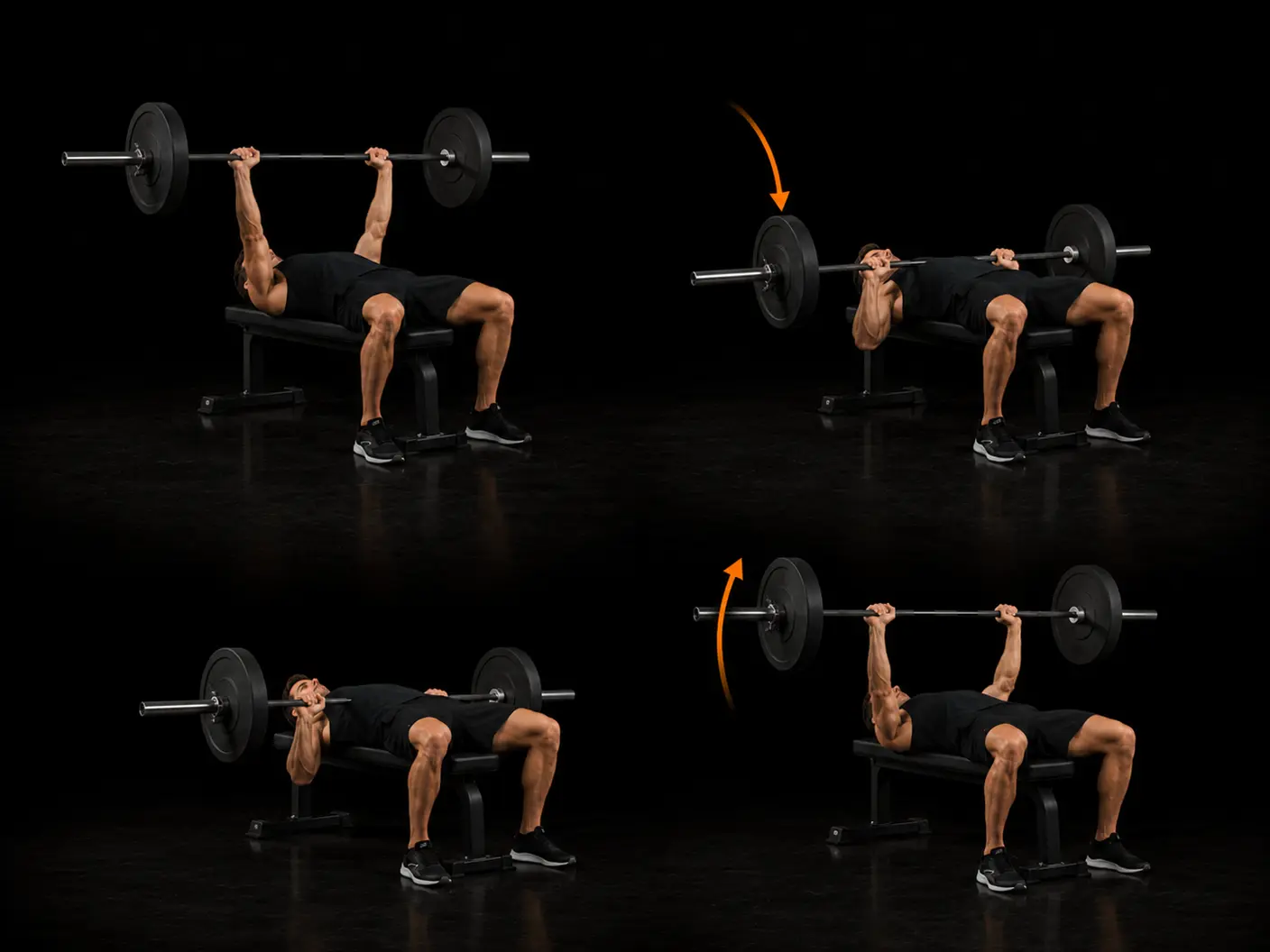
The pause bench press is a barbell compound movement in the horizontal push pattern, performed identically to a flat bench press until the bar reaches the chest — at which point the lifter holds a controlled, motionless pause of one to three seconds before pressing to full lockout. By eliminating the stretch-shortening reflex at the bottom of the lift, the pause forces the pectoralis major and triceps to generate force from a dead stop, building genuine strength rather than relying on elastic rebound. It suits intermediate to advanced lifters focused on maximal strength development, powerlifting competition preparation, or breaking through sticking points in the conventional bench press.
How to do it
Set up as a flat bench press. Lower the bar to the chest and pause on the chest for 1–3 seconds (powerlifting legal pause). Stay tight during the pause. Press explosively off the pause to lockout.
Coaching cues
- Hit the chest and hold
- Stay tight during the pause
- Explode off the chest
- Full lockout
Why train it
- Removing the bounce from the bottom position exposes and directly addresses weaknesses in starting strength, making it a highly effective tool for overcoming bench press sticking points.
- The mandatory pause demands full-body tension throughout — legs, glutes, upper back, and lats must remain braced — reinforcing the technical discipline that carries over to heavier competition lifts.
- Training the pectoralis major and triceps under a paused load builds the kind of force production capacity that translates directly to one-rep-max improvement in the standard bench press.
- Because the movement mirrors powerlifting competition rules, it serves as specific preparation for those who compete or plan to compete on the platform.
Common mistakes
- Relaxing the body during the pause — maintain full lat engagement, leg drive, and upper-back tightness throughout the entire hold, not just at the start and finish of the rep.
- Letting the bar drift away from the chest or move position during the pause — the bar must remain completely stationary on the chest for the pause to achieve its intended training effect.
- Pressing before completing a full pause — count a deliberate one-to-three seconds rather than tapping and going, as a shortened pause simply reintroduces the stretch-shortening reflex the exercise is designed to remove.
- Losing wrist alignment under load — keep the wrists stacked directly over the elbows with a firm, closed grip to ensure force transfers efficiently from the chest into the bar at the point of explosion.
Primary: Pectoralis Major, Triceps Brachii.
Secondary: Anterior Deltoid.
Equipment
Good for
Easier variation
Touch-and-go bench press — no pause.
Similar movements
Frequently asked
- What muscles does the pause bench press work?
- The primary muscles trained are the pectoralis major and triceps, with the anterior deltoid working as a secondary contributor. The enforced pause also demands sustained isometric effort from the upper back, lats, and the muscles responsible for shoulder stability.
- How much lighter should I go compared to my regular bench press?
- Most lifters find they need to reduce load by roughly 10–20 per cent relative to their standard bench press, particularly when first introducing pauses of two to three seconds. Start conservatively and build load back progressively as you become comfortable sustaining tension through the hold.
- What sets and reps work best for the pause bench press?
- Because the primary goal is strength, lower rep ranges tend to be most appropriate — typically three to five sets of two to five reps with a focus on bar speed off the chest. Higher-volume schemes are possible, but the demand on total-body tension makes accumulated fatigue significant.
- Is the pause bench press suitable for beginners?
- This movement is rated advanced and is best introduced once a lifter has established solid flat bench press technique and a reliable sense of full-body tightness under load. Beginners are better served building proficiency with the conventional bench press first before adding the additional complexity of a controlled pause.
- What are the best alternatives if I do not have access to a rack?
- The pause bench press is specifically designed around a barbell and rack setup, so direct alternatives without that equipment are limited. If rack access is unavailable, a paused dumbbell bench press can replicate some of the intent — pausing with the dumbbells at chest height — though the loading potential and carry-over to barbell strength will differ.
Want this movement in a plan built for you?
Adaptiv programmes the right exercises for your goal, equipment and experience — then adapts them as you train.
Build my programme