Neutral-Grip Pull-Up
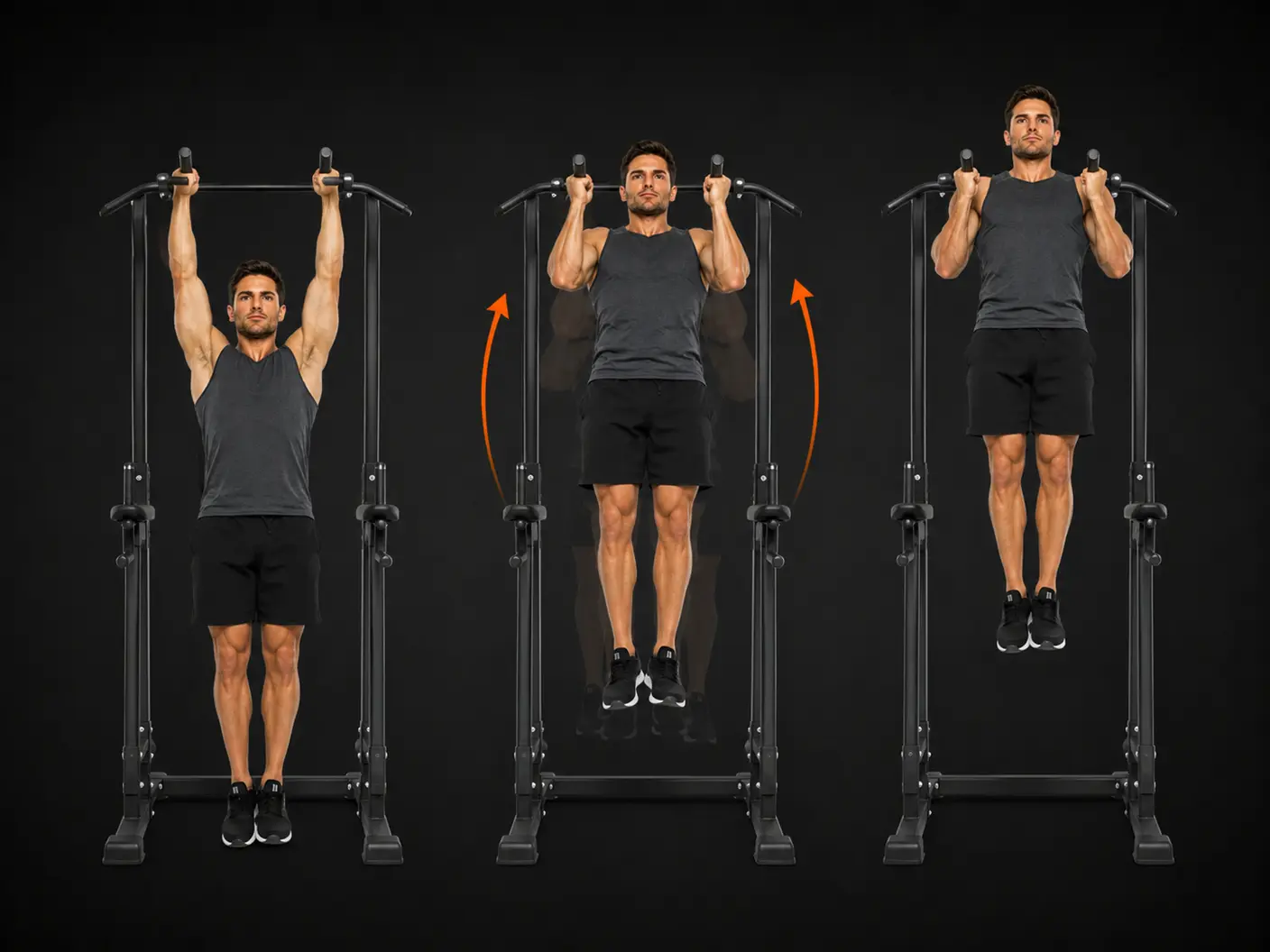
The neutral-grip pull-up is a compound vertical pulling exercise performed on parallel handles or rings, with the palms facing each other throughout the movement. This grip position reduces stress on the wrists and elbows relative to a pronated pull-up, making the pattern accessible to a broader range of lifters while still demanding significant lat, bicep, and brachialis development. It suits intermediate trainees building upper-body pulling strength, as well as those who find overhand variations uncomfortable at the wrist or elbow.
How to do it
Hang from parallel handles, palms facing each other. Active shoulders, shoulder-width grip. Pull the chest to the bar; elbows drive down and slightly forward. Chin clears. Lower under control.
Coaching cues
- Palms face each other
- Pull elbows down
- Chest through
- Controlled descent
Why train it
- The parallel grip places the elbow in a mechanically favourable position, allowing the biceps brachii and brachialis to contribute effectively alongside the lats for strong, efficient pulling force.
- Training through a full hang to chin-over-bar range of motion develops lat hypertrophy across a long muscle length, which is a meaningful stimulus for upper-back size.
- The involvement of the middle trapezius and rhomboids as secondary movers means the exercise also reinforces scapular retraction and depression, supporting better posture under load.
- Performing the movement on rings adds a stabilisation demand to each repetition, making it a useful progression for athletes who need shoulder and scapular control under dynamic conditions.
Common mistakes
- Shrugging the shoulders at the start of the pull — set the shoulder blades down and back before initiating the movement so the lats are loaded from the first inch of travel.
- Using momentum by kipping or swinging the hips — control the hang position and initiate every rep from a dead stop to ensure the target muscles are doing the work.
- Letting the elbows flare wide rather than driving them down and slightly forward — cueing the elbows toward the hips keeps the lats in a stronger pulling line throughout the rep.
- Dropping quickly through the descent — lower yourself under control over two to three seconds to maximise time under tension and reduce the risk of shoulder joint stress at the bottom.
Primary: Latissimus Dorsi, Biceps Brachii, Brachialis.
Secondary: Trapezius, Rhomboids.
Equipment
Good for
Easier variation
Band-assisted neutral-grip pull-up.
Similar movements
Frequently asked
- What muscles does the neutral-grip pull-up work?
- The primary muscles are the latissimus dorsi, biceps brachii, and brachialis. The middle trapezius and rhomboids act as secondary movers, contributing to scapular stability and retraction during the pull.
- How many sets and reps should I do for strength versus hypertrophy?
- For strength, work in the three to six rep range across three to five sets with substantial rest between efforts. For hypertrophy, sets of six to twelve reps with 60 to 90 seconds of rest are a reliable starting point, provided you can maintain controlled form throughout.
- What is the difference between a neutral-grip pull-up and a standard overhand pull-up?
- The key difference is grip orientation: neutral-grip has the palms facing each other, while overhand places the palms facing away. The neutral grip tends to feel more comfortable on the wrists and elbows and allows greater bicep and brachialis involvement, whereas the overhand grip typically emphasises a longer lat stretch at the bottom.
- What are good alternatives if I cannot yet complete a full neutral-grip pull-up?
- Banded neutral-grip pull-ups, neutral-grip lat pulldowns, and eccentric-only repetitions — where you jump or step to the top position and lower yourself slowly — all train the same movement pattern at a reduced load while building the strength needed for full bodyweight reps.
- Is the neutral-grip pull-up suitable for someone focused on building a wider back?
- Yes, provided you drive your elbows down toward your hips and pull your chest to the bar rather than your chin to your hands. This cue keeps the lats as the prime mover, and consistent progressive overload on this movement will contribute to lat width over time.
Want this movement in a plan built for you?
Adaptiv programmes the right exercises for your goal, equipment and experience — then adapts them as you train.
Build my programme