Assisted Pull-Up
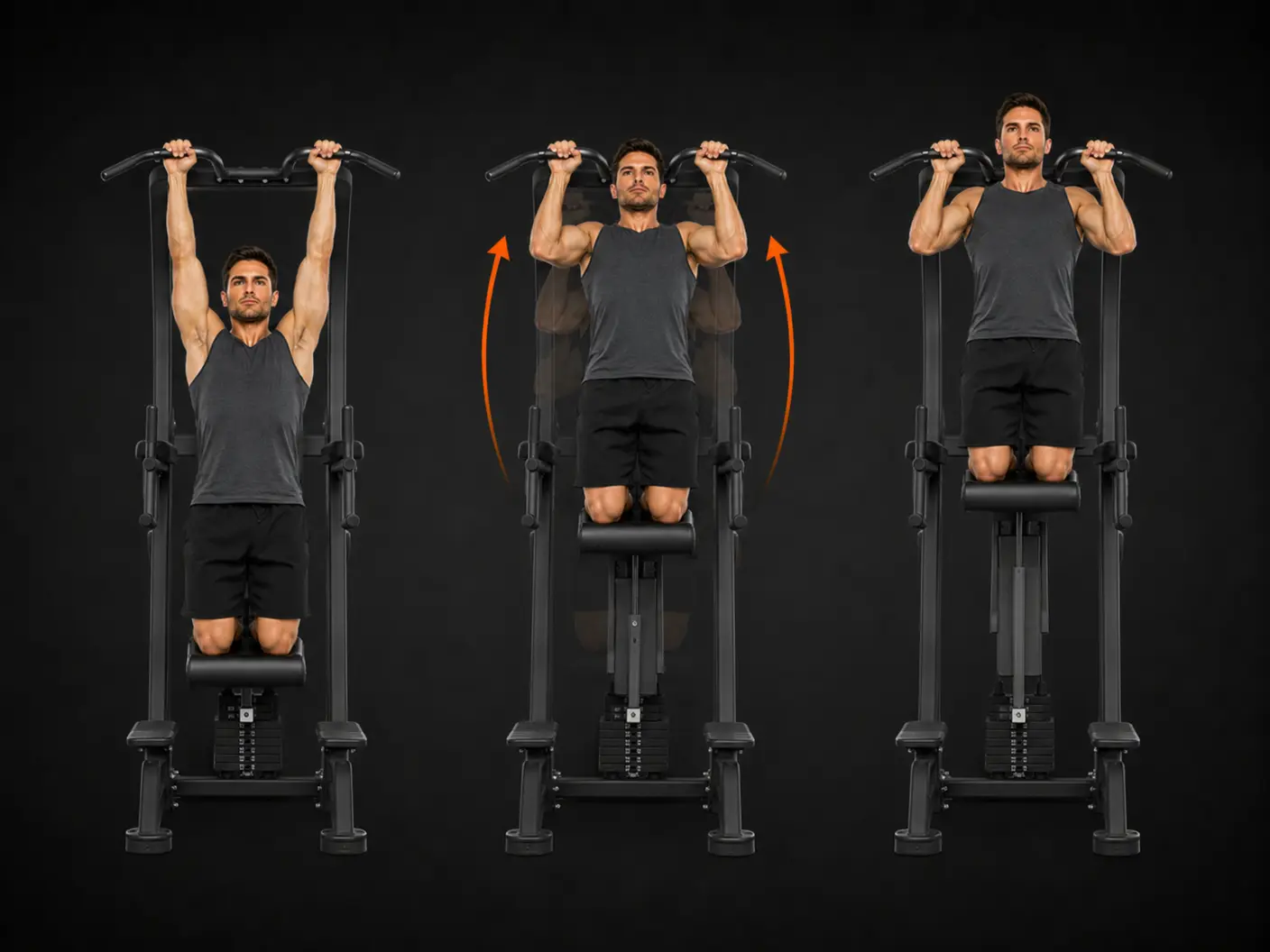
The assisted pull-up is a vertical pulling exercise that develops the same mechanics as a full bodyweight pull-up, using either a counterbalanced machine or a looped resistance band to reduce the load you lift on each repetition. It trains the back, biceps, and shoulder girdle through a large range of motion, making it an effective entry point for those building pulling strength from scratch. It suits beginners working toward their first unassisted pull-up as well as intermediate lifters using it for volume or hypertrophy work at a controlled load.
How to do it
Using an assisted pull-up machine, set the counterbalance to reduce your effective bodyweight. Kneel or stand on the pad. Grip the bar slightly wider than shoulder-width, pronated. Pull the chest toward the bar by driving the elbows down and back. Lower under control. Alternatively, loop a resistance band over the bar and step into it for band assistance.
Coaching cues
- Pull elbows down
- Chest to the bar
- Full hang at the bottom
- Control the descent
Why train it
- It develops genuine pulling strength through a full range of motion, directly transferring to unassisted pull-ups as assistance is progressively reduced.
- Training the latissimus dorsi, teres major, and biceps brachii through a long arc of movement creates a strong stimulus for upper-body muscle development.
- The machine or band assistance allows you to maintain sound technique across all repetitions, rather than grinding through poor-quality reps at the end of a set.
- It suits a wide range of training goals — strength, hypertrophy, and general fitness — making it a practical addition to most upper-body programmes.
Common mistakes
- Using too much assistance — reduce the counterbalance or switch to a lighter band gradually so the movement continues to challenge you and adaptation progresses.
- Pulling with the arms rather than the back — initiate each repetition by driving the elbows down and back, which engages the lats before the biceps take over.
- Not achieving a full hang at the bottom — allow the arms to extend completely at the base of each rep to train the full range of motion and avoid shortchanging the stretch under load.
- Letting the chest drop short of the bar — aim to bring the chest to the bar on every repetition, as a partial range of motion limits both the training stimulus and the carryover to unassisted pull-ups.
Primary: Latissimus Dorsi, Biceps Brachii, Teres Major.
Secondary: Brachialis, Trapezius, Rhomboids.
Equipment
Good for
Easier variation
Lat pulldown — same vertical pull pattern without bodyweight requirement.
Similar movements
Frequently asked
- What muscles does the assisted pull-up work?
- The primary muscles are the latissimus dorsi, biceps brachii, and teres major. The brachialis, middle trapezius, and rhomboids provide secondary support throughout the movement.
- How many sets and reps should I do?
- For strength development, three to five sets of five to eight repetitions works well. For hypertrophy or general fitness, three to four sets of eight to twelve repetitions at a moderate assistance level is a sound starting point.
- How do I progress from an assisted pull-up to an unassisted one?
- Reduce the counterbalance weight or move to a thinner resistance band incrementally over several weeks, keeping your rep quality consistent. Once you can complete clean sets with minimal assistance, attempt unassisted repetitions at the start of a session when you are freshest.
- Is the machine or the resistance band better?
- Both are effective. The machine provides a consistent, measurable level of assistance on every repetition, which makes progressive reduction straightforward. A resistance band provides more assistance at the bottom of the lift and less at the top, which some lifters find transfers well to the demands of a full pull-up.
- Can I use the assisted pull-up for hypertrophy if I can already do unassisted pull-ups?
- Yes — setting a moderate assistance level allows you to perform higher-rep sets with controlled technique, which can be useful for accumulating volume during a hypertrophy phase without the fatigue that heavy unassisted sets produce.
Want this movement in a plan built for you?
Adaptiv programmes the right exercises for your goal, equipment and experience — then adapts them as you train.
Build my programme