Neutral-Grip Lat Pulldown
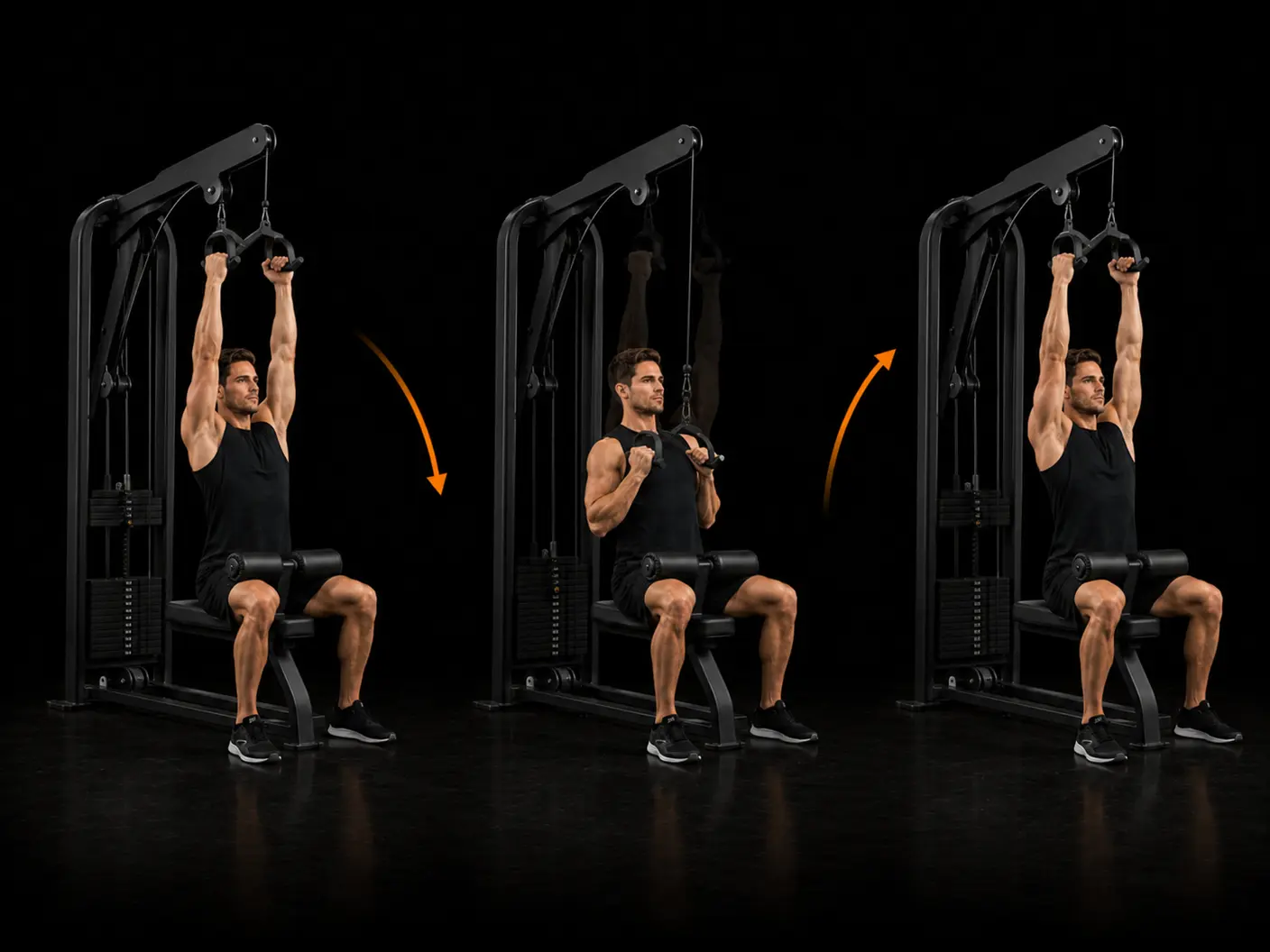
The neutral-grip lat pulldown is a machine-based vertical pulling exercise that uses a V-handle or parallel-grip attachment to train the latissimus dorsi through a full range of motion. The neutral hand position — palms facing each other — reduces stress on the wrists and elbows relative to a pronated grip, making it an accessible entry point for lifters building foundational pulling strength. It suits beginners establishing the lat pulldown pattern as well as more advanced trainees looking for a joint-friendly variation to accumulate pulling volume.
How to do it
Set up as a lat pulldown with a V-handle or parallel-grip attachment. Sit tall, shoulder-width hands on the handle. Lean back ~15°. Pull the handle to the sternum; drive the elbows down and back. Pause; return to a full lat stretch.
Coaching cues
- Pull elbows down
- V-handle to sternum
- Stretch at the top
- Slow eccentric
Why train it
- The full stretch at the top of each rep loads the latissimus dorsi through a lengthened position, which is associated with greater muscle growth stimulus during hypertrophy-focused training.
- The neutral grip allows the elbows to travel down and back efficiently, reinforcing sound scapular mechanics and encouraging proper rhomboid involvement at the bottom of the pull.
- As a machine-based movement, resistance is consistent throughout the set, making it straightforward to control load and track progressive overload across training cycles.
- The slow eccentric prescribed for this exercise increases time under tension on the lats and biceps, making each set more demanding without requiring additional weight on the stack.
Common mistakes
- Pulling to the chin rather than the sternum — drive the elbows down and back so the handle meets the lower chest, which keeps the lats as the primary mover rather than shifting load to the shoulders.
- Shortening the return phase — allow the arms to extend fully at the top of every rep so the lats reach a complete stretch before the next pull.
- Leaning back excessively beyond 15° — a slight lean is appropriate, but turning the movement into a near-horizontal row reduces the vertical pulling stimulus and shifts the pattern away from lat development.
- Letting the elbows flare wide on the descent — keep them tracking downward and slightly behind the torso to maintain tension on the lats and avoid unnecessary shoulder impingement.
Primary: Latissimus Dorsi.
Secondary: Biceps Brachii, Brachialis, Rhomboids.
Equipment
Good for
Easier variation
Seated cable row with the same handle — horizontal pull equivalent.
Similar movements
Frequently asked
- What muscles does the neutral-grip lat pulldown work?
- The primary muscle trained is the latissimus dorsi. The biceps and brachialis assist with elbow flexion throughout the pull, while the rhomboids are recruited at the bottom of the movement as the shoulder blades retract.
- How many sets and reps should I do for hypertrophy?
- For muscle growth, three to four sets of eight to twelve repetitions is a well-supported range. Pair this with the slow eccentric cue — around two to three seconds on the return — to maximise time under tension at a given load.
- What is the difference between the neutral-grip and wide-grip lat pulldown?
- The neutral grip places the palms facing each other, which tends to feel more comfortable at the wrist and elbow for many lifters. The wide overhand grip creates a greater initial stretch on the lats at the top but can increase stress on the wrists and shoulder capsule, so the neutral variation is often the better starting point.
- Can beginners use this exercise?
- Yes — it is classified as a foundational movement, and the machine provides a guided path of motion that helps beginners focus on the pulling mechanics without needing to stabilise a free weight. Start with a load that allows full range of motion and a controlled eccentric before increasing the stack.
- What are good alternatives if I do not have access to a V-handle?
- A close-grip or supinated-grip lat pulldown performed with a short straight bar is the closest substitute, as it preserves a narrow hand position and a similar elbow path. If no pulldown machine is available, assisted pull-ups with a neutral-grip bar offer a comparable stimulus in a free-weight context.
Want this movement in a plan built for you?
Adaptiv programmes the right exercises for your goal, equipment and experience — then adapts them as you train.
Build my programme