Machine Lateral Raise
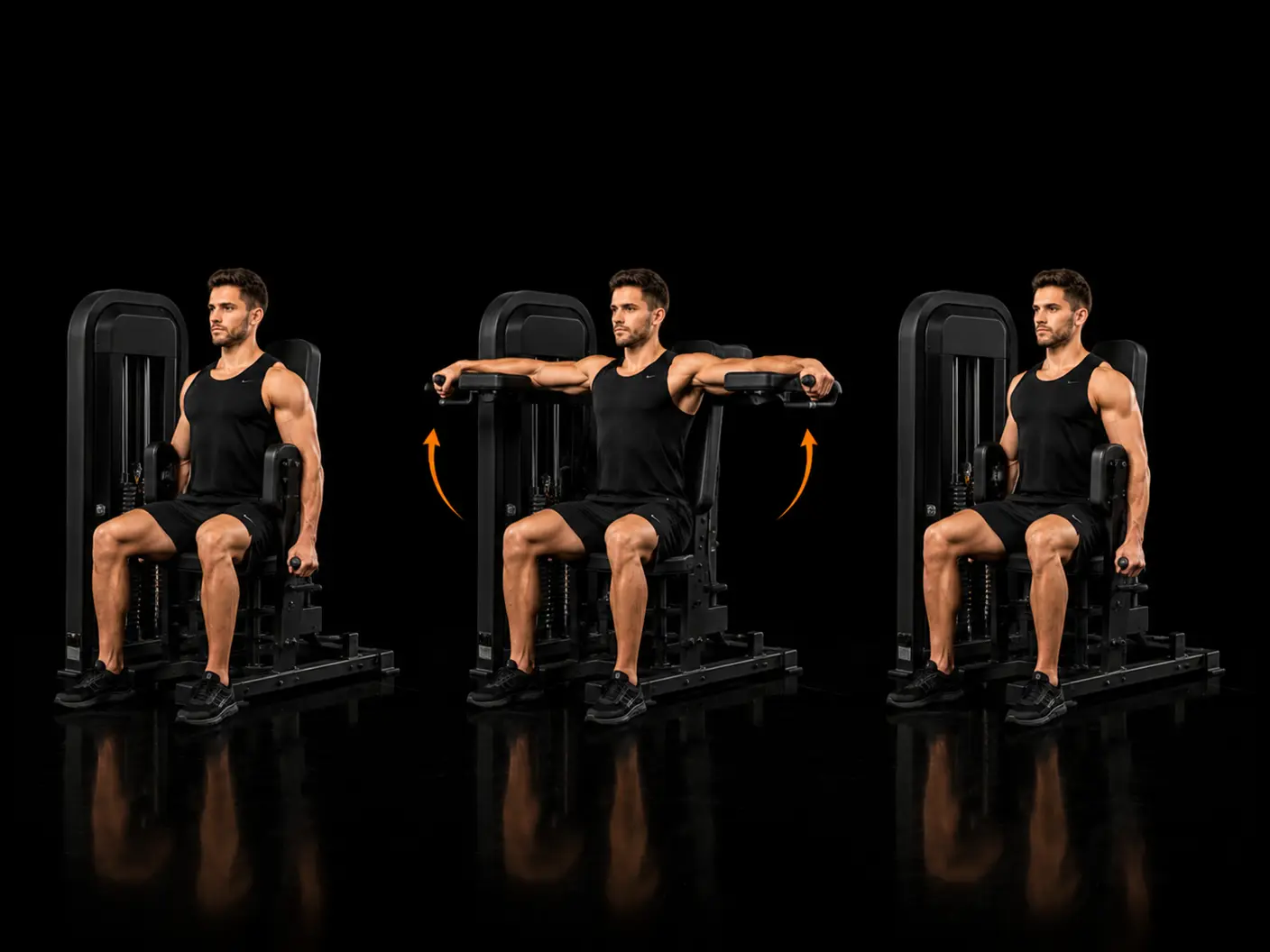
The machine lateral raise is a single-joint isolation exercise that targets the medial deltoid by moving the arms out to the sides against a fixed resistance path. The machine format removes grip and balance demands from the equation, allowing the shoulder abductors to work directly without compensatory effort from the traps or upper body. It suits lifters at any experience level who want to add width to the shoulders or bring up a lagging medial delt.
How to do it
Sit with torso upright against the pad. Forearms against the pads; grip the handles. Raise the arms out to the sides, elbows leading. Stop at shoulder height. Pause briefly. Lower slowly.
Coaching cues
- Elbows lead
- Stop at shoulder height
- Pause at peak
- Slow eccentric
Why train it
- The guided movement path reduces the need for stabilisation, making it easier to place consistent tension on the medial deltoid across every repetition.
- A brief pause at peak contraction and a controlled eccentric phase maximise time under tension, both of which are directly relevant to hypertrophy.
- Because the machine dictates the arc of movement, it is straightforward to programme as an accessory or finisher without significant technical fatigue accumulating.
- The seated, upright position keeps the torso out of the movement, limiting the temptation to use momentum and ensuring the deltoid performs the work.
Common mistakes
- Shrugging the traps to initiate the raise — seat yourself firmly, keep the neck long, and let the elbows lead the movement from the outset.
- Raising the arms above shoulder height — stop when the elbows reach shoulder level, as going beyond this shifts load away from the medial deltoid and increases unnecessary stress on the joint.
- Letting the weight drop on the way down — resist the stack throughout the eccentric, taking at least two to three seconds to return to the start position.
- Gripping the handles too tightly and leading with the wrists rather than the elbows — maintain a relaxed grip and focus on driving the forearm pads outward with the elbows.
Primary: Lateral Deltoid.
Secondary: Anterior Deltoid.
Equipment
Good for
Easier variation
Dumbbell lateral raise — accessible without the machine.
Similar movements
Frequently asked
- What muscles does the machine lateral raise work?
- The primary muscle trained is the medial deltoid, which is responsible for arm abduction and gives the shoulder its rounded, wide appearance. The anterior deltoid acts as a secondary contributor throughout the movement.
- How many sets and reps should I do for the machine lateral raise?
- For hypertrophy, three to four sets of ten to fifteen repetitions works well, with a load that makes the final two reps genuinely challenging while allowing full control. The pause at the top and slow eccentric are more important than chasing heavy weight.
- Is the machine lateral raise better than dumbbell lateral raises?
- Neither is categorically superior, but the machine version offers a more consistent resistance curve and removes the need for grip and postural stabilisation, making it useful when you want to isolate the medial deltoid with less technical interference. Dumbbell raises involve more stabilising muscle activity and allow greater freedom of movement, so both have a place in a well-rounded programme.
- Where should the machine lateral raise sit in a session?
- It is best used as an accessory movement after compound pressing exercises such as overhead press or bench press, so that the shoulder girdle is already warmed up and primary strength work is not compromised.
- Can beginners use the machine lateral raise?
- Yes — the foundational difficulty rating reflects that the machine format is accessible to those new to resistance training. Start with a light load, focus on the coaching cues around elbow lead and a slow eccentric, and build familiarity with the movement before adding resistance.
Want this movement in a plan built for you?
Adaptiv programmes the right exercises for your goal, equipment and experience — then adapts them as you train.
Build my programme