Leaning Single-Arm Lateral Raise
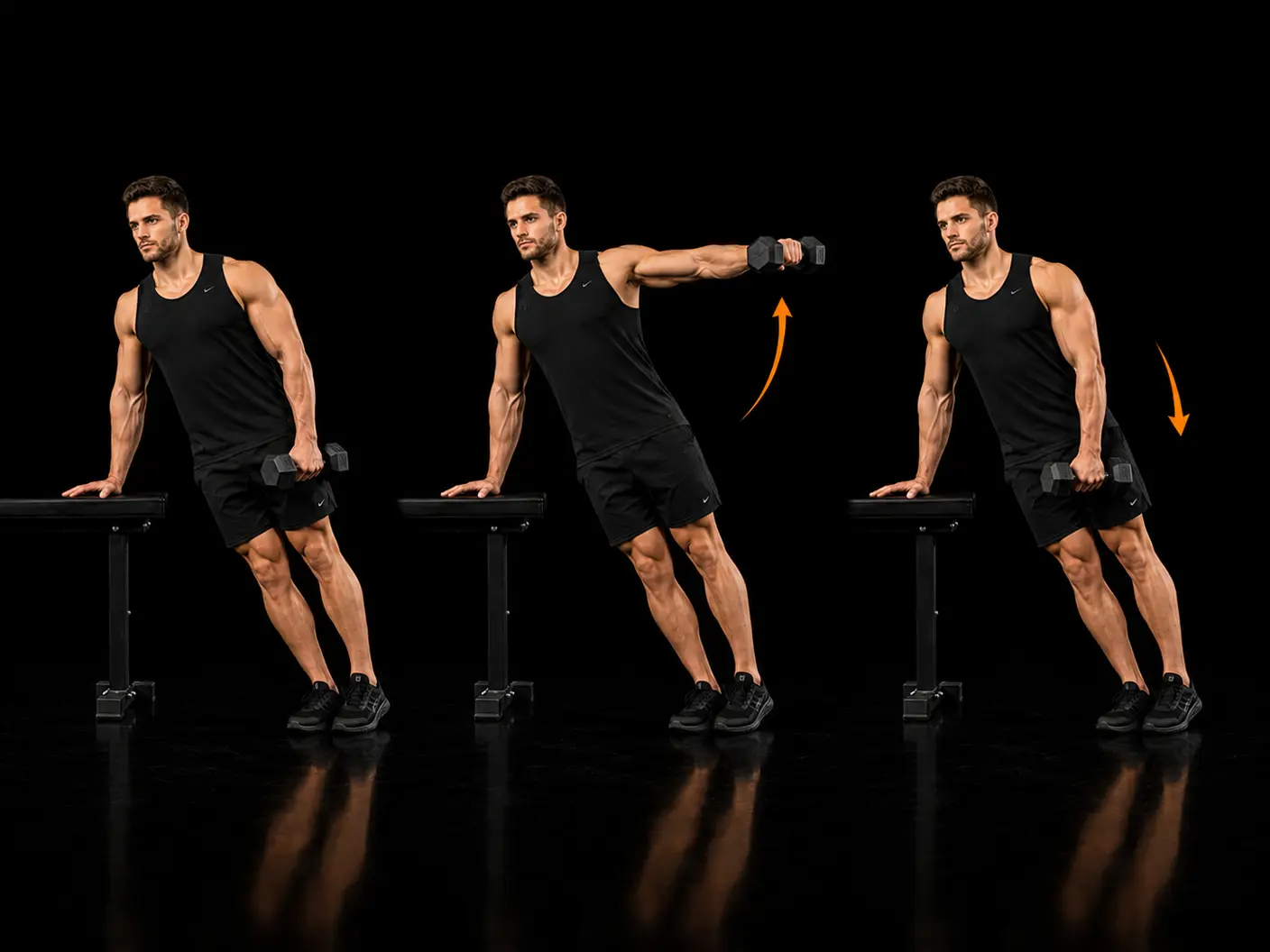
The leaning single-arm lateral raise is an isolation exercise for the medial deltoid that uses a rack for support, allowing the lifter to lean away and dramatically extend the range of motion at the bottom of the movement. By hanging the dumbbell across the body in the start position, the shoulder is placed under a meaningful stretch before each rep begins — a mechanical advantage that standard standing lateral raises rarely achieve. It suits lifters at any training age who want to prioritise shoulder width and deltoid hypertrophy with greater positional control.
How to do it
Grip a rack with one hand and lean away, feet stacked under the rack. Dumbbell in the free hand, hanging across the body. Raise the dumbbell out to the side and up — the lean extends the range of motion at the bottom. Pause at peak. Lower into a full stretch.
Coaching cues
- Lean creates stretch
- Slow eccentric
- Lead with the elbow
- Full range
Why train it
- The leaning position increases the stretch on the medial deltoid at the bottom of each rep, improving the stimulus across a fuller range of motion than a conventional lateral raise.
- Having one hand anchored to the rack removes the temptation to use momentum or body sway, keeping tension directed at the target muscle throughout the set.
- The single-arm format allows each shoulder to be trained independently, making it straightforward to identify and address left-to-right strength or size discrepancies.
- A slow eccentric, as the arm lowers back into the full stretch, increases time under tension — a key driver of hypertrophic adaptation.
Common mistakes
- Shortening the range of motion at the top — raise until the arm is at or near shoulder height, pausing briefly before lowering with control.
- Using a swinging or jerking motion to initiate the raise — the movement should begin from a dead hang, driven by the deltoid rather than by momentum.
- Letting the elbow drop below the wrist during the raise — lead with the elbow so it arrives at the same height or slightly above the hand throughout the arc.
- Rushing the lowering phase — the eccentric portion should be deliberate and controlled, returning fully to the stretched position before each subsequent rep begins.
Primary: Lateral Deltoid.
Secondary: Rotator Cuff.
Equipment
Good for
Easier variation
Standing DB lateral raise — remove the lean to reduce ROM.
Similar movements
Frequently asked
- What muscles does the leaning single-arm lateral raise work?
- The primary muscle trained is the medial deltoid, which is responsible for shoulder abduction and contributes to the appearance of shoulder width. The supraspinatus, a rotator cuff muscle that assists in the early phase of arm elevation, also works as a secondary contributor.
- How many sets and reps should I do for shoulder hypertrophy?
- For hypertrophy, three to four sets of ten to fifteen reps per side is a practical starting point. Prioritise a controlled tempo — particularly on the lowering phase — over simply accumulating reps with poor form.
- Why is leaning better than standing for a lateral raise?
- Leaning away from the rack places the shoulder in a stretched position at the start of each rep, meaning the medial deltoid is loaded through a greater range of motion. Standard standing lateral raises often have a dead zone at the bottom where tension is minimal; the lean effectively eliminates this.
- What can I use instead of a rack to anchor myself?
- A sturdy upright, a cable machine post, or any fixed vertical structure of appropriate height will serve the same purpose, provided it is stable enough to support your bodyweight as you lean. Avoid anything that shifts or flexes under load.
- Is this exercise suitable for beginners?
- It is classified as a foundational movement, so it is appropriate for those new to resistance training, provided they select a manageable dumbbell weight and take time to establish the correct lean and foot position before adding load. If you have a history of shoulder discomfort, consult a qualified professional before adding this movement to your programme.
Want this movement in a plan built for you?
Adaptiv programmes the right exercises for your goal, equipment and experience — then adapts them as you train.
Build my programme