Lying Leg Raise
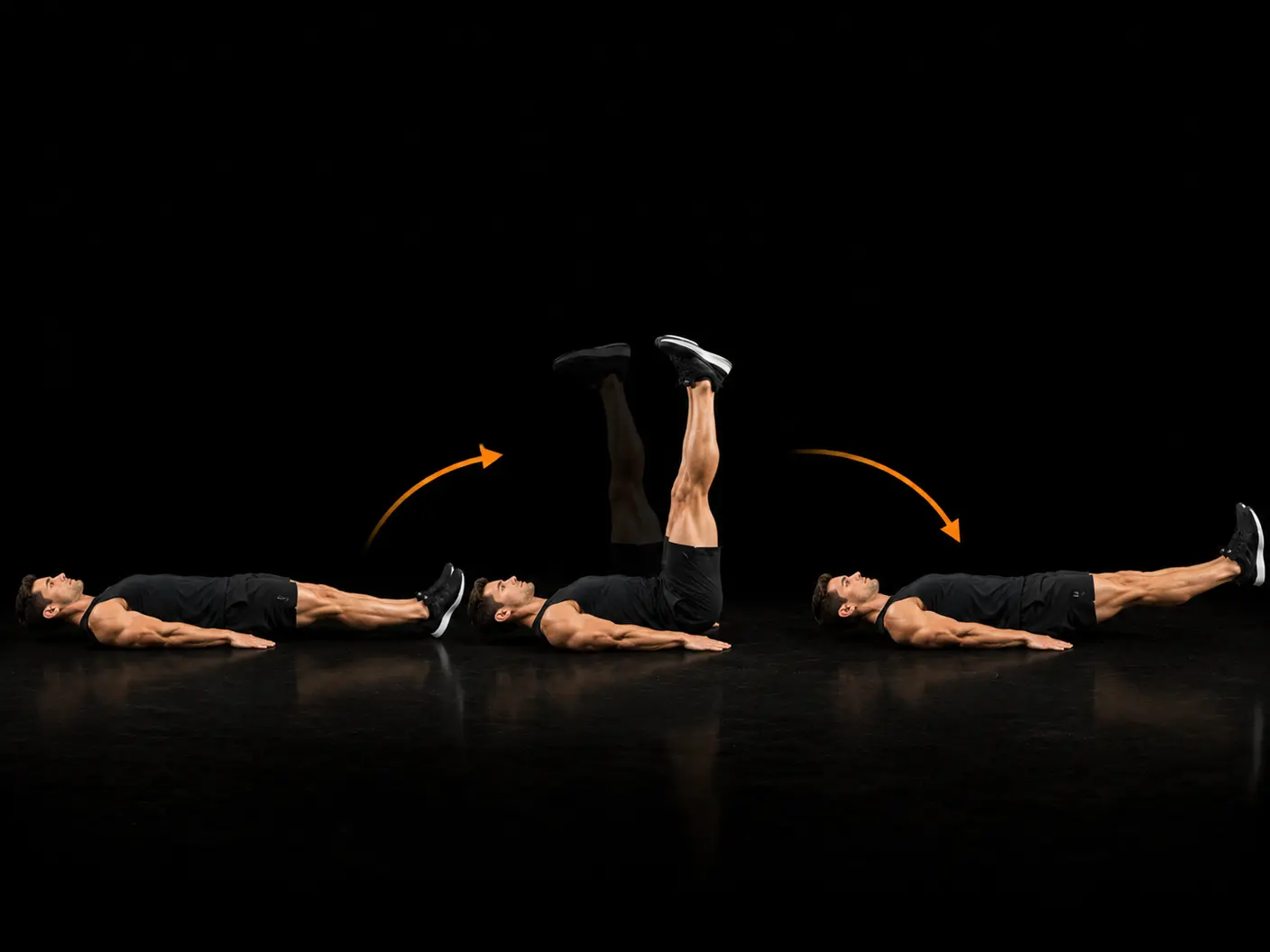
The lying leg raise is a bodyweight core exercise performed supine, in which the legs are lifted together to 90° and lowered under control without allowing the feet to touch the floor. It trains the anti-extension pattern, requiring the core to resist lumbar extension throughout the movement, with particular demand placed on the lower portion of the rectus abdominis and the hip flexors. It suits intermediate trainees looking to build core strength and hypertrophy as part of a general fitness or physique programme.
How to do it
Lie flat on your back with legs straight and together. Place hands under the lower back for support. Keeping the legs straight, raise them together to 90° above the floor. Lower under control — stop just before the feet touch the floor. Brace the core throughout to prevent the lower back from arching off the floor.
Coaching cues
- Slow descent
- Lower back stays flat
- Legs together
- Brace hard
Why train it
- Develops lower abdominal and hip flexor strength through a demanding range of motion that many standard crunching movements do not adequately address.
- The anti-extension demand trains the core to maintain a neutral spine under load, a quality that carries over to compound lifts and everyday movement.
- Requiring no equipment beyond bodyweight, the exercise can be programmed consistently regardless of training environment.
- The slow, controlled descent adds time under tension to the working muscles, supporting hypertrophy goals when combined with appropriate volume.
Common mistakes
- Allowing the lower back to arch off the floor — brace the core firmly before the movement begins and maintain that brace throughout the descent to keep the lumbar spine flat.
- Using momentum to swing the legs upward — initiate the lift with a deliberate contraction of the core and hip flexors rather than a kick, keeping the movement smooth and controlled.
- Letting the legs drift apart — keep the feet together throughout both the ascent and descent to maintain tension and ensure symmetrical loading.
- Lowering the feet all the way to the floor between reps — stop just short of contact so the core remains under tension and the lumbar spine does not lose its flat position.
Primary: Hip Flexors, Rectus Abdominis.
Secondary: Obliques.
Equipment
Good for
Easier variation
Bent-knee raise — reduces the lever arm significantly and is easier on the lower back.
Similar movements
Frequently asked
- What muscles does the lying leg raise work?
- The primary muscles are the hip flexors and the lower portion of the rectus abdominis. The obliques assist as secondary stabilisers throughout the movement.
- How many sets and reps should I do for the lying leg raise?
- For general fitness and hypertrophy, 3–4 sets of 10–15 controlled reps is a practical starting point. Prioritise quality of movement over rep count — if the lower back begins to arch, reduce the reps until core strength improves.
- What is the difference between the lying leg raise and the hanging leg raise?
- Both movements share the same basic pattern, but the hanging version requires additional grip, shoulder, and lat engagement to support the body from a bar. The lying leg raise removes that upper-body demand, making it the more accessible option and a sensible progression point before moving to hanging variations.
- Is the lying leg raise suitable for beginners?
- It is classified as an intermediate movement because maintaining a flat lower back throughout the full range requires a meaningful level of core control. Beginners who find the lumbar spine lifting off the floor should build foundational core strength with easier anti-extension work before progressing to this exercise.
- Can I do lying leg raises every session?
- Core tissue recovers relatively quickly, but daily training of any movement is rarely necessary or optimal. Two to three sessions per week, allowing at least one rest day between sessions, is sufficient to drive adaptation without accumulating excess fatigue.
Want this movement in a plan built for you?
Adaptiv programmes the right exercises for your goal, equipment and experience — then adapts them as you train.
Build my programme