Hanging Knee Raise
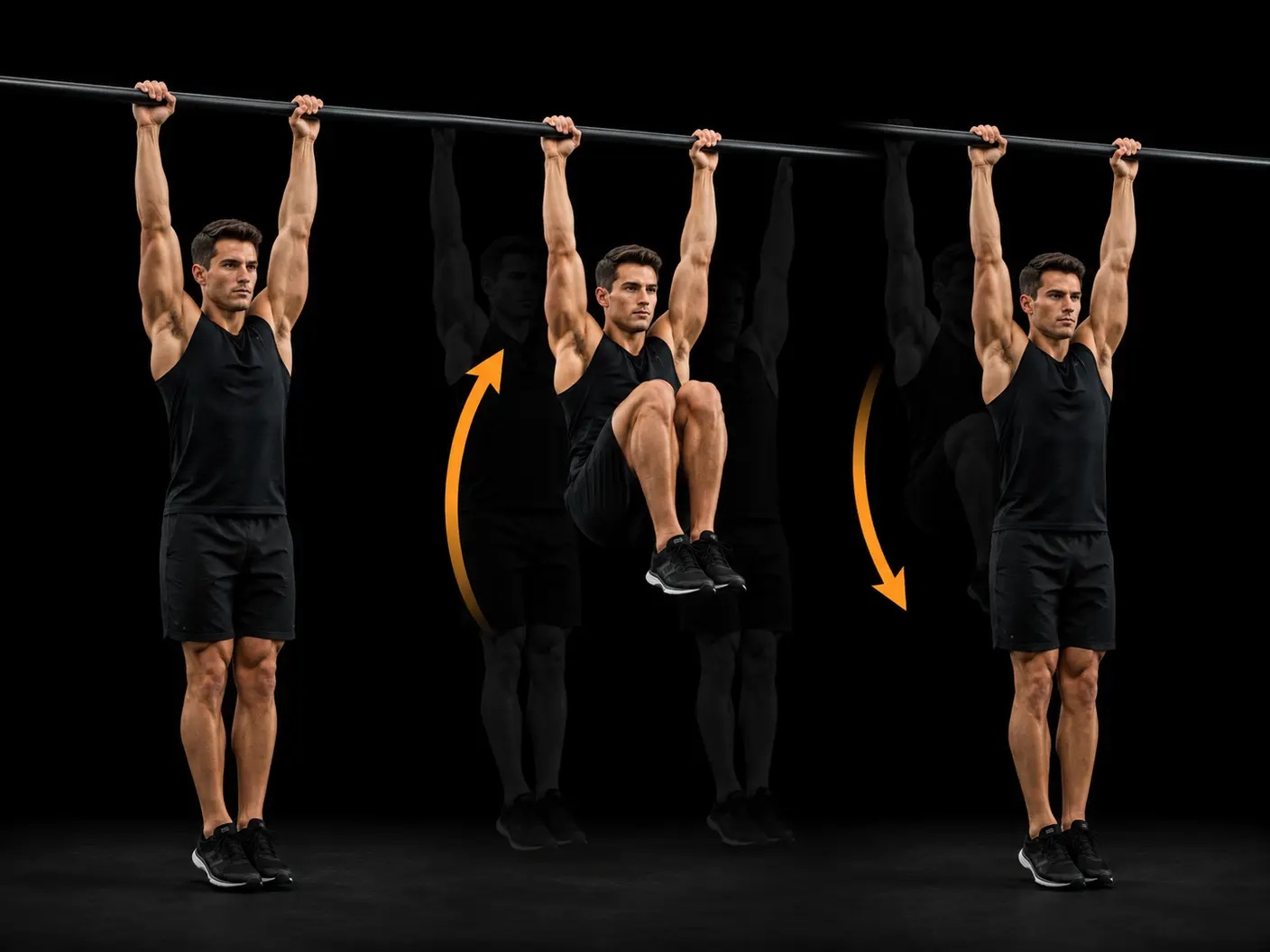
The hanging knee raise is a compound core exercise performed from a pull-up bar, training the anti-extension pattern by demanding that the lower rectus abdominis and hip flexors work together to bring the knees toward the chest through a controlled posterior pelvic tilt. Unlike floor-based abdominal work, the hanging position removes the ground as a support, requiring active shoulder engagement and grip endurance throughout the movement. It suits intermediate trainees who have the overhead grip strength to hang with stability and want to build lower abdominal and hip flexor development within a general fitness or hypertrophy programme.
How to do it
Hang from a bar. Active shoulders. Raise the knees by tilting the pelvis posteriorly and flexing the hips; bring the knees toward the chest. Pause; lower under control with no swing.
Coaching cues
- Posterior pelvic tilt
- Knees to chest
- No kipping
- Slow descent
Why train it
- The posterior pelvic tilt cue emphasises lower rectus abdominis recruitment rather than relying purely on hip flexion, making it an effective exercise for targeted abdominal hypertrophy.
- Performing the movement in a dead hang trains grip endurance and shoulder girdle stability as genuine secondary demands, adding useful upper-body work without additional equipment.
- The controlled descent and strict no-swing requirement build anti-extension strength through the full range of motion, developing the kind of trunk stiffness that carries over to compound lifts.
- As a bodyweight movement requiring only a pull-up bar, it integrates cleanly into the end of almost any training session without loading the spine under compression.
Common mistakes
- Using momentum to swing the knees up — initiate every rep from a dead stop by tilting the pelvis posteriorly before flexing the hips, keeping the torso vertical throughout.
- Allowing the shoulders to shrug passively toward the ears — actively depress and pack the shoulder blades at the start of the hang and maintain that position for the duration of the set.
- Skipping the pelvic tilt and hinging only at the hip — consciously tuck the pelvis under before raising the knees so the lower abdominals drive the movement rather than the hip flexors alone.
- Dropping the knees quickly on the descent — lower them under full muscular control to preserve time under tension and prevent the swing that would compromise the following rep.
Primary: Rectus Abdominis, Hip Flexors.
Secondary: Obliques, Forearm Flexors.
Equipment
Good for
Easier variation
Captain's chair knee raise — back supported makes it easier.
Similar movements
Frequently asked
- What muscles does the hanging knee raise work?
- The primary muscles are the lower fibres of the rectus abdominis and the hip flexors. The obliques contribute as stabilisers, and the grip and shoulder girdle are engaged throughout to maintain a controlled hang.
- How many sets and reps should I do for the hanging knee raise?
- For hypertrophy, three to four sets of ten to fifteen controlled reps works well, with rest periods of sixty to ninety seconds. For general fitness, two to three sets of eight to twelve reps is a practical starting point, prioritising quality of movement over rep count.
- What is the difference between a hanging knee raise and a hanging leg raise?
- In the hanging knee raise the knees remain bent, which shortens the lever arm and reduces the demand on the hip flexors and lower abdominals compared to a straight-leg variation. The knee raise is the more accessible progression and is the appropriate starting point before moving to a full hanging leg raise.
- Why should I avoid kipping on this exercise?
- Kipping transfers the work from the abdominals to momentum, significantly reducing the stimulus to the target muscles. Strict, controlled reps with no swing are what drive lower abdominal and hip flexor development over time.
- Is the hanging knee raise suitable if I have limited grip strength?
- If grip fails before the core is adequately fatigued, the exercise becomes impractical. Building grip endurance through dead hangs or farmer carries alongside this movement is the recommended approach rather than compromising bar contact with lifting straps.
Want this movement in a plan built for you?
Adaptiv programmes the right exercises for your goal, equipment and experience — then adapts them as you train.
Build my programme