Cable Crunch
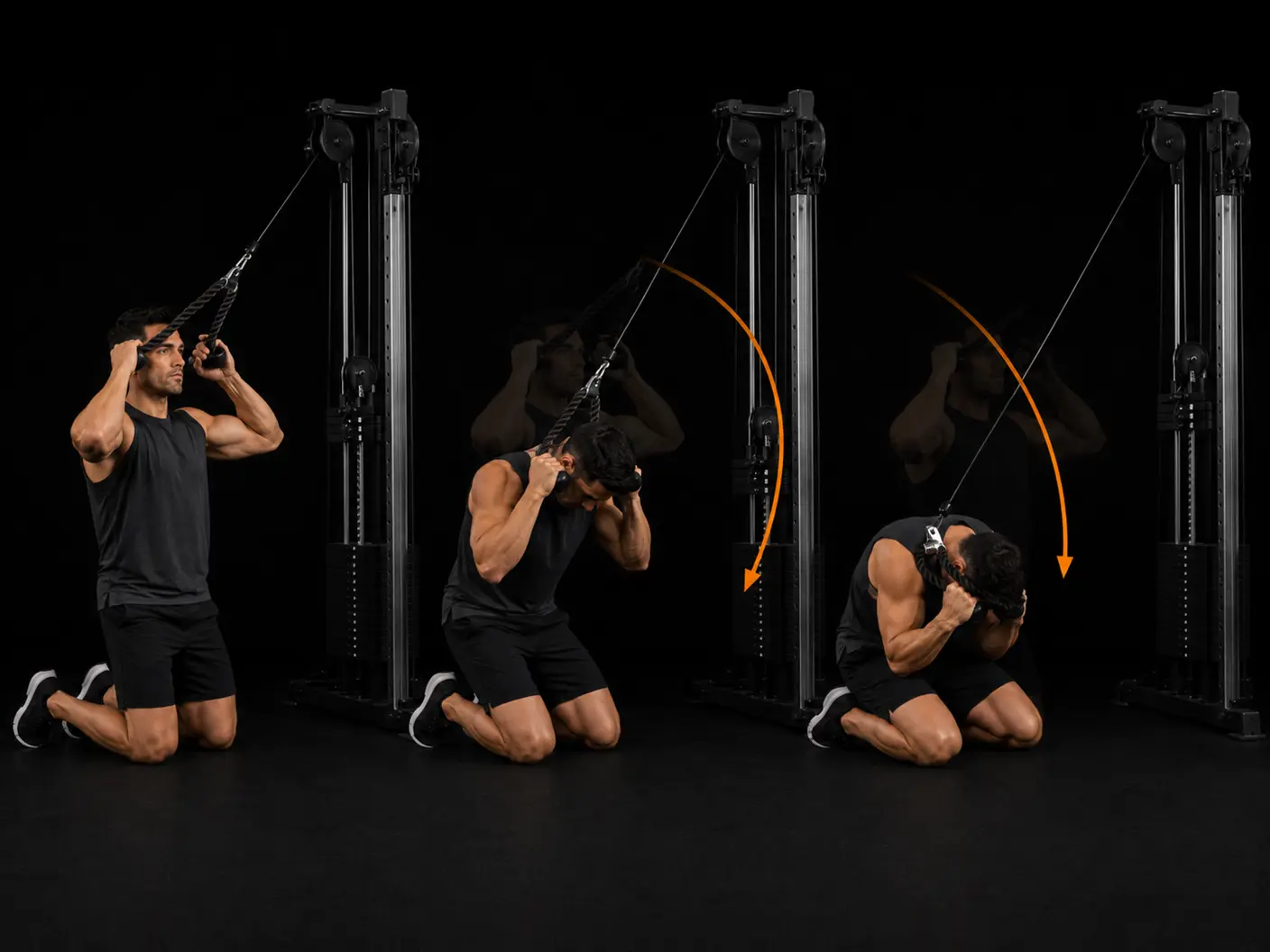
The cable crunch is a kneeling resistance exercise that trains the rectus abdominis through loaded spinal flexion, using a high cable and rope attachment to provide consistent tension throughout the range of motion. Unlike many bodyweight ab exercises, the load is easily adjustable, making progressive overload straightforward to apply. It suits anyone from general fitness trainees to those specifically pursuing abdominal hypertrophy.
How to do it
Kneel in front of a high cable with a rope. Grip the rope at the forehead or sides of the head. Hinge down by crunching the ribs toward the pelvis — the movement is spinal flexion, not hip flexion. Pause at peak contraction. Return under control.
Coaching cues
- Crunch the ribs down
- Hip angle stays fixed
- Round the spine
- Pause at peak
Why train it
- The cable provides constant tension across the entire range of motion, creating a more demanding stimulus for the rectus abdominis than many bodyweight alternatives.
- Load can be increased incrementally over time, allowing genuine progressive overload — a prerequisite for hypertrophy in any muscle group.
- Kneeling removes lower-body drive from the equation, helping isolate spinal flexion and reduce the contribution of the hip flexors when performed correctly.
- The obliques contribute as secondary movers, meaning the exercise develops width across the entire anterior core rather than the rectus abdominis alone.
Common mistakes
- Pulling with the hip flexors rather than flexing the spine — keep the hip angle fixed throughout and focus on drawing the ribs toward the pelvis, not the chest toward the floor.
- Gripping the rope and yanking through the shoulders — the hands should remain stationary at the forehead while the spine does the work.
- Failing to pause at peak contraction — hold briefly at the bottom of each rep to maximise time under tension and confirm the target musculature is engaged.
- Using too much weight and losing spinal rounding — select a load that allows a full, deliberate curl of the spine rather than a short, jerky range of motion.
Primary: Rectus Abdominis.
Secondary: Obliques, Hip Flexors.
Equipment
Good for
Easier variation
Machine crunch or decline crunch — free weight version.
Similar movements
Frequently asked
- What muscles does the cable crunch work?
- The primary muscle is the rectus abdominis, which drives spinal flexion throughout the movement. The obliques and hip flexors contribute as secondary muscles.
- How many sets and reps should I do for cable crunches?
- For hypertrophy, three to four sets of ten to fifteen reps with a controlled tempo and a brief pause at peak contraction is a practical starting point. Prioritise feeling the rectus abdominis contract over moving heavy loads.
- What is the difference between a cable crunch and a sit-up?
- A sit-up combines spinal flexion with significant hip flexion, meaning the hip flexors take on a large share of the work. The cable crunch, when performed correctly, keeps the hip angle fixed so the rectus abdominis handles the majority of the load.
- Can I do cable crunches if I have lower back concerns?
- Spinal flexion under load is not appropriate for everyone, and individual circumstances vary considerably — if you have any existing back issues, check with a qualified professional before including this exercise in your programme.
- What are good alternatives to the cable crunch?
- Any exercise that trains spinal flexion against resistance serves a similar purpose; examples would include the rope crunch performed on a decline bench or weighted crunches on an exercise mat. The cable variation is particularly useful where consistent tension and easy load adjustment are priorities.
Want this movement in a plan built for you?
Adaptiv programmes the right exercises for your goal, equipment and experience — then adapts them as you train.
Build my programme