Low-Incline Dumbbell Press
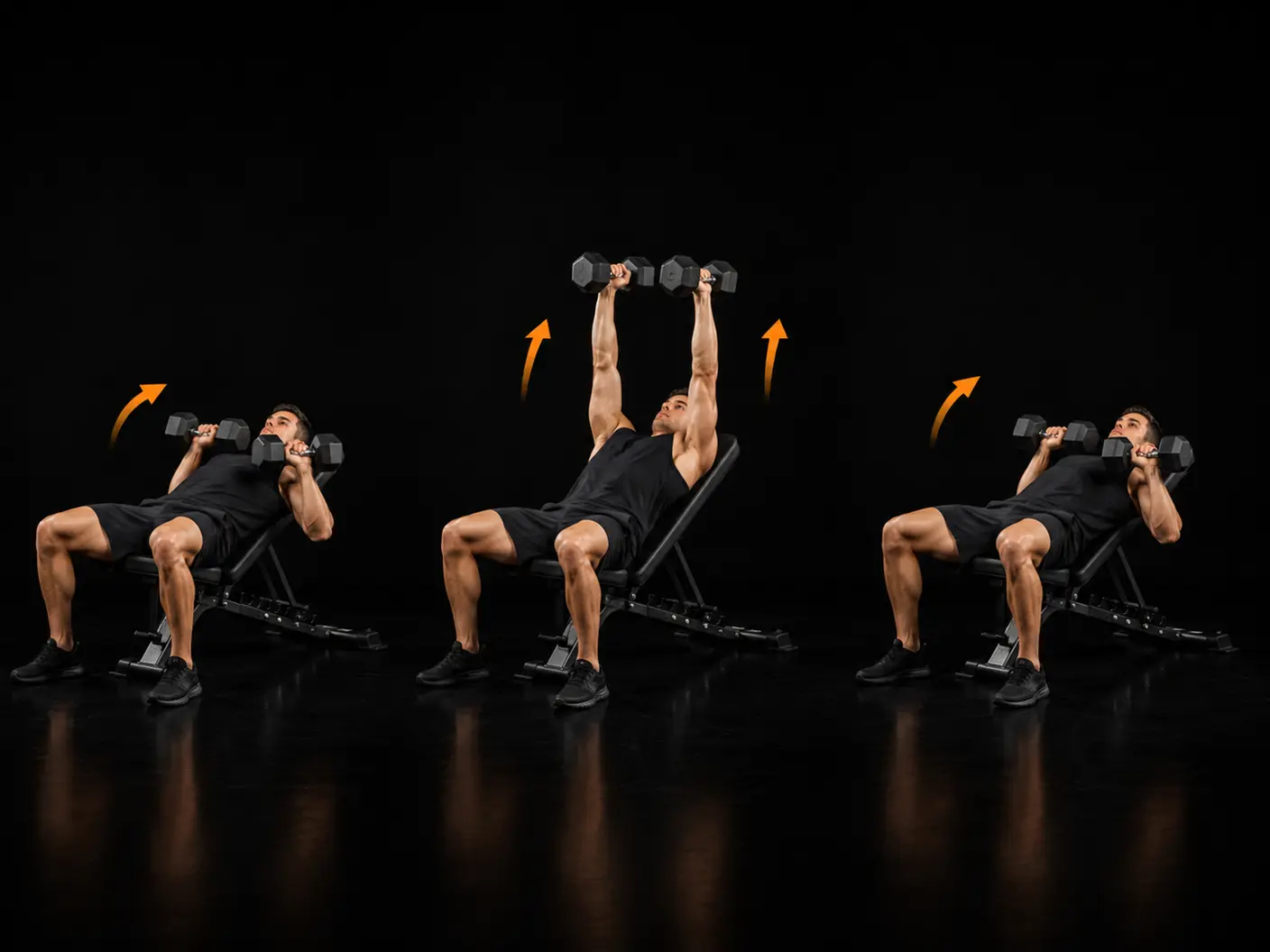
The low-incline dumbbell press is a compound horizontal push performed on a bench set to approximately 15 degrees — a modest angle that shifts emphasis toward the upper portion of the pectoralis major whilst keeping the clavicular head meaningfully involved alongside the sternocostal fibres. The slight incline differentiates it from a flat press without the pronounced anterior deltoid recruitment that a steeper angle demands, making it a precise tool for balanced chest development. It suits intermediate lifters who are comfortable with dumbbell pressing mechanics and want to address upper chest hypertrophy without over-relying on the front deltoid.
How to do it
Set the bench to 15°. Press up from the thighs into position. Dumbbells at the outer chest, elbows ~45°. Press up and slightly inward to meet at the top. Lower with control to a full stretch.
Coaching cues
- 15° incline
- Press and meet
- Stretch-focused
- Shoulder blades set
Why train it
- The 15-degree angle distributes load across both the sternocostal and clavicular heads of the pectoralis major, promoting more complete chest development than a flat or steep incline press alone.
- Pressing and slightly converging the dumbbells at the top increases peak contraction at the chest, a mechanical advantage that a fixed barbell path cannot replicate.
- The independent nature of each dumbbell requires greater stabilisation from the anterior deltoid and triceps, building supporting strength alongside the primary movement.
- Lowering under control to a full stretch places the pectoralis major under load in a lengthened position, a stimulus associated with effective hypertrophy responses.
Common mistakes
- Flaring the elbows to 90 degrees — keep them at roughly 45 degrees to the torso to reduce shoulder stress and maintain tension through the pectorals.
- Bouncing the dumbbells off the chest at the bottom — lower with deliberate control to the full stretch position rather than using momentum to initiate the next rep.
- Allowing the shoulder blades to protract and lift off the pad — set the blades down and back before the first rep and maintain that position throughout the set.
- Setting the bench angle too steep — stay close to 15 degrees; a higher incline transfers demand to the anterior deltoid and reduces the balanced pectoral stimulus this exercise is designed to provide.
Primary: Pectoralis Major.
Secondary: Anterior Deltoid, Triceps Brachii.
Equipment
Good for
Easier variation
Flat DB press — similar angle with less adjustment.
Similar movements
Frequently asked
- What muscles does the low-incline dumbbell press work?
- The primary muscles are the pectoralis major, specifically both its sternocostal and clavicular heads. The anterior deltoid and triceps contribute as secondary movers throughout the press.
- How many sets and reps should I do for hypertrophy?
- For hypertrophy, three to four sets of eight to twelve repetitions with controlled tempo works well for most intermediate lifters. Prioritise a full stretch at the bottom and a deliberate squeeze at the top over simply moving the heaviest weight available.
- How is this different from a standard flat or 45-degree incline dumbbell press?
- A flat press targets the sternocostal head more directly, whilst a 45-degree incline shifts substantial load onto the anterior deltoid. The 15-degree incline sits between the two, giving meaningful upper chest involvement without the deltoid dominating the movement.
- Can I do this exercise if I have shoulder discomfort?
- The 45-degree elbow angle and controlled range of motion make this a relatively shoulder-friendly pressing variation for many people, but if you experience discomfort during the movement, consult a qualified professional before continuing.
- What are good alternatives if I do not have an adjustable bench?
- A flat dumbbell press or a dumbbell floor press are practical alternatives that train the same horizontal push pattern. If an incline is important, a low incline can sometimes be achieved by placing weight plates under one end of a flat bench, though stability should be checked carefully before loading the movement.
Want this movement in a plan built for you?
Adaptiv programmes the right exercises for your goal, equipment and experience — then adapts them as you train.
Build my programme