Lateral Bound (Skater Jump)
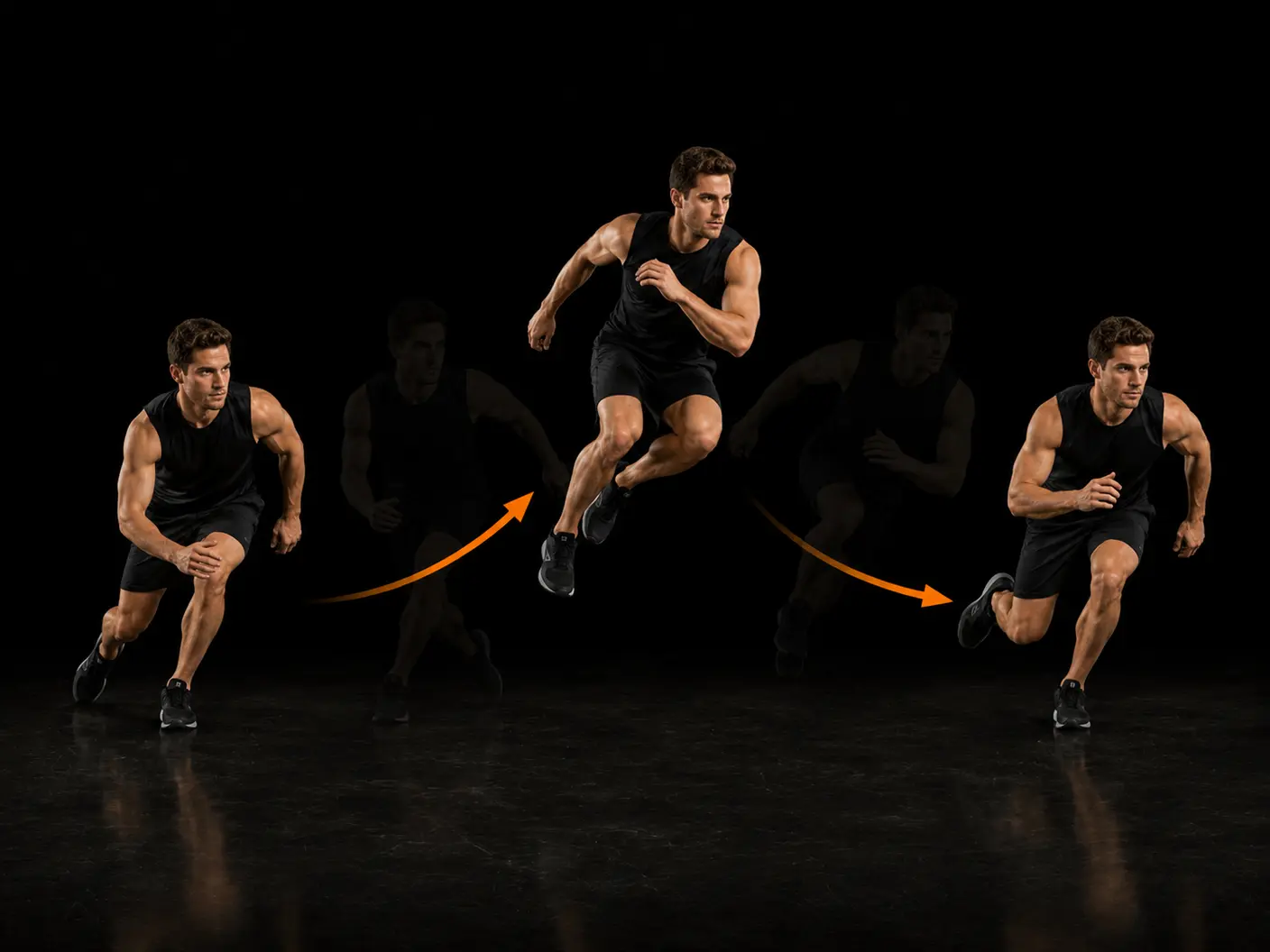
The lateral bound, commonly known as the skater jump, is a plyometric exercise in which you propel yourself laterally from one leg and absorb the landing on the opposite leg alone. It trains the frontal-plane power and single-leg stability that most conventional bilateral movements leave unaddressed. It suits intermediate trainees looking to develop athletic performance qualities — particularly those involving change of direction and lateral force production.
How to do it
Stand on one leg. Bound laterally to the opposite side — land on the opposite leg only. Stick or flow into the next bound. Use the arms for momentum. Cover distance side to side.
Coaching cues
- Push off laterally
- Stick the landing
- Single-leg control
- Arms drive
Why train it
- Develops explosive hip abductor strength, with the glutes — particularly gluteus medius — responsible for both driving the bound and controlling the landing.
- Trains single-leg deceleration and balance simultaneously, building the kind of co-ordinated lower-limb stability that carries directly into sport and field-based activity.
- The compound, full-body demand of each rep — legs generating power, arms driving momentum, core stabilising the landing — makes it an efficient addition to athletic conditioning programmes.
- Covering distance side to side under fatigue improves lateral speed and reactive strength without the need for any equipment beyond bodyweight.
Common mistakes
- Collapsing through the landing knee — keep the knee tracking over the toes and absorb the impact by allowing the hip and knee to flex rather than buckling inward.
- Using a short, timid push-off — drive hard through the standing leg to cover genuine lateral distance, as minimal effort reduces the plyometric stimulus significantly.
- Neglecting the arms — actively swing the arms in the direction of travel on each bound, as this adds momentum and helps you stick a controlled landing.
- Landing with a flat, stiff leg — accept the landing on a slightly bent knee and hip to load the musculature eccentrically and protect the joints under impact.
Primary: Gluteus Medius, Gluteus Maximus, Quadriceps, Hamstrings.
Secondary: Rectus Abdominis, Gastrocnemius.
Equipment
Good for
Easier variation
Lateral step-over — no airtime, just side-to-side.
Similar movements
Frequently asked
- What muscles does the lateral bound work?
- The primary muscles are the glutes (medius and maximus), quadriceps, and hamstrings, which power the push-off and control the landing. The calves and core work as secondary contributors, assisting with take-off force and stabilising the torso throughout each rep.
- How many sets and reps should I do for lateral bounds?
- For athletic performance, three to four sets of six to ten bounds per side works well — quality and distance covered per rep matter more than volume. Allow full recovery between sets to preserve the explosive intent of each effort.
- Are lateral bounds suitable for beginners?
- This movement is rated intermediate, so a foundation of single-leg balance and basic plyometric experience is advisable before programming it. Beginners would benefit from building confidence with lateral step-downs and single-leg Romanian deadlifts before progressing to the bound.
- What are good alternatives to the lateral bound?
- Lateral lunges and side-step squats train a similar frontal-plane pattern at a lower intensity and without the plyometric demand, making them suitable stepping stones. Once comfortable with those, banded lateral walks can further develop gluteus medius strength before returning to the bound.
- Can I use lateral bounds for general fitness rather than sport?
- Yes — while the exercise is primarily associated with athletic performance goals, the combination of single-leg stability, hip strength, and coordination it develops is broadly useful. Programme it as a power development exercise within a well-rounded session rather than treating it as conditioning or cardio work.
Want this movement in a plan built for you?
Adaptiv programmes the right exercises for your goal, equipment and experience — then adapts them as you train.
Build my programme