Kettlebell Swing (Two-Handed)
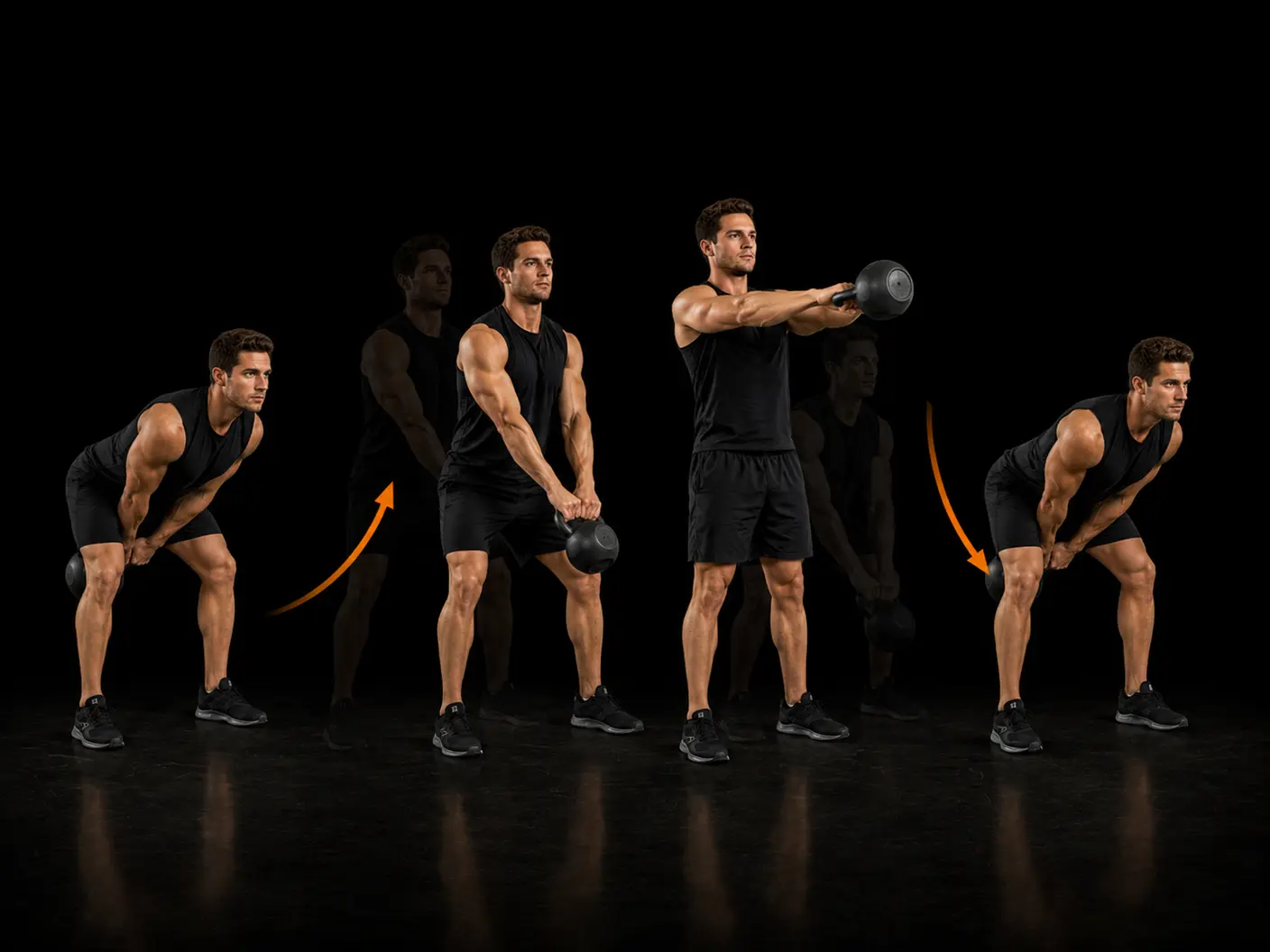
The two-handed kettlebell swing is a ballistic hip-hinge movement that trains explosive posterior-chain power using a single kettlebell. The bell is driven by the hips rather than the arms, making it a true expression of hip extension speed and loading. It suits intermediate trainees who have a sound hip-hinge pattern and are looking to develop athletic capacity, conditioning, or body composition.
How to do it
Place the kettlebell 12–18 inches in front of you. Hinge and grip the handle with both hands. Hike the bell back between the thighs — upper arms contact the ribs. Drive the hips forward explosively; the arms are ropes. The bell floats to chest height on hip power alone. Let gravity return the bell; catch it at the hips and re-hinge.
Coaching cues
- Hike pass
- Hips drive
- Arms are ropes
- Plank at the top
Why train it
- Develops explosive hip extension power by demanding a fast, forceful drive from the glutes and hamstrings on every rep.
- Trains the posterior chain — glutes, hamstrings, and erectors — under dynamic load, building strength and resilience through the back of the body.
- Delivers a high metabolic demand in a short working window, making it an efficient tool for fat loss and conditioning programmes.
- Reinforces the hip-hinge pattern under load and at speed, carrying over directly to athletic movements such as jumping, sprinting, and lifting from the floor.
Common mistakes
- Squatting the swing instead of hinging — keep the hips high at the start, push them back sharply, and let the knees follow rather than leading the descent.
- Lifting with the arms — the bell should float to chest height purely on hip drive; if the arms are pulling, reduce the load and focus on the explosive hip snap.
- Losing tension at the top — squeeze the glutes, brace the core, and stand tall into a standing plank position at the apex of every rep rather than allowing the lower back to hyperextend.
- Letting the bell drift too far from the body on the hike — keep the upper arms in contact with the ribs as the bell passes back between the thighs to maintain a short lever and protect the lower back.
Primary: Gluteus Maximus, Hamstrings.
Secondary: Erector Spinae, Latissimus Dorsi, Rectus Abdominis, Forearm Flexors.
Equipment
Good for
Easier variation
Kettlebell deadlift — teaches the hinge pattern without the ballistic demand.
Similar movements
Frequently asked
- What muscles does the two-handed kettlebell swing work?
- The primary muscles are the glutes (gluteus maximus) and hamstrings, which produce the explosive hip extension. The erectors, lats, core, and forearms work as secondary muscles to stabilise the spine and control the implement throughout the movement.
- How many sets and reps should I do for kettlebell swings?
- For power and athletic performance, work in sets of 5–10 reps with full recovery between sets so output stays high. For conditioning or fat loss, sets of 15–20 reps with shorter rest periods are common. Start conservatively with load and volume until technique is consistent.
- What weight kettlebell should I use?
- A common starting point for men is 16 kg and for women 12 kg, though individual strength and movement quality should guide the choice. If you cannot maintain a rigid torso and clean hinge pattern throughout the set, the load is too heavy.
- Is the kettlebell swing suitable for beginners?
- The movement is classified as intermediate because it requires a competent hip-hinge pattern before adding ballistic load. Beginners are better served by first building that pattern with Romanian deadlifts or deadlifts before progressing to swings.
- What exercises can I substitute if I do not have a kettlebell?
- A dumbbell hip hinge or Romanian deadlift trains similar muscles with the equipment available. Cable pull-throughs also replicate the hip-hinge loading pattern, though neither fully replicates the ballistic, cyclical nature of the swing.
Want this movement in a plan built for you?
Adaptiv programmes the right exercises for your goal, equipment and experience — then adapts them as you train.
Build my programme