Kas Glute Bridge
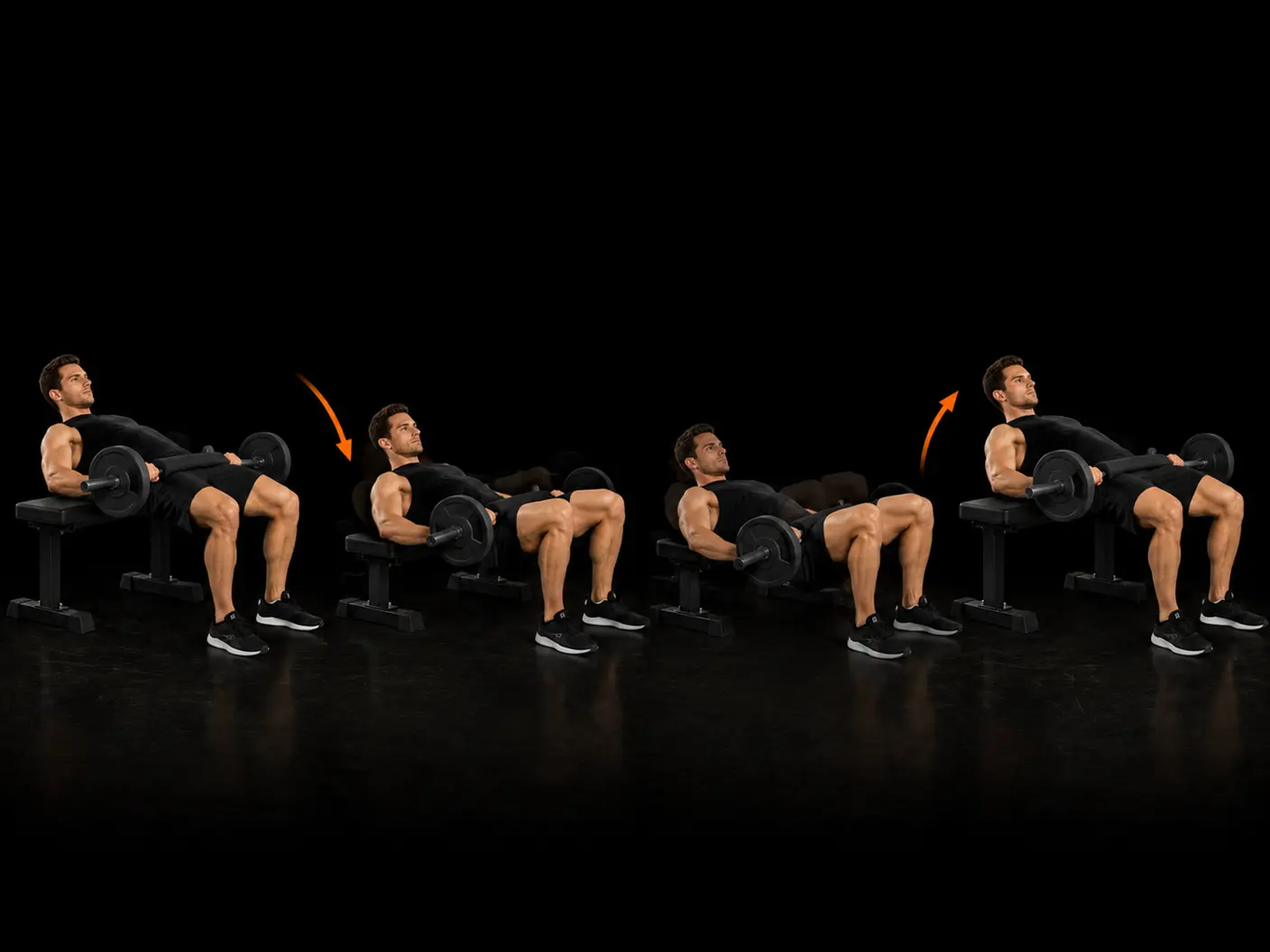
The Kas glute bridge is a barbell hinge variation performed from a bench-supported position, using a deliberately shortened range of motion concentrated at the top of the hip thrust pattern. By limiting the descent to only a few inches and remaining in the upper portion of the lift throughout, the movement keeps the glutes under near-constant tension rather than cycling through a full range. It suits intermediate trainees looking to maximise glute hypertrophy and who are already familiar with the conventional hip thrust setup.
How to do it
Set up as a hip thrust but use a shorter range of motion. Start with hips already elevated and torso supported by the bench. Lower the hips only slightly — inches — then drive back up, emphasising the top half of the lift and the glute squeeze.
Coaching cues
- Short ROM at the top
- Constant tension
- Squeeze every rep
- Ribs down
Why train it
- The reduced range of motion keeps the glutes loaded continuously throughout each set, avoiding the tension drop-off that occurs at the bottom of a standard hip thrust.
- The shortened arc places sustained mechanical stress on the glutes at the position where they are most active, making it an efficient choice for hypertrophy-focused programming.
- Because the torso remains supported by the bench throughout, the movement minimises compensatory lower-back involvement and keeps demand concentrated on the primary muscles.
- It pairs well with full-range hip thrusts as an accessory or finishing movement, allowing additional glute volume without significantly increasing systemic fatigue.
Common mistakes
- Dropping the hips too low — keep the descent to only a few inches rather than returning to the floor, preserving constant tension on the glutes throughout.
- Losing the glute squeeze at the top — actively contract the glutes at peak extension on every single repetition rather than simply locking out the hips passively.
- Allowing the ribs to flare — keep the ribcage down and the core braced so the lumbar spine stays neutral rather than hyperextending under the barbell.
- Using excessive load before mastering the shortened pattern — establish clean, controlled mechanics with a moderate weight before progressing, as the compressed range of motion offers less feedback than a full hip thrust.
Primary: Gluteus Maximus.
Secondary: Hamstrings.
Equipment
Good for
Easier variation
Standard hip thrust — full ROM version.
Similar movements
Frequently asked
- What muscles does the Kas glute bridge work?
- The primary muscle targeted is the glutes, with the hamstrings acting as secondary contributors. The shortened range of motion is specifically designed to keep demand concentrated on the glutes throughout the set.
- How many sets and reps should I do for the Kas glute bridge?
- For hypertrophy, three to four sets of ten to twenty repetitions works well, with a controlled tempo and a deliberate squeeze at the top of each rep. The movement is well suited to moderate-to-high rep ranges given its focus on sustained tension rather than maximal load.
- What is the difference between the Kas glute bridge and a standard hip thrust?
- The key distinction is range of motion — a hip thrust travels from near the floor up to full hip extension, while the Kas glute bridge begins with the hips already elevated and descends only a few inches. This eliminates the bottom portion of the lift and keeps the glutes under tension for the entire set.
- Can beginners use the Kas glute bridge?
- The movement is classified as intermediate, and it is advisable to first develop familiarity with the conventional barbell hip thrust before attempting it. A solid foundation in hip hinge mechanics and barbell positioning will make the shortened pattern easier to perform correctly.
- What equipment do I need for the Kas glute bridge?
- You need a barbell and a bench. The setup is identical to the hip thrust — upper back supported against the bench, barbell loaded across the hips — with the distinction being the restricted range of motion once you are in position.
Want this movement in a plan built for you?
Adaptiv programmes the right exercises for your goal, equipment and experience — then adapts them as you train.
Build my programme