Jump Rope
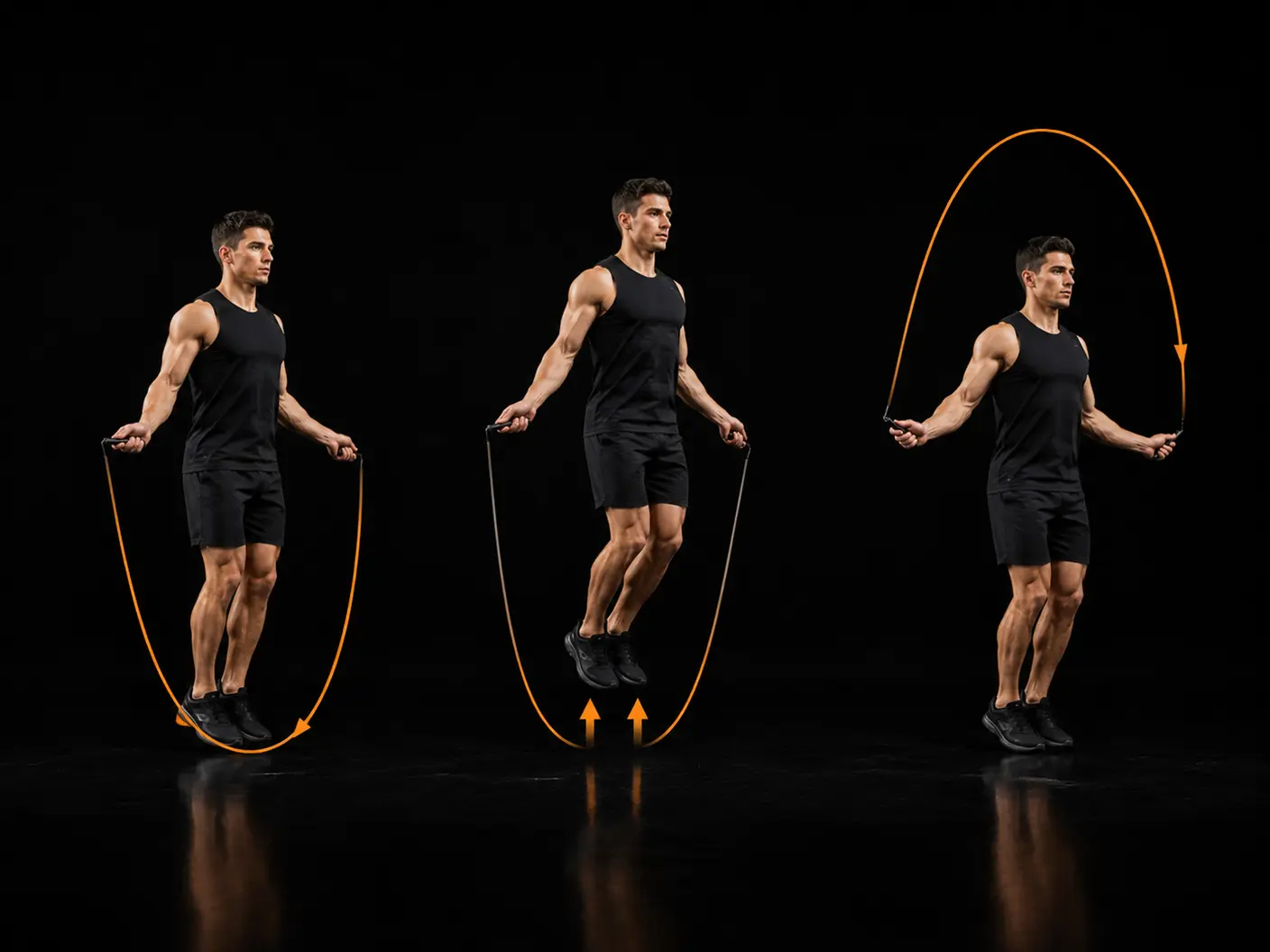
Jump rope is a foundational conditioning drill that trains rhythmic coordination, foot speed, and cardiovascular endurance using a single piece of portable equipment. The movement pattern centres on continuous, low-amplitude pogo hops with wrist-driven rope rotation, keeping the body upright and the joints stacked. It suits beginners establishing an aerobic base and more experienced athletes looking to maintain conditioning or sharpen footwork.
How to do it
Hold the rope handles at the sides. Flick the rope with the wrists — not the shoulders. Jump with small pogo hops, landing on the balls of the feet. Work in rounds of 30–60 seconds or by rep count.
Coaching cues
- Wrist drives the rope
- Small pogo hops
- Stay tall
- Relaxed shoulders
Why train it
- Develops cardiovascular fitness efficiently, making it a time-effective option when programming metabolic work into a session.
- The repeated calf and quad loading across high-rep rounds builds lower-leg resilience and improves foot-contact quality.
- Because the rope is portable and requires minimal space, it integrates easily into warm-ups, circuits, or standalone conditioning blocks.
- Coordinating wrist rotation with precise jump timing trains the kind of rhythmic motor control that carries over to broader athletic performance.
Common mistakes
- Driving the rope with the shoulders rather than the wrists — keep the upper arms close to the body and let the wrists do the work to reduce fatigue and maintain tempo.
- Jumping too high between rotations — aim for small pogo hops just enough to clear the rope, which preserves energy and keeps the rhythm consistent.
- Landing on the heels — stay on the balls of the feet throughout to absorb impact efficiently and maintain the elastic quality of each hop.
- Letting the shoulders creep up toward the ears — actively relax them down to reduce tension and allow the wrists to move freely.
Primary: Gastrocnemius, Quadriceps.
Secondary: Anterior Deltoid, Forearm Flexors, Cardiovascular System.
Equipment
Good for
Easier variation
Skip without the rope (boxer skipping in place) — learn the bounce.
Similar movements
Frequently asked
- What muscles does jump rope work?
- The primary muscles are the calves and quads, which absorb and produce force on every hop. The shoulders and forearms contribute to rope control, and sustained bouts place significant demand on the cardiovascular system.
- How should I structure jump rope in a training session?
- Work in rounds of 30–60 seconds with equal or slightly longer rest periods, or set a rep target and rest between sets. Beginners may find three to five rounds a practical starting point before progressing volume.
- Is jump rope suitable for fat loss?
- It is an effective tool within a fat loss programme because it elevates heart rate quickly and can accumulate meaningful conditioning volume in a short time. It works best when combined with a structured nutrition approach and progressive training plan.
- What are good alternatives if I don't have a rope?
- Low-amplitude pogo hops or skipping in place replicate much of the lower-leg and cardiovascular demand without equipment. High knees or shuttle runs are also broadly comparable conditioning options.
- How difficult is jump rope for a complete beginner?
- It is classed as a foundational movement, so the coordination demands are manageable, though some learners need a short practice period to synchronise the wrist rotation with the jump timing. Starting with slower, deliberate rotations and building pace gradually is the most effective approach.
Want this movement in a plan built for you?
Adaptiv programmes the right exercises for your goal, equipment and experience — then adapts them as you train.
Build my programme