Inchworm
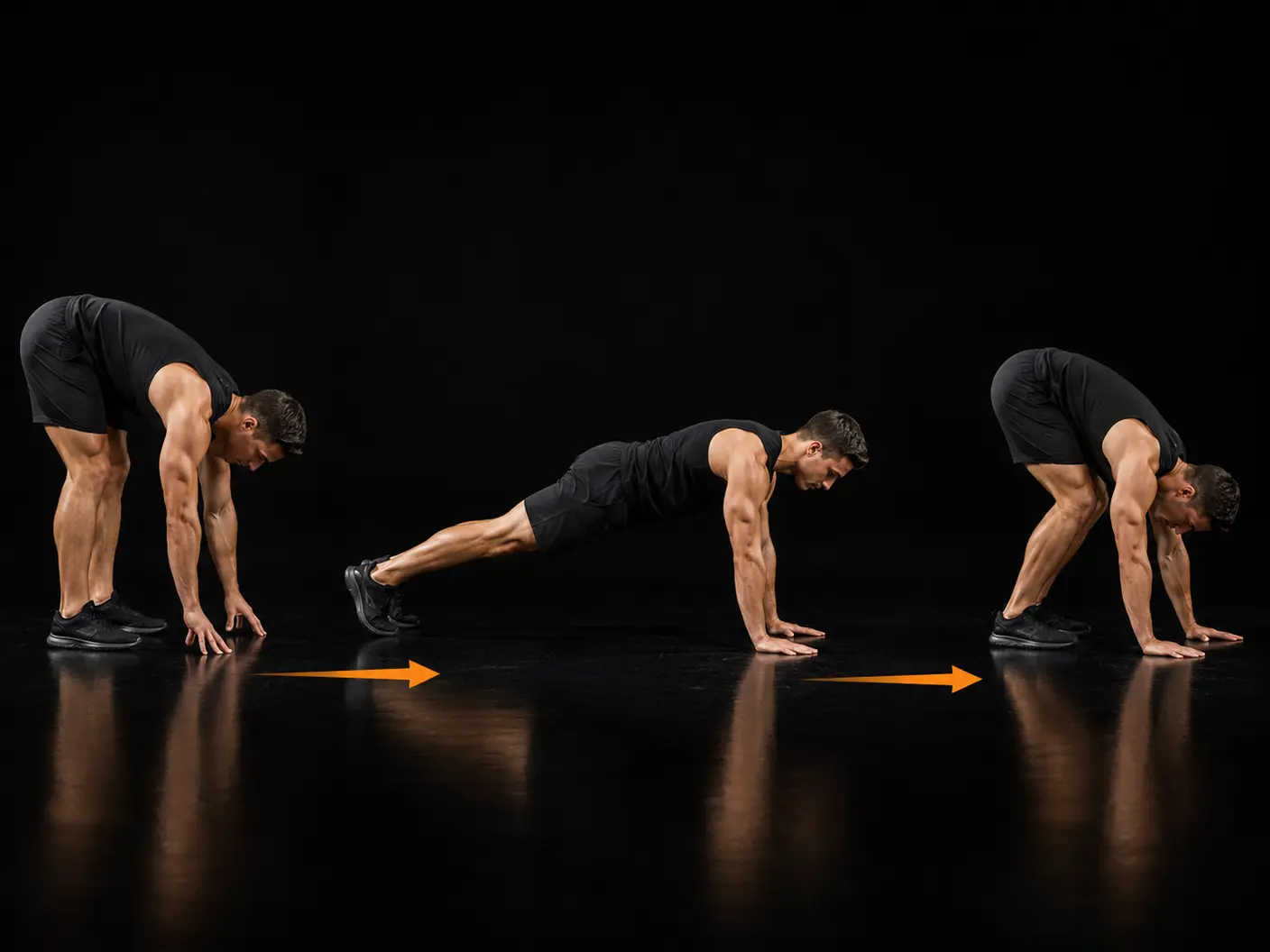
The inchworm is a bodyweight mobility drill that combines a hip hinge, a hamstring stretch, and a travelling plank into a single flowing movement. It trains the posterior chain through its full range whilst simultaneously challenging core stability and upper-body positioning. It suits a wide range of trainees, from those building a general fitness base to athletes using it as part of a structured warm-up.
How to do it
Stand tall, feet hip-width. Hinge at the hips, place the hands on the floor, and walk the hands out to a push-up position. Perform an optional push-up. Walk the hands back toward the feet by taking small steps with the feet, keeping the legs as straight as possible. Stand by hinging back up through the hips.
Coaching cues
- Legs straight throughout
- Walk slowly
- Hips high on the return
- Neutral spine
Why train it
- Walking the hands out to a plank position demands sustained core bracing, reinforcing midline stability under a lengthened load.
- The hip-hinge component provides a progressive hamstring stretch that improves posterior chain flexibility with repeated exposure.
- The optional push-up at the bottom integrates the deltoids and pectorals, making the movement a time-efficient warm-up tool that prepares the upper body alongside the lower.
- Because it requires no equipment and minimal space, it can be programmed reliably regardless of training environment.
Common mistakes
- Bending the knees during the floor walk — keep the legs as straight as your current hamstring flexibility allows to maintain the stretch stimulus throughout.
- Letting the hips sag as you reach the plank position — actively brace the core to hold a neutral spine and avoid loading the lower back passively.
- Rushing the tempo — walk the hands and feet slowly so each segment of the movement is controlled and the stretch is given time to develop.
- Rounding the upper back on the return walk — keep the chest open and the spine neutral as you step the feet toward the hands and hinge back to standing.
Primary: Hamstrings, Rectus Abdominis.
Secondary: Anterior Deltoid, Pectoralis Major, Gastrocnemius.
Equipment
Good for
Easier variation
Bent-knee inchworm — allow a soft bend in the knees to reduce hamstring tension.
Similar movements
Frequently asked
- What muscles does the inchworm work?
- The primary muscles are the hamstrings and core. The deltoids, pectorals, and calves are also engaged as secondary contributors, particularly during the plank hold and the hand-walk phases.
- How many sets and reps should I do?
- For a warm-up context, two to three sets of five to eight reps is a practical starting point. If you are using it as a standalone mobility drill within a session, focus on quality of movement over volume.
- Is the inchworm suitable for beginners?
- Yes — it is classified as a foundational movement, meaning it requires no prior loading experience. Those with limited hamstring flexibility should simply allow a soft bend in the knees initially and work toward straighter legs over time.
- What is a good alternative to the inchworm?
- If the inchworm is too demanding on hamstring flexibility, a standing toe-touch hold or a kneeling hip-flexor stretch addresses overlapping mobility goals. If you want to retain the travelling pattern, a bear crawl preserves the core and shoulder demands without the same posterior chain stretch requirement.
- Can the inchworm be used as a warm-up before lifting?
- It is well suited to that purpose. The movement progressively raises tissue temperature in the hamstrings and calves, establishes core engagement, and positions the shoulders for work — making it a functional preamble to lower-body or full-body training sessions.
Want this movement in a plan built for you?
Adaptiv programmes the right exercises for your goal, equipment and experience — then adapts them as you train.
Build my programme