High Pull
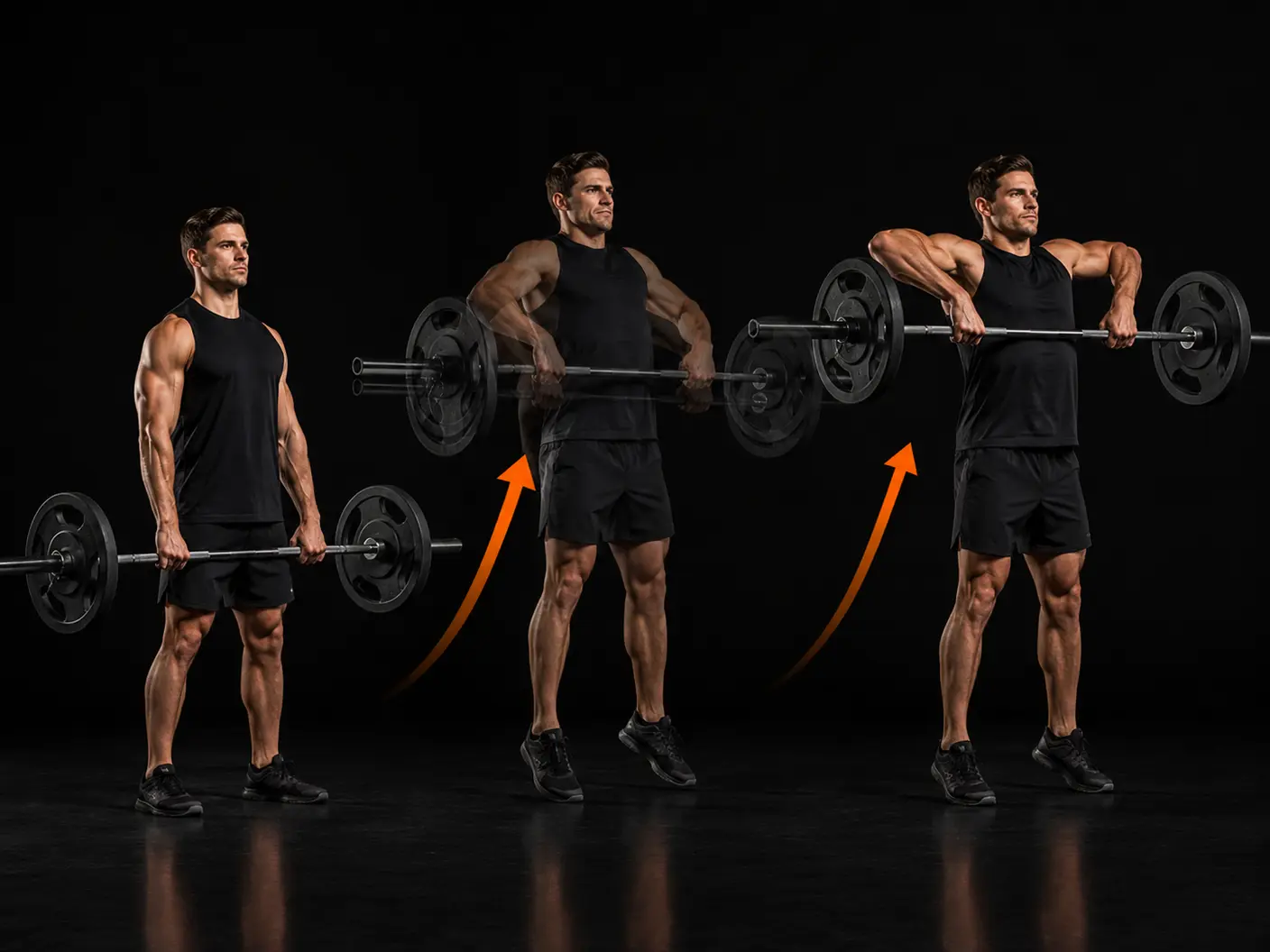
The high pull is a power-based compound movement that trains triple extension — simultaneous extension of the ankle, knee, and hip — followed by a powerful upper-body pull. It bridges the gap between slower strength lifts and fully technical Olympic movements, making it well suited to intermediate lifters building explosive capacity. It can be loaded with a barbell or kettlebell and performed from the floor or a hang position, offering useful flexibility in programme design.
How to do it
Set up as a clean or snatch grip. Execute triple extension; as the hips fire, pull the elbows high — higher than the hands. The bar rises to the chest or higher. Lower under control. Can be performed from the hang or floor.
Coaching cues
- Hips first
- Elbows high
- Bar close to the body
- No reverse curl
Why train it
- The high pull develops rate of force development through the hips, glutes, and hamstrings, making it a practical tool for athletes who need to express power quickly.
- Because it requires less technical overhead commitment than a full clean or snatch, it allows lifters to accumulate quality explosive repetitions without the learning curve of a catch phase.
- The movement trains the traps and shoulders under dynamic load, contributing to upper-body strength and pulling capacity that carries over to other compound lifts.
- Performing it from the hang position places repeated demand on the hamstrings and posterior chain through a controlled eccentric, reinforcing positional strength and body awareness.
Common mistakes
- Reverse curling the bar — initiate the pull by driving the elbows high first; the arms should follow the hip drive, not lead the movement.
- Letting the bar drift away from the body — keep the bar in close contact with the thighs throughout the pull to maintain efficient force transfer and bar path.
- Pulling with the arms before achieving full hip extension — allow the hips to fire completely before the upper-body pull begins, otherwise you sacrifice the primary power source.
- Dropping the load without control on the descent — lower the bar under control back to the hang or floor position to reinforce good positioning and protect the lower back.
Primary: Trapezius, Posterior Deltoid, Anterior Deltoid, Gluteus Maximus, Hamstrings.
Secondary: Quadriceps, Biceps Brachii, Forearm Flexors.
Equipment
Good for
Easier variation
Upright row — similar target, no explosive component.
Similar movements
Frequently asked
- What muscles does the high pull work?
- The primary muscles are the traps, shoulders, glutes, and hamstrings, which drive the explosive extension and upper pull. The quads, biceps, and forearms contribute as secondary movers during the pull and throughout the movement.
- How many sets and reps should I do for the high pull?
- For power development, three to five sets of three to six repetitions is a common and effective range, keeping load moderate to heavy and prioritising bar speed. Rest periods of two to three minutes between sets allow sufficient recovery to maintain quality.
- What is the difference between a high pull and a clean?
- The high pull omits the catch phase entirely, so there is no receiving position to learn or master. This makes it more accessible for developing explosive hip drive and upper-body pulling mechanics without the full technical demands of the clean.
- Can the high pull be used for strength or only for power?
- While it is primarily programmed for athletic performance and power, the high pull also contributes to upper-back and trap strength when loaded appropriately. It is best viewed as a power-dominant movement that carries secondary strength benefits rather than a primary hypertrophy or maximal strength lift.
- Is a barbell or kettlebell better for the high pull?
- Both are effective tools and the choice depends on individual context. A barbell allows for precise load increments and is well suited to athletes comfortable with conventional pulling positions, while a kettlebell offers a slightly different grip and path that some lifters find easier to manage when learning the movement.
Want this movement in a plan built for you?
Adaptiv programmes the right exercises for your goal, equipment and experience — then adapts them as you train.
Build my programme