High-Incline Rear Delt Row
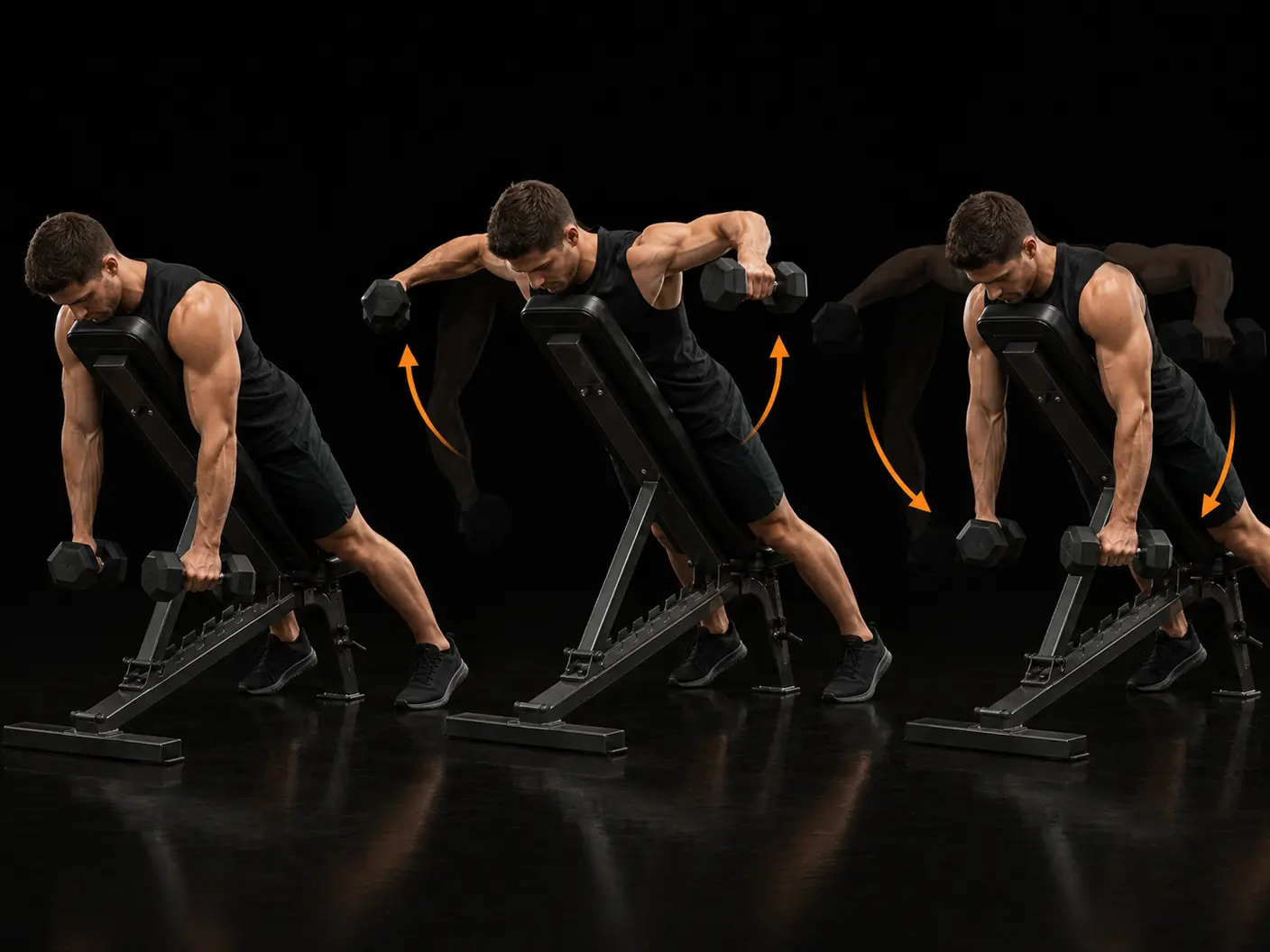
The high-incline rear delt row is a dumbbell pulling movement performed chest-down on a bench set to approximately 60 degrees, isolating the posterior deltoid and middle trapezius by directing the elbows high and wide rather than tucking them toward the torso. The incline position fixes the torso, removing momentum and forcing the upper back musculature to do the work through a clean range of motion. It suits intermediate lifters looking to develop rear deltoid thickness and upper back width without the postural compensation that often creeps into standing or seated variations.
How to do it
Set a bench to 60°. Chest on the pad, feet braced. Dumbbells hang with arms straight. Row high — pull the dumbbells toward the upper chest / collarbones with elbows flaring wide. Pause at peak. Lower under control.
Coaching cues
- Row high and wide
- Elbows flare
- Chest pinned
- Squeeze the upper back
Why train it
- The chest-supported position eliminates torso sway, ensuring the posterior deltoid and middle trapezius receive consistent mechanical tension across every rep.
- Rowing high toward the collarbones with flared elbows places the rear delts in a mechanically advantageous line of pull, making this one of the more direct loading options for that muscle.
- The rhomboids and biceps contribute as synergists, meaning the movement builds meaningful upper back cohesion rather than targeting a single muscle in isolation.
- Programming this exercise for hypertrophy responds well to moderate-to-high rep ranges, making it an efficient volume tool within an upper body pulling day.
Common mistakes
- Letting the elbows drop toward the ribs — keep them flaring wide throughout the pull so the load stays on the rear delts rather than shifting to the lats.
- Lifting the chest off the pad to generate momentum — pin the chest to the bench for the entire set and let the shoulder girdle do the work.
- Cutting the range of motion short — row until the dumbbells reach the level of the upper chest or collarbones, pausing briefly at the top to confirm full contraction.
- Using too much load and losing control on the descent — the eccentric phase should be deliberate and governed, not dropped, to maximise time under tension in the target muscles.
Primary: Posterior Deltoid, Trapezius.
Secondary: Rhomboids, Biceps Brachii.
Equipment
Good for
Easier variation
Face pull — similar high-pull pattern, less strict form.
Similar movements
Frequently asked
- What muscles does the high-incline rear delt row work?
- The primary muscles are the posterior deltoid and middle trapezius. The rhomboids and biceps act as secondary contributors throughout the pull.
- What rep and set range should I use for this exercise?
- For hypertrophy, three to four sets of ten to fifteen reps works well. Prioritise controlled tempo and a genuine pause at the top over chasing heavier loads.
- How is this different from a standard bent-over dumbbell row?
- The incline bench fixes your torso at a steep angle and removes the option of using leg drive or back extension to assist the lift, which keeps tension directed at the rear delts and upper traps rather than the lats and mid-back.
- Where does this exercise fit in a training session?
- It works well as an accessory movement after compound pulls such as rows or pull-ups, or as a dedicated rear delt exercise within an upper body or push-pull day.
- Can beginners perform the high-incline rear delt row?
- The movement is classed as intermediate because the coordination required to flare the elbows correctly while maintaining chest contact takes some practise. Beginners would benefit from establishing basic pulling mechanics first, though the exercise is accessible once those foundations are in place.
Want this movement in a plan built for you?
Adaptiv programmes the right exercises for your goal, equipment and experience — then adapts them as you train.
Build my programme