Dumbbell Sumo Squat
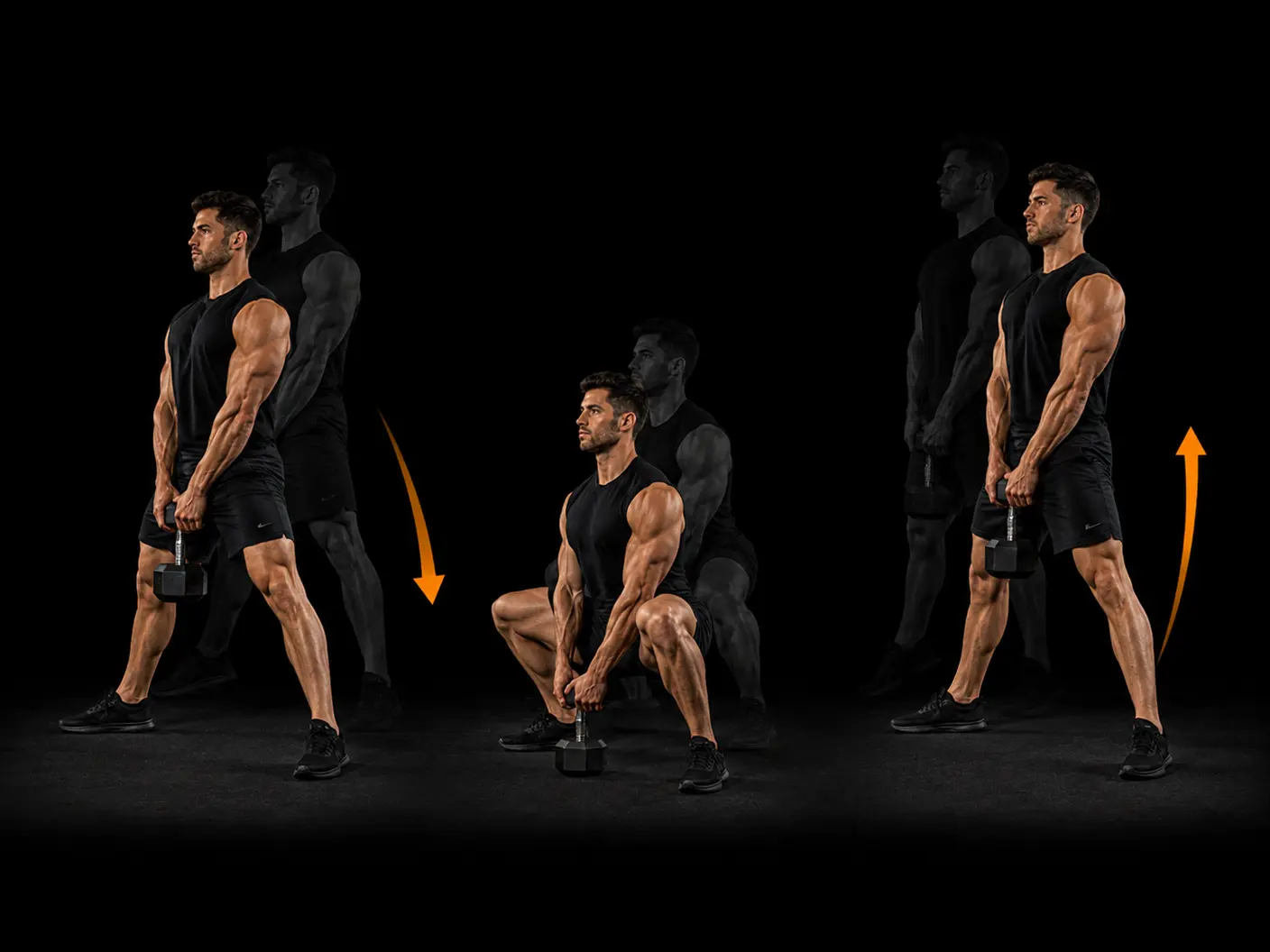
The dumbbell sumo squat is a wide-stance squat variation that places particular emphasis on the adductors and gluteus maximus alongside the quadriceps. The flared toe position and broader base distinguish it from a conventional squat, shifting demand toward the inner thigh and hip musculature in a way that a narrower stance does not replicate. It suits beginners learning squat mechanics as well as more experienced trainees looking to add volume to the glutes and adductors without loading a barbell.
How to do it
Stand with feet wider than shoulder-width and toes turned out to approximately 45°. Hold one or two dumbbells vertically in front of the body, arms hanging naturally. Brace the core. Descend by pushing the knees out over the toes, keeping the torso upright. Lower until the thighs are at least parallel to the floor. Drive through mid-foot to stand.
Coaching cues
- Knees out over toes
- Chest tall
- Wide stance
- Full depth
Why train it
- The wide stance and externally rotated hip position increase adductor and gluteus maximus recruitment, making it an efficient choice for lower-body hypertrophy work.
- Holding the dumbbell in front of the body acts as a counterbalance, which helps less experienced lifters maintain an upright torso and reach full depth more easily.
- As a foundational compound movement, it trains multiple lower-body muscle groups simultaneously, giving it strong return on investment within a time-limited programme.
- The relatively low technical demand makes it straightforward to load progressively over time, supporting consistent strength and muscle development across general fitness and hypertrophy goals.
Common mistakes
- Allowing the knees to collapse inward — actively drive them out in line with the toes throughout the entire descent and ascent.
- Leaning the torso excessively forward — keep the chest tall and brace the core before initiating the descent to maintain an upright position.
- Using a stance that is too narrow — set the feet noticeably wider than shoulder-width with toes turned out to approximately 45° so the correct muscles are loaded.
- Failing to reach parallel depth — control the descent and aim for thighs at least parallel to the floor, as cutting the range short reduces stimulus to the glutes and adductors.
Primary: Gluteus Maximus, Adductors, Quadriceps.
Secondary: Hamstrings, Rectus Abdominis, Gastrocnemius.
Equipment
Good for
Easier variation
Bodyweight sumo squat — same stance without load.
Similar movements
Frequently asked
- What muscles does the dumbbell sumo squat work?
- The primary muscles are the gluteus maximus, adductors, and quadriceps. The hamstrings, calves, and core contribute as secondary stabilisers throughout the movement.
- How many sets and reps should I do for the dumbbell sumo squat?
- For general fitness, three to four sets of ten to fifteen reps works well. If hypertrophy is the goal, training in the eight to twelve rep range with a weight that challenges the final few repetitions is a sound approach.
- What is the difference between a dumbbell sumo squat and a goblet squat?
- Both use a similar upright torso and forward-held load, but the sumo squat uses a wider stance with toes turned out further, placing greater demand on the adductors and inner glutes. A goblet squat typically uses a narrower, more conventional stance.
- Is the dumbbell sumo squat suitable for beginners?
- Yes — the dumbbell held in front acts as a counterbalance that makes it easier to stay upright and hit depth, which is why it is classified as a foundational movement. It is a practical starting point for learning lower-body mechanics before progressing to barbell variations.
- What are good alternatives to the dumbbell sumo squat?
- The goblet squat trains a similar pattern with a more conventional stance, while a barbell sumo squat replicates the wide-stance mechanics at higher loads. A dumbbell Romanian deadlift targets the posterior chain in a complementary way if the goal is to balance quad-dominant work.
Want this movement in a plan built for you?
Adaptiv programmes the right exercises for your goal, equipment and experience — then adapts them as you train.
Build my programme