Cable Sumo Squat
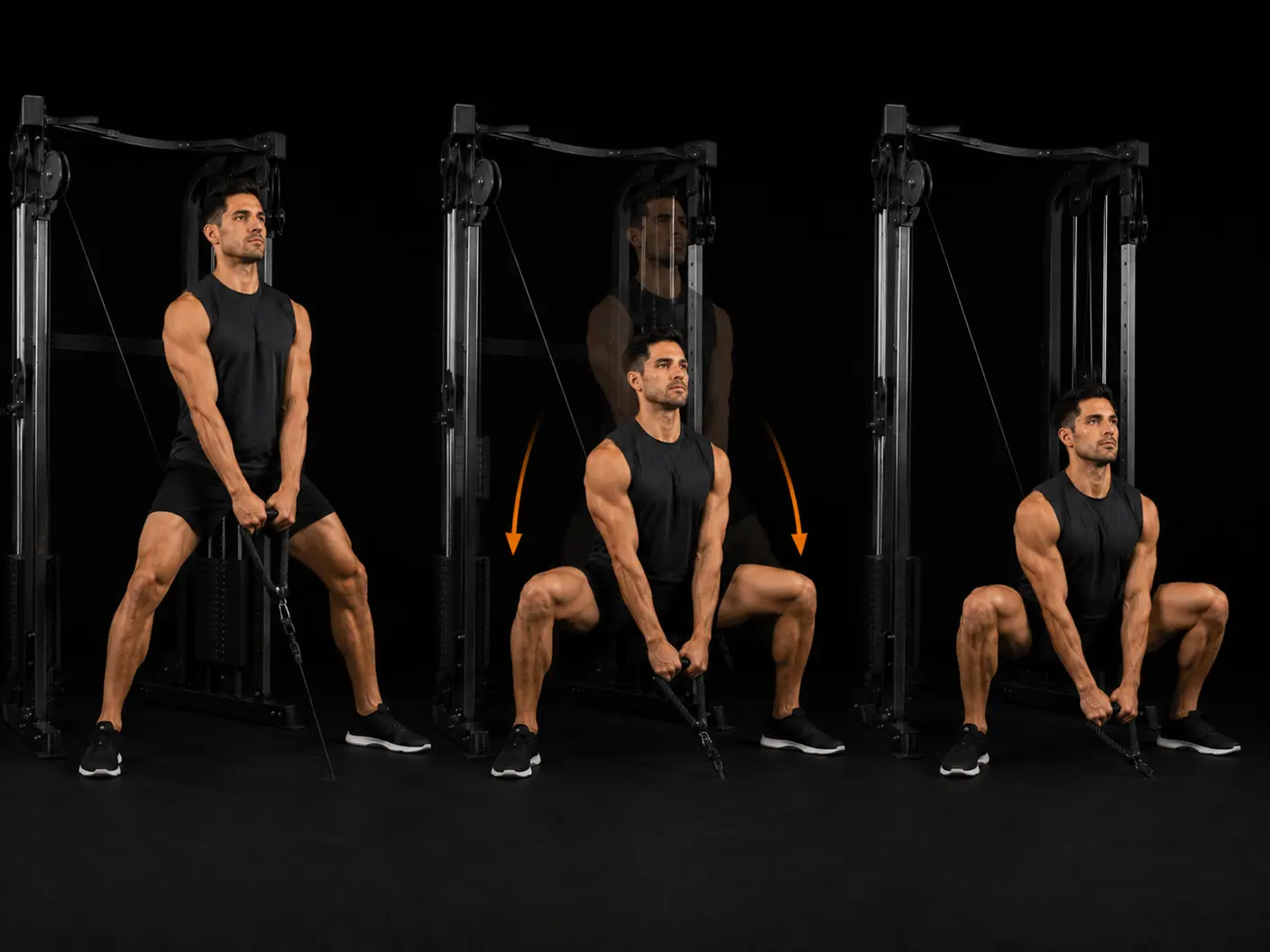
The cable sumo squat is a compound lower-body movement performed with a wide stance and externally rotated feet, loading the squat pattern through a low cable attachment held between the legs. The positioning places greater demand on the adductors and glutes compared with a conventional squat stance, while the cable's constant tension encourages an upright torso throughout the range of motion. It suits beginners establishing squat mechanics as well as those training for hypertrophy who want direct adductor and glute stimulus.
How to do it
Set a low cable with a rope attachment. Stand facing the stack with feet wide (sumo stance), toes pointed out. Grip the rope between the legs. Brace the core and descend into a sumo squat, keeping the chest tall and knees tracking over the toes. Drive through the whole foot to stand, bringing the rope up as you extend.
Coaching cues
- Wide stance
- Knees out
- Chest tall
- Drive through the floor
Why train it
- The wide stance directly loads the adductors alongside the glutes and quadriceps, making it a practical choice for lifters who want more inner-thigh development without adding isolation work.
- Cable tension remains consistent through the entire range of motion, which increases time under tension at the top of the lift where a barbell or dumbbell movement would otherwise unload.
- The upright torso demanded by the movement pattern transfers well to general movement quality, reinforcing the ability to squat tall and control the knee position under load.
- As a foundational movement on the cable machine, it requires minimal load to be effective, making it accessible for beginners and useful as a higher-rep accessory for more experienced lifters.
Common mistakes
- Allowing the knees to collapse inward — actively push the knees out in line with the toes throughout the descent and drive phase.
- Rounding the lower back at the bottom of the squat — brace the core before descending and keep the chest tall to maintain a neutral spine.
- Rising onto the toes as you stand — keep the whole foot in contact with the floor and drive evenly through the heel and ball of the foot.
- Gripping the rope with tension in the arms rather than using it as a guide — the arms should remain relatively relaxed, with the legs and hips doing the work.
Primary: Adductors, Gluteus Maximus, Quadriceps.
Secondary: Hamstrings, Rectus Abdominis.
Equipment
Good for
Easier variation
Dumbbell sumo squat — same stance with free weight at the centre.
Similar movements
Frequently asked
- What muscles does the cable sumo squat work?
- The primary muscles are the adductors, glutes, and quadriceps. The hamstrings and core work as secondary contributors, with the core in particular active throughout to maintain the upright torso position.
- How many sets and reps should I do for the cable sumo squat?
- For general fitness, three to four sets of ten to fifteen reps works well. For hypertrophy, consider three to four sets of eight to twelve reps with a load that makes the final two reps challenging while keeping form clean.
- What is the difference between a cable sumo squat and a regular cable squat?
- The sumo stance places the feet wider apart with toes turned out, which shifts more emphasis onto the adductors and glutes relative to a narrower conventional stance. The movement pattern is otherwise similar, with the same requirement for an upright chest and controlled descent.
- Can I do the cable sumo squat if I have limited hip mobility?
- A wide sumo stance requires reasonable hip external rotation, so if you find it difficult to track your knees over your toes at a wide stance, start with a more moderate foot width and work within your current range. If you have specific concerns about hip mobility or pain, consult a qualified professional before progressing.
- What are good alternatives to the cable sumo squat?
- The dumbbell sumo squat and barbell sumo squat train the same pattern and stance. If the goal is adductor loading specifically, cable pull-throughs or dumbbell goblet squats with a moderate stance are reasonable substitutes depending on equipment availability.
Want this movement in a plan built for you?
Adaptiv programmes the right exercises for your goal, equipment and experience — then adapts them as you train.
Build my programme