Dumbbell Step-Up with Knee Drive
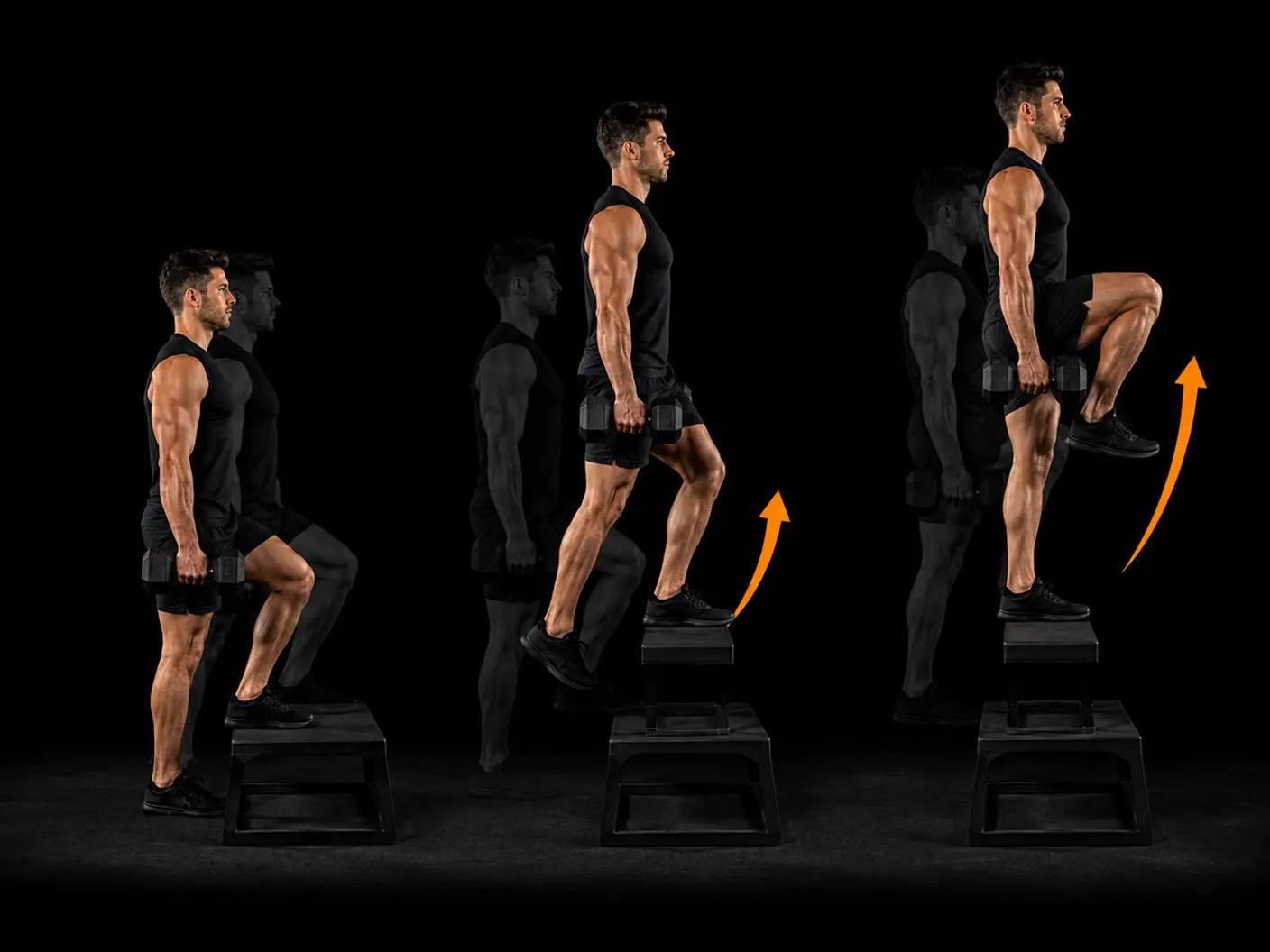
The dumbbell step-up with knee drive is a unilateral lower-body compound movement that combines a loaded step-up with an explosive knee drive at the top of the rep. It trains single-leg force production, balance, and hip extension under load — qualities central to athletic performance and functional strength. It suits intermediate lifters looking to address leg symmetry, build the quadriceps and gluteus maximus, or carry over strength to sport and daily movement.
How to do it
Hold dumbbells at the sides. Place one foot flat on a box or bench. Drive through the top heel to stand up onto the box, and as you reach the top, explosively drive the opposite knee up to hip height. Hold the balance briefly at the top, then lower the foot back to the floor under control.
Coaching cues
- Drive through the top foot
- Knee drives to hip
- Tall torso
- Control the descent
Why train it
- Training each leg independently reduces the compensation patterns that bilateral exercises can mask, making it a reliable tool for correcting strength imbalances between limbs.
- The combination of hip extension during the step and hip flexion at the knee drive trains the lower body through a large functional range of motion, supporting both hypertrophy and athletic carryover.
- Holding dumbbells at the sides while balancing on one leg places meaningful demand on the core and stabilising musculature, reinforcing upright posture under load.
- The controlled descent back to the floor develops eccentric strength in the quadriceps and hamstrings, which is directly relevant to deceleration and change-of-direction tasks.
Common mistakes
- Pushing off the rear foot to initiate the step — place all drive through the heel of the working foot on the box to keep the target muscles loaded throughout.
- Letting the torso lean excessively forward — maintain a tall spine throughout the movement, as forward collapse shifts demand away from the glutes and reduces balance.
- Allowing the standing knee to drift inward at the top — keep the knee tracking in line with the toes to maintain joint integrity and full glute activation.
- Dropping the trailing foot back to the floor without control — lower it slowly and deliberately, as the eccentric phase is a key part of the stimulus and rushed descents increase the risk of losing balance.
Primary: Quadriceps, Gluteus Maximus.
Secondary: Hamstrings, Hip Flexors, Rectus Abdominis.
Equipment
Good for
Easier variation
Standard dumbbell step-up — omit the knee drive until single-leg strength is established.
Similar movements
Frequently asked
- What muscles does the dumbbell step-up with knee drive work?
- The primary muscles are the quadriceps and gluteus maximus, which drive the step and extend the hip at the top of the movement. The hamstrings, hip flexors, and core contribute as secondary stabilisers throughout the rep.
- How many sets and reps should I do?
- For hypertrophy, 3–4 sets of 8–12 reps per leg works well. For athletic performance and power development, 3–4 sets of 5–8 reps with a focus on the explosiveness of the knee drive is more appropriate. Allow full recovery between legs before switching.
- How high should the box or bench be?
- A box that brings the working knee to approximately 90 degrees when the foot is placed flat is a reliable starting point. A higher surface increases the range of motion and demand on the glutes, while a lower surface reduces both — choose based on your current mobility and strength level.
- Is this exercise suitable for building leg size?
- Yes, it is a practical hypertrophy option for the quadriceps and gluteus maximus when programmed with sufficient volume and load. Because it is unilateral, it tends to require lower absolute weight than bilateral movements, so pairing it with compound lifts like squats or Romanian deadlifts will give the most complete stimulus for size.
- What are good alternatives if I do not have a box or dumbbells?
- Barbell step-ups on a bench are a direct alternative if a box is available but dumbbells are not. If neither box nor bench is accessible, Bulgarian split squats with dumbbells train a comparable unilateral lunge pattern with a similar emphasis on the quadriceps and glutes.
Want this movement in a plan built for you?
Adaptiv programmes the right exercises for your goal, equipment and experience — then adapts them as you train.
Build my programme