Dumbbell Snatch
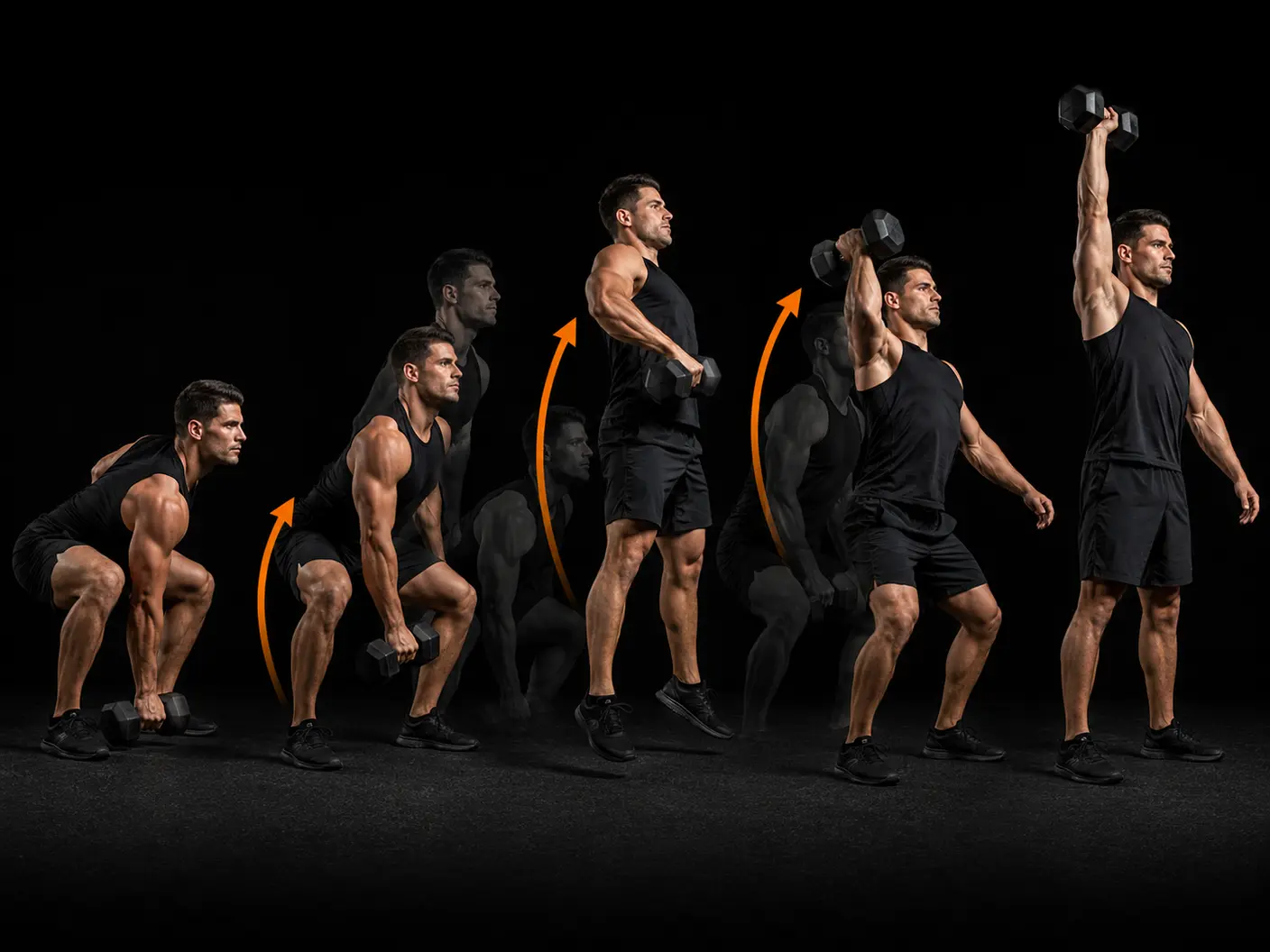
The dumbbell snatch is a single-arm ballistic movement that trains the full-body power pattern — linking a hip hinge and explosive extension through to an overhead lockout in one continuous sequence. It develops coordinated strength across the posterior chain, shoulders, and trunk, making it a practical alternative to barbell Olympic lifting for athletes and general population trainees alike. The unilateral nature of the movement also exposes and addresses side-to-side asymmetries that bilateral lifts can mask.
How to do it
Set a dumbbell between the feet. Hinge and grip with one hand. Explosively extend the hips; shrug and pull the dumbbell up close to the body. As the dumbbell passes shoulder height, punch the arm overhead — the dumbbell ends locked out over the shoulder. Lower and repeat.
Coaching cues
- Close to the body
- Hips drive
- Punch overhead
- Soft catch
Why train it
- It develops explosive hip extension, a quality that underpins sprinting, jumping, and change-of-direction performance in almost every sport.
- The full-body demand — from glutes and hamstrings through to the traps, lats, and shoulder — makes it an efficient stimulus for caloric expenditure when programmed at moderate to high intensity.
- Training one side at a time challenges the core to resist rotation under load, building anti-rotational stability that carries over to everyday and athletic movement.
- The dumbbell format requires less technical investment than a barbell snatch, lowering the barrier to entry while still delivering a meaningful power stimulus.
Common mistakes
- Letting the dumbbell drift away from the body on the pull — keep it travelling close to the torso throughout so the hip drive transfers efficiently into upward momentum.
- Pulling with the arm instead of driving with the hips — initiate every rep with a sharp hip extension and let the arm follow; the upper body should guide the dumbbell, not muscle it up.
- Catching the dumbbell with a bent, unstable elbow — punch the arm to full lockout overhead and absorb the catch with a soft, controlled finish rather than a hard stop.
- Rounding the lower back at the start position — set a neutral spine before the lift begins, bracing the core as you hinge so the posterior chain loads properly from the outset.
Primary: Gluteus Maximus, Hamstrings, Quadriceps, Trapezius.
Secondary: Rectus Abdominis, Latissimus Dorsi, Anterior Deltoid.
Equipment
Good for
Easier variation
Kettlebell snatch — similar pattern with a different tool.
Similar movements
Frequently asked
- What muscles does the dumbbell snatch work?
- The primary muscles are the glutes, hamstrings, quads, and shoulders, with the core, traps, and lats contributing as secondary movers. Because the lift is explosive and links the lower and upper body in a single movement, the overall muscle recruitment is high relative to most single-implement exercises.
- How many sets and reps should I do for the dumbbell snatch?
- For athletic performance and power development, three to five sets of three to six reps per arm at high intent work well — power qualities respond better to lower rep ranges with full recovery between sets. For fat loss or general fitness circuits, sets of eight to ten reps with shorter rest periods are a common approach, though you should reduce load if bar speed drops noticeably.
- Is the dumbbell snatch suitable for beginners?
- The movement is rated intermediate because it requires you to coordinate a hip hinge, a shrug, and an overhead lockout under a degree of speed — patterns that take some prior exposure to load correctly. Beginners would benefit from building a solid hip hinge and overhead pressing foundation first before adding the ballistic element.
- What are good alternatives to the dumbbell snatch?
- The kettlebell swing trains a similar explosive hip extension pattern and is generally easier to learn as an entry point. The dumbbell clean removes the overhead component if shoulder mobility or stability is a limiting factor. Both movements share the same primary muscle group demand.
- Can I use the dumbbell snatch for fat loss?
- Yes — its full-body compound nature and high metabolic demand make it a useful tool in fat loss programmes when programmed alongside appropriate nutrition. It features in the primary goals for fat loss precisely because large-muscle, multi-joint explosive work tends to produce a greater energy expenditure than isolated movements.
Want this movement in a plan built for you?
Adaptiv programmes the right exercises for your goal, equipment and experience — then adapts them as you train.
Build my programme