Dumbbell Good Morning
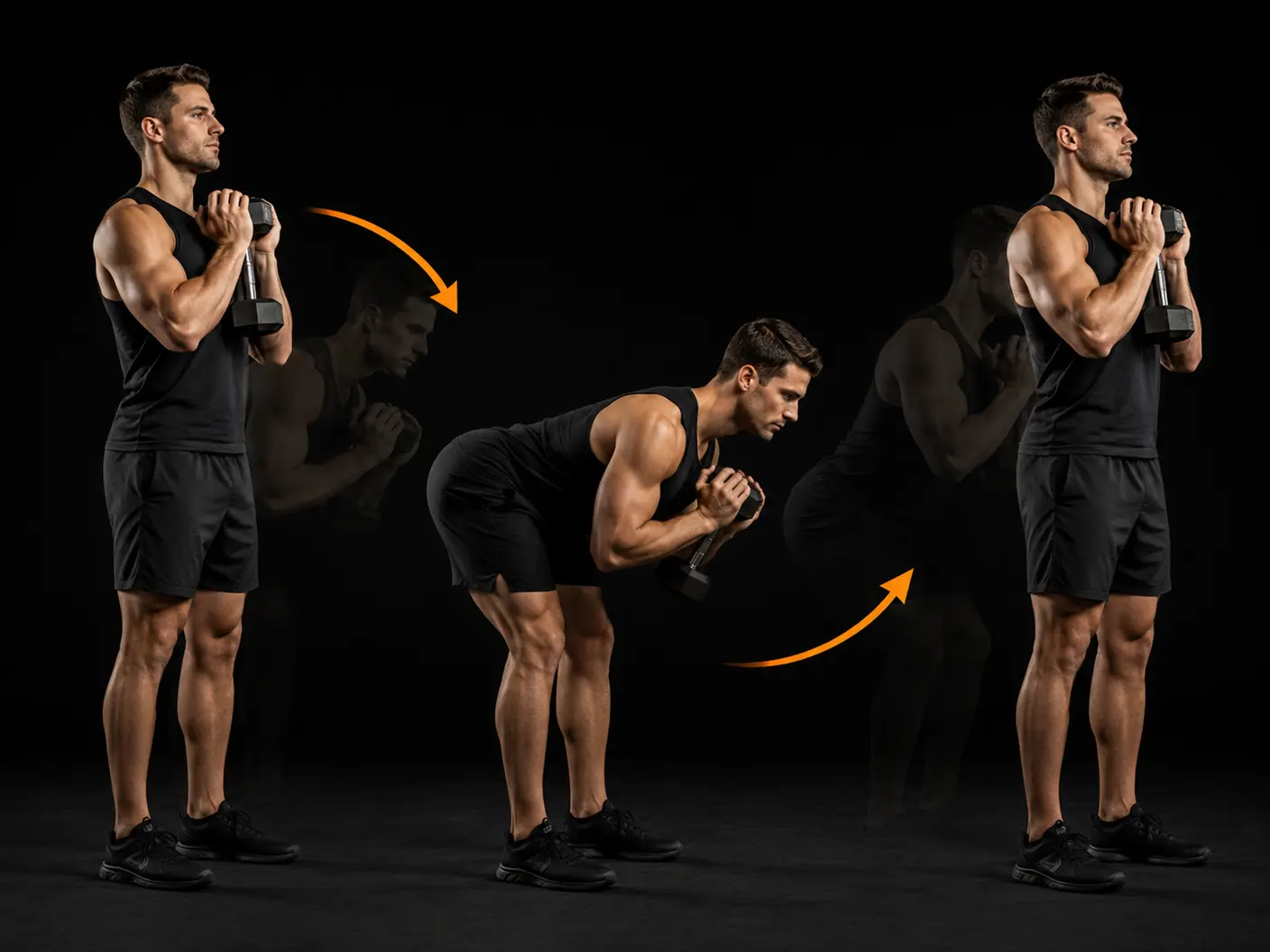
The dumbbell good morning is a hip-hinge movement that trains the posterior chain by loading the hamstrings and erector spinae through a controlled forward lean of the torso. Holding a dumbbell at the chest, in a goblet position, or clasped behind the head, the lifter pushes the hips back until the torso approaches parallel with the floor before driving back to standing. It suits intermediate trainees looking to develop hamstring length and strength, reinforce a safe hinge pattern, or carry posterior-chain work into athletic performance.
How to do it
Hold a dumbbell or dumbbells at the chest, goblet position, or clasped behind the head. Stand with feet shoulder-width and a slight knee bend. Hinge forward at the hips, pushing the hips back and lowering the torso toward parallel with the floor while keeping the back flat. Feel the hamstring stretch at the bottom, then drive the hips forward to return to standing.
Coaching cues
- Hips back
- Long spine
- Slight knee bend
- Drive hips to return
Why train it
- It directly loads the hamstrings under a lengthening position, making it an effective choice for building both strength and flexibility along the back of the legs.
- The movement reinforces a neutral-spine hinge pattern, which transfers to deadlifts, Romanian deadlifts, and athletic movements that require safe hip loading.
- As a compound exercise, it simultaneously trains the erector spinae, gluteus maximus, and core, making it efficient for general fitness programming.
- The dumbbell load is modest and adjustable, allowing the exercise to sit usefully within warm-up, accessory, or conditioning blocks without requiring a barbell or rack.
Common mistakes
- Rounding the lower back — brace the core before the hinge begins and think 'long spine' throughout, keeping the natural lumbar curve intact.
- Letting the knees drift forward as the torso descends — keep only a slight, fixed knee bend and push the hips back rather than squatting down.
- Hinging too shallowly to avoid hamstring tension — work towards the point where a genuine stretch is felt in the hamstrings, as this range is where the training stimulus occurs.
- Jerking upright on the return — drive the hips forward in a controlled manner rather than hyperextending or snapping through the top of the movement.
Primary: Hamstrings, Erector Spinae.
Secondary: Gluteus Maximus, Rectus Abdominis.
Equipment
Good for
Easier variation
Bodyweight good morning — practise the hinge pattern without load.
Similar movements
Frequently asked
- What muscles does the dumbbell good morning work?
- The primary muscles trained are the hamstrings and erector spinae, which work eccentrically to control the descent and concentrically to drive the return. The gluteus maximus and core are engaged as secondary contributors throughout the movement.
- How many sets and reps should I do for the dumbbell good morning?
- For strength development, 3–4 sets of 6–10 reps works well with a load that still allows a flat back and full range. For general fitness or as an accessory movement, 3 sets of 10–15 reps at a lighter load is a practical starting point.
- What is the difference between a dumbbell good morning and a Romanian deadlift?
- Both are hip-hinge patterns that load the hamstrings, but the good morning holds the load at or above the torso rather than in the hands below the hips. This shifts the moment arm and places more demand on the erector spinae to control the forward lean.
- Is the dumbbell good morning suitable for beginners?
- It is classed as an intermediate movement because maintaining a neutral spine under load during a hinge requires body awareness that beginners are still developing. Those new to hinging are generally better served learning the pattern with bodyweight or a light Romanian deadlift first.
- Can the dumbbell good morning help with athletic performance?
- Yes — the exercise trains the posterior chain in a position relevant to running, jumping, and change-of-direction mechanics, where the hip extensors must produce force from a flexed-hip position. It is a useful accessory lift for athletes who require hamstring strength and hip-hinge proficiency.
Want this movement in a plan built for you?
Adaptiv programmes the right exercises for your goal, equipment and experience — then adapts them as you train.
Build my programme