Barbell Good Morning
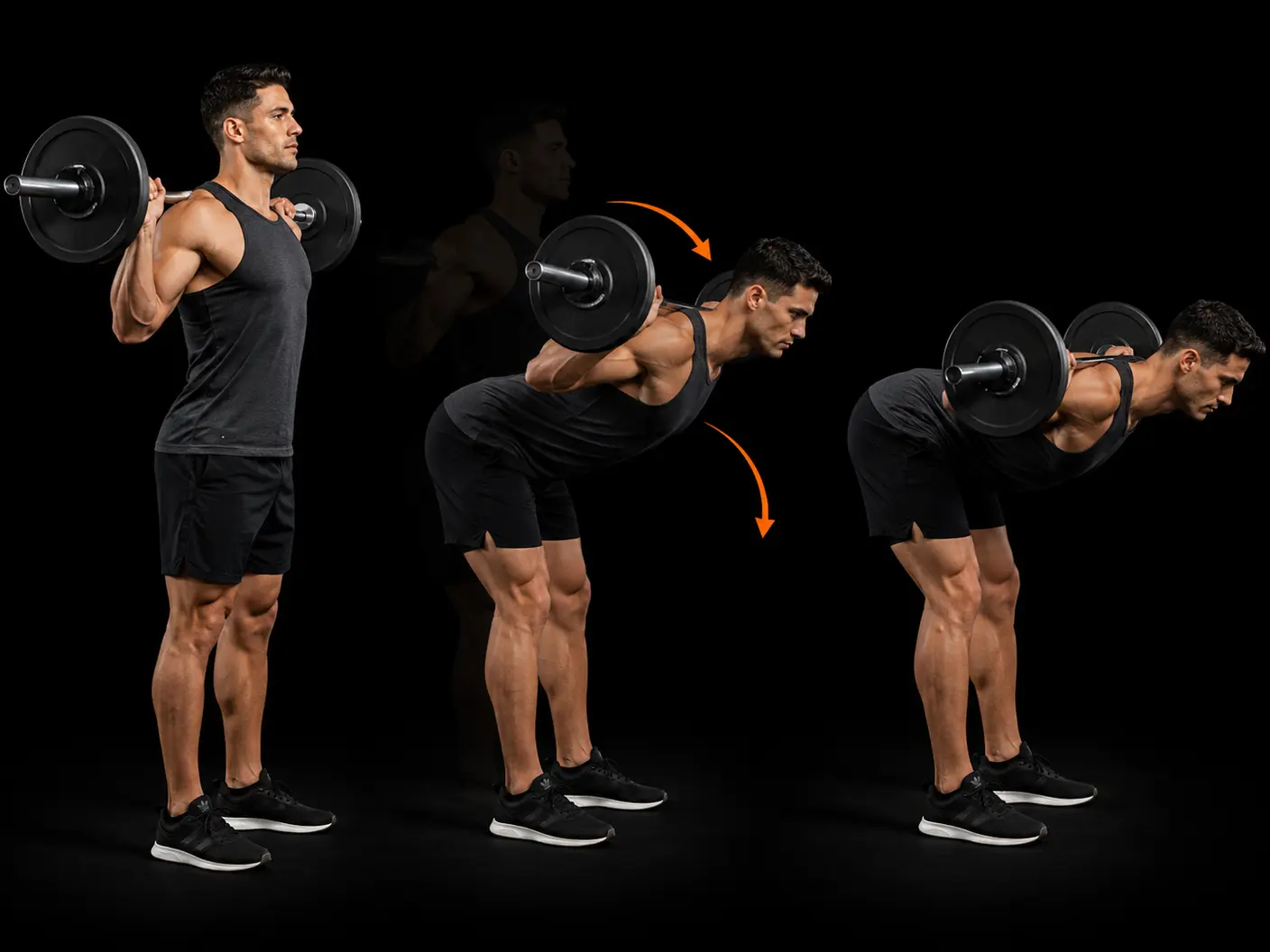
The barbell good morning is a compound hinge movement in which a barbell is held across the upper back while the lifter drives the hips rearward, lowering the torso toward parallel under load. It trains the posterior chain — hamstrings, glutes, and spinal erectors — through a demanding range of motion that closely mirrors the mechanics of the squat and deadlift. Because the loading position places significant demand on spinal control, this exercise is best suited to experienced lifters with an established hinge pattern and solid core bracing technique.
How to do it
Rack the bar on the upper back. Feet hip-width, slight bend in the knees. Brace the core. Push the hips straight back while the torso lowers toward parallel. Keep the bar tight to the traps. Stop when the hamstrings limit further flexion or the back begins to round. Drive the hips forward to stand.
Coaching cues
- Hips back
- Long spine
- Soft knees
- Drive hips to stand
Why train it
- It develops the hamstrings, glutes, and erectors simultaneously, building the posterior chain strength that underpins heavier squats and deadlifts.
- The movement trains hip hinge mechanics under a barbell load, reinforcing the long-spine position and hip-back drive that carry over directly to athletic performance.
- Loading the hinge pattern in this way places the erectors under prolonged tension, making it an effective stimulus for spinal extensor hypertrophy.
- As a secondary benefit, maintaining bar position against the traps and keeping the torso from collapsing engages the lats and core, developing positional stability throughout the trunk.
Common mistakes
- Rounding the lower back as the torso descends — brace the core firmly before the movement begins and stop the descent the moment the lumbar spine begins to flex.
- Letting the knees straighten fully — maintain a consistent soft bend throughout the rep to keep tension on the hamstrings and reduce shear at the knee.
- Dropping the chest and losing lat engagement — cue a long spine and keep the bar pulled tight into the traps so the upper back remains rigid across the full range.
- Hinging too shallow due to insufficient hamstring flexibility — only lower to the depth your hamstrings permit without the back rounding, and work progressively on mobility rather than forcing range.
Primary: Hamstrings, Gluteus Maximus, Erector Spinae.
Secondary: Latissimus Dorsi, Rectus Abdominis.
Equipment
Good for
Easier variation
Seated good morning — removes the hamstring length demand and allows loading the erectors directly.
Similar movements
Frequently asked
- What muscles does the barbell good morning work?
- The primary muscles are the hamstrings, glutes, and spinal erectors. The lats and core work as secondary stabilisers to maintain bar position and spinal rigidity throughout the movement.
- How many sets and reps should I do for the barbell good morning?
- For strength, two to four sets of four to six reps with heavier loading is appropriate. For hypertrophy or posterior chain development, three to four sets of eight to twelve reps at a moderate load tends to be more effective. Start conservatively — the movement punishes poor bracing regardless of the weight used.
- Is the barbell good morning suitable for beginners?
- This exercise is classified as advanced and is not recommended for those new to resistance training. A confident hip hinge, solid core bracing under load, and familiarity with barbell positions on the upper back should all be established first — typically through Romanian deadlifts and conventional deadlifts.
- What are good alternatives to the barbell good morning?
- The Romanian deadlift trains the same primary muscles through a similar hinge pattern and is generally more accessible for those building toward this movement. Dumbbell or cable pull-throughs also reinforce hip hinge mechanics with a lower demand on spinal loading.
- How does the barbell good morning differ from the Romanian deadlift?
- In the Romanian deadlift the load hangs from the hands, keeping the centre of mass closer to the hips. In the good morning the barbell sits on the upper back, creating a longer moment arm from the spine and placing considerably greater demand on the erectors and core to resist forward collapse. This distinction makes the good morning particularly effective for building spinal extensor strength but also increases the technical risk if form breaks down.
Want this movement in a plan built for you?
Adaptiv programmes the right exercises for your goal, equipment and experience — then adapts them as you train.
Build my programme