Dead Hang
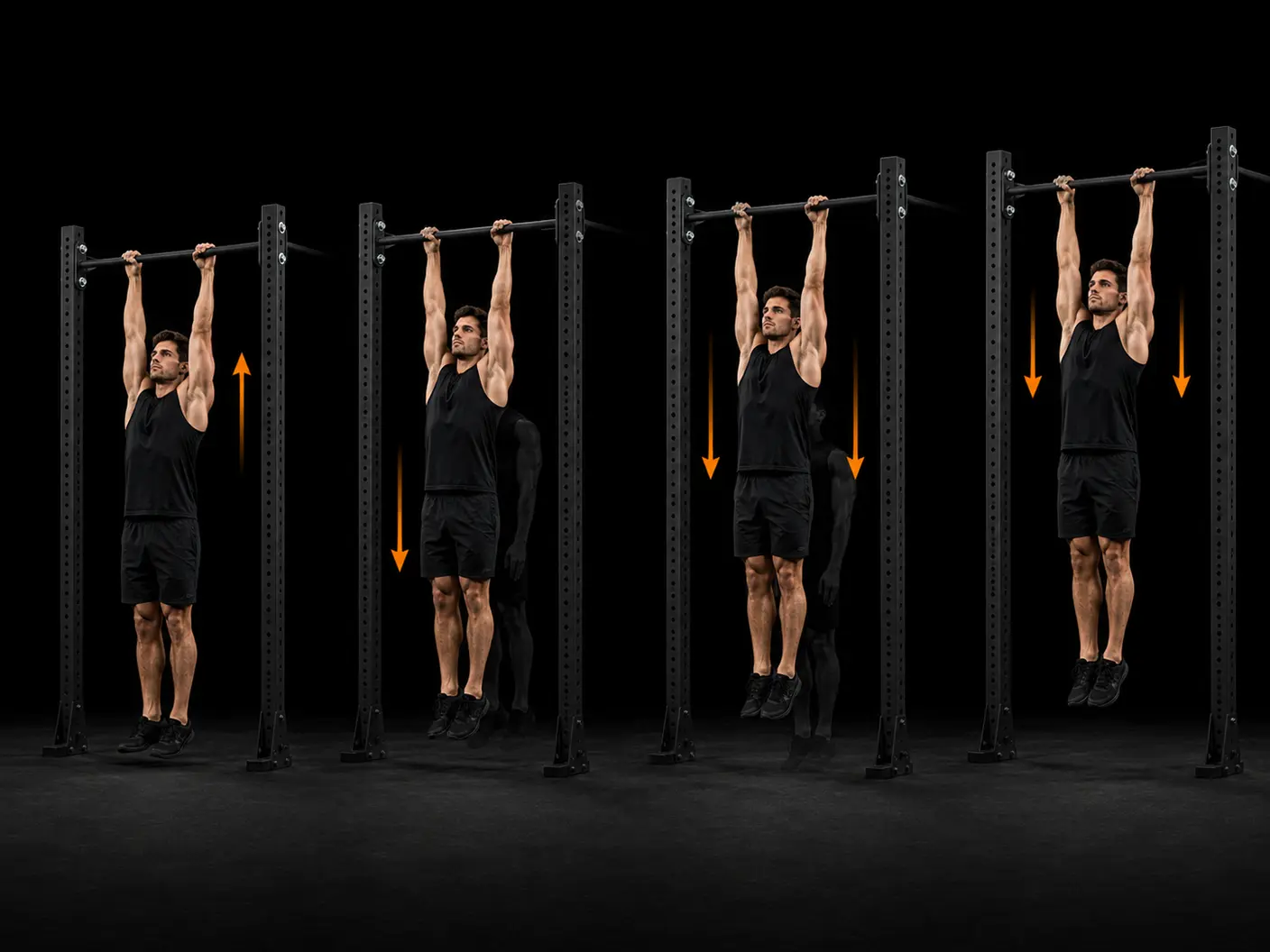
The dead hang is a static hold performed from a pull-up bar with a pronated, shoulder-width grip and arms fully extended. It trains the carry pattern by challenging grip endurance, shoulder stability, and the ability to maintain tension through the upper back and core under load over time. It suits beginners building foundational grip strength as well as more advanced trainees using it as accessory work or a decompression drill between heavier pulling sessions.
How to do it
Grip a pull-up bar with a pronated grip, shoulder-width. Hang with arms fully extended, shoulders active (not jammed into ears). Feet off the floor. Hold for time. Breathe steadily.
Coaching cues
- Active shoulders
- Full extension
- Steady breathing
- Crush the bar
Why train it
- Develops grip and forearm flexor endurance, which underpins performance in pulling movements, carrying drills, and any implement work that demands prolonged hand force.
- Reinforces active shoulder positioning by training the lats to engage and stabilise the joint rather than allowing passive, passive shrug into the ears.
- Provides a low-load stimulus for the core, as maintaining a neutral or braced position while suspended demands consistent trunk tension throughout the hold.
- Requires no complex technique to learn, making it an efficient addition to warm-ups, finishers, or deload sessions without adding significant recovery cost.
Common mistakes
- Letting the shoulders rise passively into the ears — actively depress and set the shoulder blades at the start of every rep so the lats are working throughout the hold.
- Holding the breath to brace — breathe steadily and rhythmically, as controlled respiration helps sustain the hold longer and keeps unnecessary tension out of the neck.
- Using too wide or too narrow a grip — position the hands roughly shoulder-width apart so force is distributed evenly and the shoulders sit in a mechanically sound position.
- Allowing the body to swing freely — brace the core lightly and keep the legs still, as uncontrolled movement shifts the demand away from grip and shoulder stability.
Primary: Forearm Flexors.
Secondary: Latissimus Dorsi, Rectus Abdominis.
Equipment
Good for
Easier variation
Assisted dead hang with feet lightly touching the floor.
Similar movements
Frequently asked
- What muscles does a dead hang work?
- The primary demand falls on the forearm flexors and grip. The lats and core work as secondary stabilisers, keeping the shoulders active and the torso from swinging during the hold.
- How long should I hold a dead hang?
- For general fitness and grip development, aim for holds of 20–60 seconds, accumulated over two to four sets with adequate rest between efforts. Progress by extending hold duration or reducing rest rather than adding load.
- Is a dead hang suitable for building pull-up strength?
- It is a useful precursor, as it develops the grip endurance and shoulder stability needed to perform pull-ups safely, but it should be paired with active pulling work — such as scapular pulls or assisted pull-up variations — for more direct strength transfer.
- How often should I programme dead hangs?
- Two to three sessions per week is sufficient for most trainees. Because the movement is low-skill and low-intensity, it can sit within a warm-up, at the end of an upper-body session, or on a recovery day without meaningfully impacting other training.
- What can I do instead of a dead hang if I don't have a pull-up bar?
- Farmers carries and towel or rope holds are reasonable alternatives that share the grip-endurance demand, though they do not replicate the shoulder-stability and decompression characteristics of a suspended hang. A low gymnastics ring or sturdy bar at chest height used for a supported hang is the closest substitute.
Want this movement in a plan built for you?
Adaptiv programmes the right exercises for your goal, equipment and experience — then adapts them as you train.
Build my programme