Close-Grip Bench Press
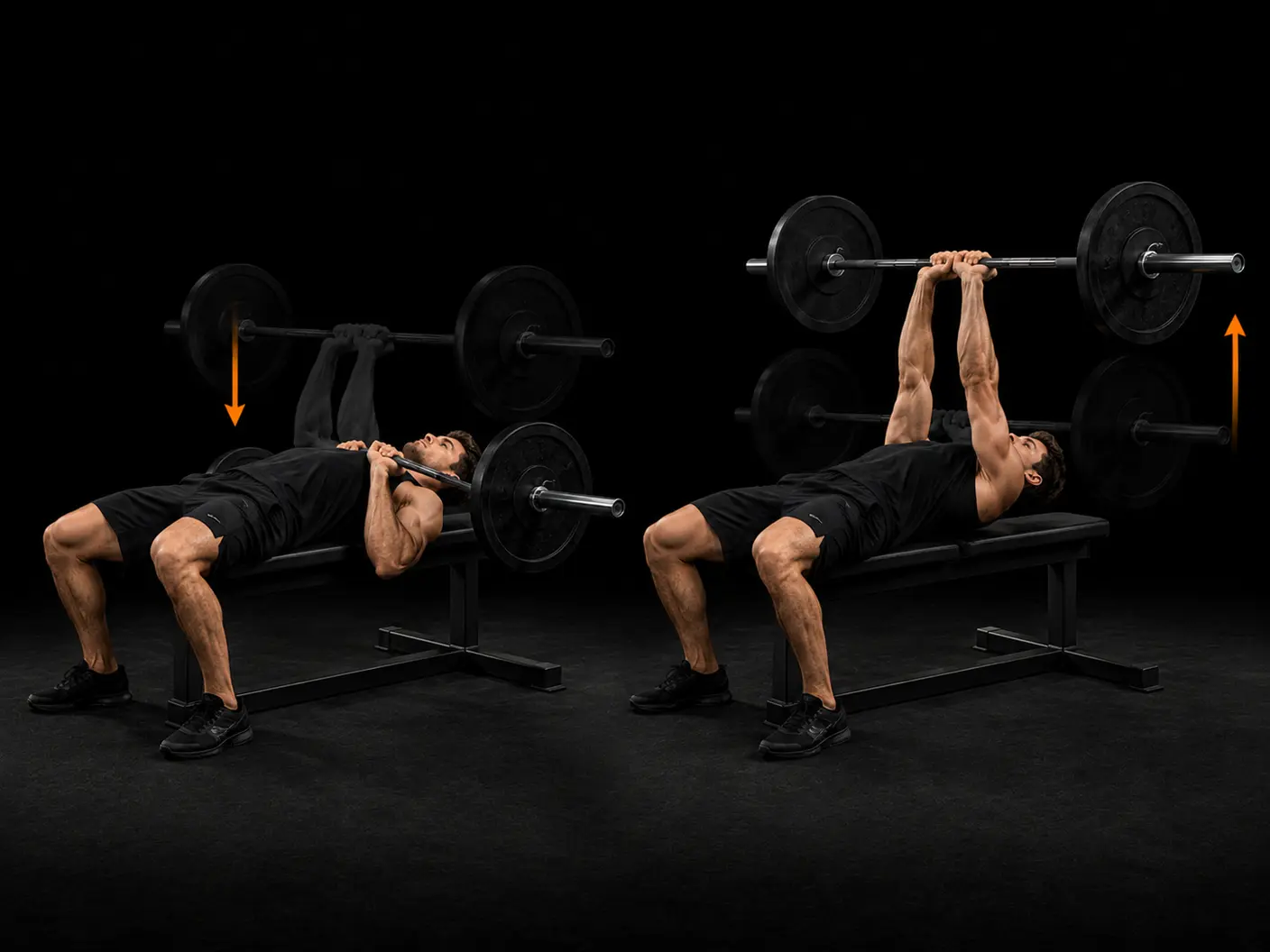
The close-grip bench press is a compound horizontal push performed with a shoulder-width grip on the barbell, which shifts the mechanical emphasis away from the chest and toward the triceps brachii. It follows the same fundamental pattern as the flat bench press but demands greater contribution from the elbow extensors throughout the press. The movement suits intermediate lifters looking to build pressing strength and upper-arm mass, and it translates directly to performance in competition bench press and overhead pressing work.
How to do it
Set up as a flat bench press. Grip at shoulder-width — wrists stacked over elbows. Unrack. Lower the bar to the lower chest with elbows tucked tight to the ribs. Press back up, keeping the bar path slightly arcing back toward the face.
Coaching cues
- Hands at shoulder-width
- Elbows tucked
- Bar to lower chest
- Drive the bench away
Why train it
- The shoulder-width grip places the triceps brachii under significant load across a full range of extension, making it an effective mass-building stimulus for the upper arm.
- Because it shares the same rack, barbell, and bench set-up as the standard bench press, it integrates efficiently into an existing strength programme without additional equipment.
- The tucked-elbow position reduces the moment arm at the shoulder, which can allow lifters to accumulate pressing volume with somewhat less anterior shoulder fatigue than a wide-grip variation.
- Strength gained here transfers directly to the lockout phase of the competition bench press, making it a practical accessory movement for powerlifters and general strength athletes alike.
Common mistakes
- Taking too narrow a grip — keep the hands at shoulder-width rather than wrist-touching; an excessively narrow grip places unnecessary stress on the wrists and reduces mechanical efficiency.
- Allowing the elbows to flare wide — tuck the elbows close to the ribs throughout the descent and press to keep the triceps engaged and the movement pattern honest.
- Bouncing the bar off the chest — lower the bar under control to the lower chest and pause momentarily before pressing; momentum through the bottom removes load from the working muscles.
- Losing wrist position under fatigue — keep the wrists stacked directly over the elbows throughout the set; allowing them to bend back shifts stress onto the joint rather than the musculature.
Primary: Triceps Brachii, Pectoralis Major.
Secondary: Anterior Deltoid.
Equipment
Good for
Easier variation
Dumbbell floor press — narrow hand position with short ROM.
Similar movements
Frequently asked
- What muscles does the close-grip bench press work?
- The primary muscles trained are the triceps brachii and pectoralis major, with the anterior deltoid contributing as a secondary mover. The shoulder-width grip means the triceps take on a larger share of the load compared with a wider bench press grip.
- How many sets and reps should I do for strength versus hypertrophy?
- For strength, three to five sets of three to six reps at higher relative loads works well. For hypertrophy, three to four sets in the eight-to-twelve rep range with controlled tempo is a practical starting point. Rest two to three minutes between sets for strength work, and ninety seconds to two minutes for hypertrophy-focused sessions.
- What is the difference between the close-grip bench press and the standard flat bench press?
- The principal difference is grip width and muscular emphasis. The standard bench press typically uses a wider grip and emphasises the pectoralis major, whereas the close-grip variation uses a shoulder-width grip and shifts more demand onto the triceps brachii. The bar path and set-up are otherwise very similar.
- Is the close-grip bench press suitable for beginners?
- It is classified as an intermediate movement, primarily because it requires solid wrist, elbow, and shoulder stability, as well as reliable racking and unracking technique under load. Beginners would benefit from establishing a sound standard bench press first before introducing grip variations.
- What are good alternatives if I do not have access to a barbell?
- Dumbbell bench press with a neutral or semi-supinated grip can replicate a similar elbow-tucked pressing pattern and provides an alternative stimulus for the triceps and pectoralis major. Weighted dips are another compound option that trains the same primary muscles without requiring a rack.
Want this movement in a plan built for you?
Adaptiv programmes the right exercises for your goal, equipment and experience — then adapts them as you train.
Build my programme