Box Step-Up to Knee Drive
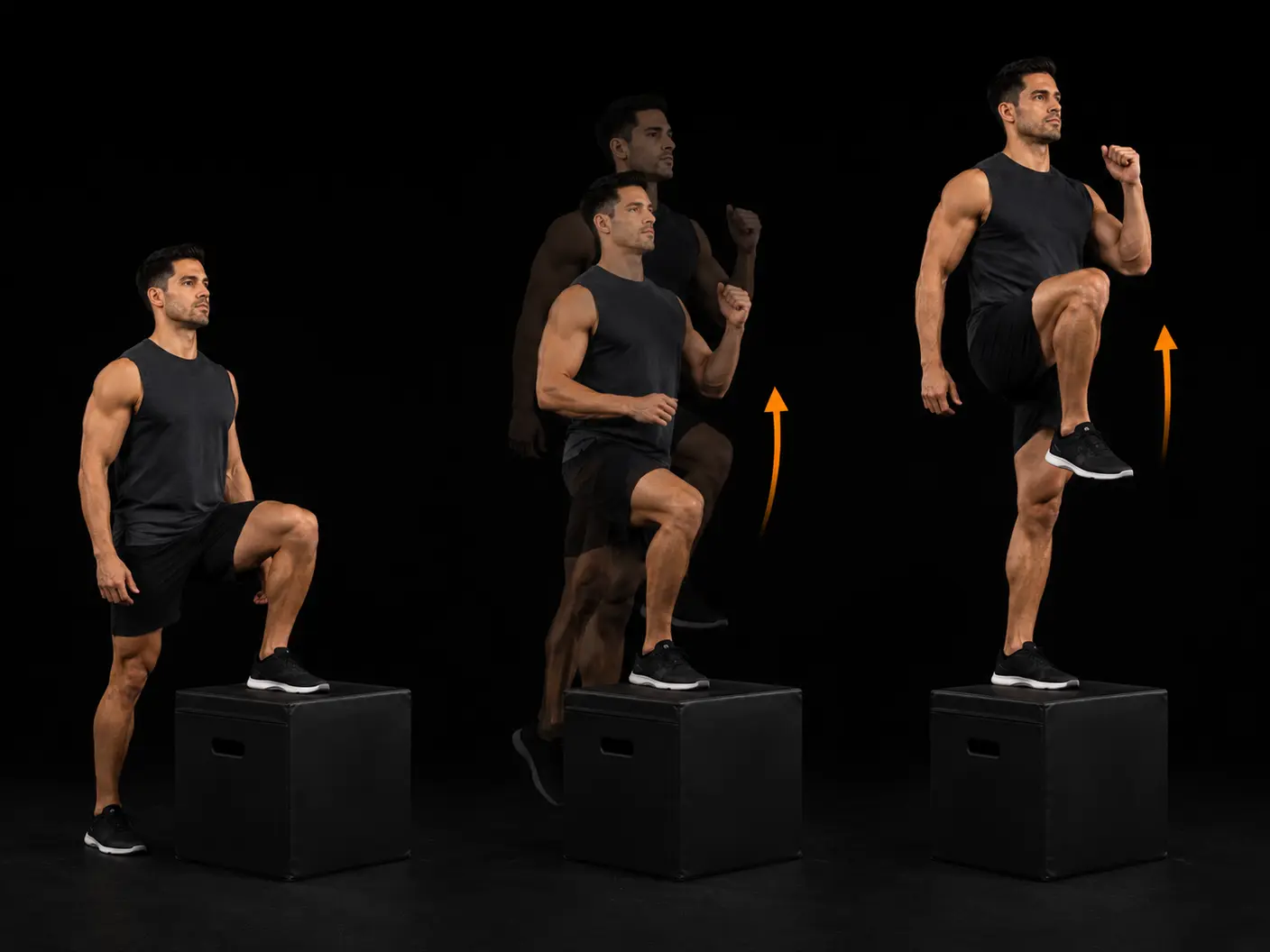
The box step-up to knee drive is a compound, power-based movement that combines a unilateral lower-body press with an explosive knee drive, training the glutes, quads, and hip flexors through a dynamic, single-leg pattern. It develops the kind of coordinated, powerful hip extension and flexion that underpins acceleration, change of direction, and general athletic output. The intermediate difficulty level makes it well suited to athletes and general trainees who already have a solid base of single-leg strength and body control.
How to do it
Stand facing a box. Place one foot on the box. Drive up powerfully through that foot and explode the opposite knee up toward the chest. Land back on the floor on the bottom leg; repeat for reps, then switch.
Coaching cues
- Drive up hard
- Knee to the chest
- Quick contact
- Tall finish
Why train it
- The unilateral loading exposes and addresses left-to-right strength imbalances that bilateral exercises can mask, making it a valuable tool for balanced athletic development.
- The explosive knee drive trains rate of force development through the glutes and quads, directly transferring to sprinting, jumping, and other high-velocity sporting actions.
- The combination of lower-body power output and the stabilising demand placed on the core makes it an efficient option when training time is limited and athletic performance is the priority.
- The elevated step height increases the range of motion through the hip and knee, placing a greater mechanical demand on the glutes and quads than flat-ground alternatives.
Common mistakes
- Pushing off the grounded foot rather than the box foot — focus all drive through the heel of the elevated foot so the trailing leg contributes as little as possible.
- Allowing the trunk to lean excessively forward on the way up — maintain an upright torso and reach a tall finish at the top to reinforce proper hip extension.
- A lazy or low knee drive — bring the free knee decisively toward the chest to complete the movement pattern and develop the hip flexor contribution the exercise is designed to train.
- Slow, heavy foot contact on the return — aim for quick, controlled contact with the floor on landing, keeping the transition sharp rather than collapsing down passively.
Primary: Gluteus Maximus, Quadriceps, Hip Flexors.
Secondary: Rectus Abdominis, Gastrocnemius.
Equipment
Good for
Easier variation
Step-up without the knee drive.
Similar movements
Frequently asked
- What muscles does the box step-up to knee drive work?
- The primary muscles trained are the glutes, quads, and hip flexors. The calves and core work as secondary contributors, stabilising the movement throughout the drive and landing phases.
- How many sets and reps should I do for athletic performance?
- For athletic performance, three to four sets of six to ten reps per side at a quality-over-quantity tempo is a sound starting point. Because this is a power movement, prioritise explosiveness on every rep rather than accumulating high volumes of fatigued repetitions.
- Can this exercise help with fat loss?
- Yes — as a compound, power-based movement it recruits a large amount of muscle mass and demands meaningful cardiovascular output, both of which support a fat loss goal when combined with appropriate nutrition and overall programme design.
- What is a suitable alternative if I do not have a plyo box?
- A sturdy bench or a set of solid steps can substitute for a plyo box provided the surface is stable and the height is appropriate for your current strength level. The movement pattern and coaching cues remain the same.
- How high should the box be?
- The box height should allow the stepping leg to reach roughly parallel or just above parallel at the hip when the foot is placed on it — typically between 40 and 60 cm for most adults. If you cannot maintain an upright torso and controlled drive, reduce the height until the mechanics are sound.
Want this movement in a plan built for you?
Adaptiv programmes the right exercises for your goal, equipment and experience — then adapts them as you train.
Build my programme