Box Squat
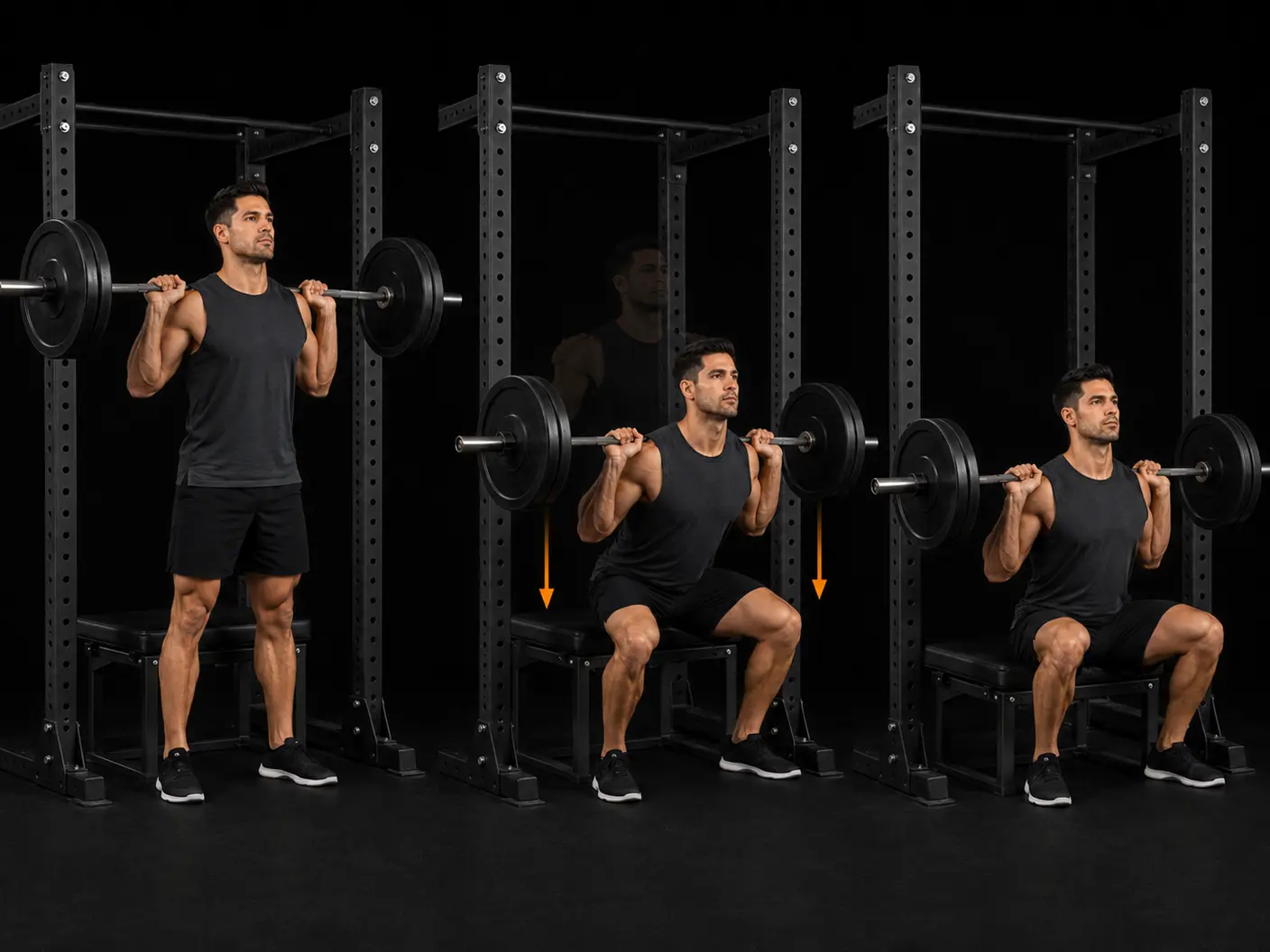
The box squat is a barbell compound movement in the squat pattern that uses a box or bench behind the lifter to set a consistent depth target and enforce a deliberate pause at the bottom. By cueing a hip-back, shin-vertical descent, it shifts demand onto the posterior chain — particularly the glutes and hamstrings — while still loading the quadriceps heavily through the drive phase. It suits intermediate lifters looking to build squat strength, reinforce positional discipline, or address sticking points in their conventional squat.
How to do it
Set a box behind you at or just below parallel. Unrack and step back with feet slightly wider than shoulder-width. Break at the hips first, sitting back onto the box with shins near vertical. Pause briefly — stay tight, do not relax onto the box. Drive through the heels and press the floor away to stand; lead with the chest.
Coaching cues
- Sit back
- Shins vertical
- Pause tight
- Drive the floor
Why train it
- The enforced pause at the box eliminates the stretch-reflex rebound, requiring the lifter to produce force from a dead stop and building genuine bottom-end strength.
- Consistent box height removes depth uncertainty across sessions, making it straightforward to track and progress loading over time.
- The hip-back, shin-vertical mechanics distribute load across the quadriceps, glutes, hamstrings, and erectors simultaneously, supporting both strength and hypertrophy goals.
- The movement translates directly to athletic performance by training the posterior chain in a powerful hip-extension pattern common to sprinting, jumping, and change of direction.
Common mistakes
- Relaxing onto the box — maintain full-body tension throughout the pause; the box is a depth reference, not a seat to rest on.
- Allowing the shins to drift forward — keep them as vertical as possible by pushing the hips back early in the descent rather than breaking at the knees first.
- Rising chest-down out of the pause — lead with the chest and drive the hips forward simultaneously so the torso angle remains controlled through the ascent.
- Setting the box too high — use a height that brings the crease of the hip to at or just below parallel, and verify depth before adding load.
Primary: Quadriceps, Gluteus Maximus.
Secondary: Hamstrings, Erector Spinae, Rectus Abdominis.
Equipment
Good for
Easier variation
Box squat to a higher box — reduces range of motion while teaching the hip-back pattern.
Similar movements
Frequently asked
- What muscles does the box squat work?
- The primary muscles are the quadriceps and glutes, with meaningful secondary contribution from the hamstrings, spinal erectors, and core. The hip-back descent pattern places particular emphasis on the glutes and posterior chain compared with a conventional high-bar squat.
- How many sets and reps should I do for the box squat?
- For strength, 4–6 sets of 2–5 reps at 75–90% of your working maximum works well. For hypertrophy, 3–4 sets of 6–10 reps with controlled pauses is a practical starting point. Allow adequate rest between sets — typically 2–3 minutes for strength work — so each set can be performed with full tension and intent.
- What is a good box squat alternative?
- The conventional back squat is the closest alternative if a box is unavailable. If you are specifically training the pause and posterior-chain emphasis, a paused squat with a deliberate hold at depth replicates a large part of the stimulus without additional equipment.
- Is the box squat suitable for building leg size as well as strength?
- Yes — it is listed as appropriate for both hypertrophy and strength goals. Programming it in a moderate rep range with controlled eccentrics and a genuine pause at the box provides sufficient mechanical tension and time under load to support muscle development in the quadriceps and glutes.
- How high should the box be for a box squat?
- The box should be set so that when you sit back fully, the crease of your hip sits at or just below the top of the knee — the standard parallel depth. Starting slightly above parallel is reasonable while you learn the movement, but training consistently above parallel will limit the strength and hypertrophy benefits the exercise is designed to deliver.
Want this movement in a plan built for you?
Adaptiv programmes the right exercises for your goal, equipment and experience — then adapts them as you train.
Build my programme