Bench Dip (Chair Dip)
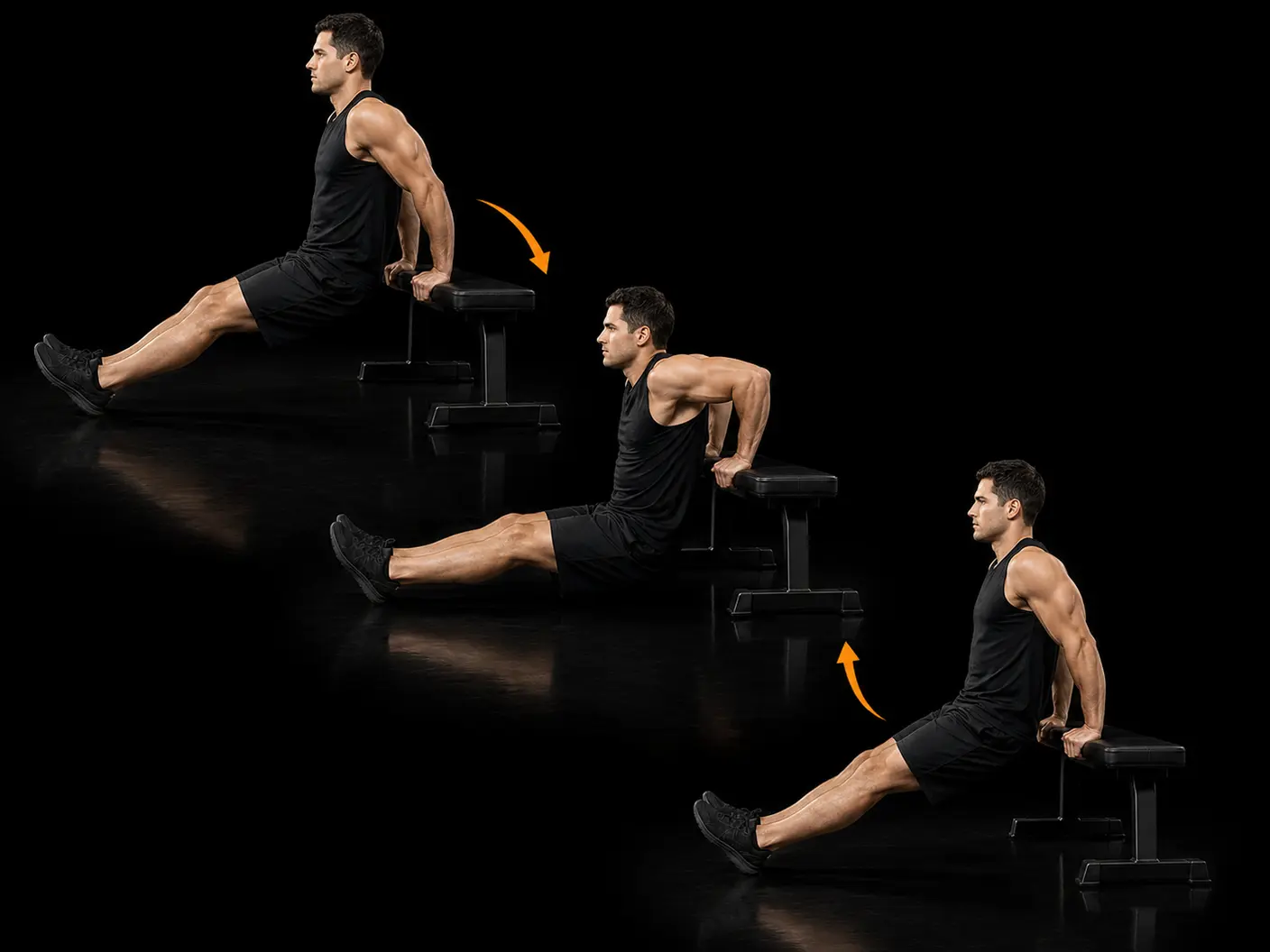
The bench dip is a foundational bodyweight isolation exercise that loads the triceps through a pressing pattern using a bench or sturdy chair for hand placement. The movement trains elbow extension under load, with the anterior deltoids and lower pectorals contributing as secondary movers. It suits beginners building upper-body pushing capacity and intermediates seeking an equipment-light option for triceps hypertrophy.
How to do it
Place hands on a bench behind you, fingers pointing forward, and extend the legs in front. Lower the hips by bending the elbows to approximately 90°, keeping the hips close to the bench edge. Press back up to full elbow extension. Do not allow the shoulders to shrug upward at the bottom.
Coaching cues
- Elbows track back
- Hips close to bench
- Shoulders down
- Full lockout
Why train it
- Develops triceps mass and strength through a full range of elbow extension without the need for specialist equipment.
- The bench or chair setup makes it highly accessible for home training environments or as a finishing movement in a gym session.
- Adjusting leg position — bent knees reducing load, straight legs increasing it — allows straightforward progression within the same exercise.
- The secondary involvement of the anterior deltoids and lower pectorals means the movement reinforces the pressing musculature used in compound upper-body lifts.
Common mistakes
- Letting the elbows flare outward — keep them tracking directly back throughout the descent to maintain tension on the triceps rather than shifting stress to the shoulder joint.
- Shrugging the shoulders upward at the bottom of the rep — actively press the shoulders down and away from the ears to avoid compromising the position and reducing triceps engagement.
- Drifting the hips away from the bench — keep them close to the edge throughout the movement so the load stays on the arms rather than dispersing into an inefficient body angle.
- Stopping short of full elbow extension at the top — press to complete lockout on every rep to maximise the working range and stimulus for the triceps.
Primary: Triceps Brachii.
Secondary: Anterior Deltoid, Pectoralis Major.
Equipment
Good for
Easier variation
Feet flat with knees bent — reduces the load by shortening the lever arm.
Similar movements
Frequently asked
- What muscles do bench dips work?
- The primary mover is the triceps, which drives elbow extension throughout the rep. The anterior deltoids and lower pectorals act as secondary muscles, assisting the pressing action.
- How many sets and reps should I do for bench dips?
- For hypertrophy, three to four sets of ten to fifteen reps with controlled tempo works well. For general fitness, two to three sets in the same rep range is a practical starting point, progressing by straightening the legs once the movement feels stable.
- Are bench dips suitable for complete beginners?
- Yes — they are classified as a foundational movement and require no specialist equipment or prior lifting experience. Begin with bent knees to reduce the load and focus on keeping the elbows tracking back and the shoulders pressed down before advancing to straight legs.
- What are good alternatives to the bench dip?
- Close-grip press-ups target the triceps through a similar elbow-extension pattern using only bodyweight. If a cable station or dumbbell is available, triceps pushdowns or overhead triceps extensions isolate the same muscle group with more load control.
- Can bench dips be used as a warm-up or are they better as a working exercise?
- They function well in both roles. At low volume with bent knees they warm up the elbow extensors and shoulders before pressing work; programmed with straight legs and higher effort they serve as a productive working or finishing exercise for triceps hypertrophy.
Want this movement in a plan built for you?
Adaptiv programmes the right exercises for your goal, equipment and experience — then adapts them as you train.
Build my programme