Bench Dip
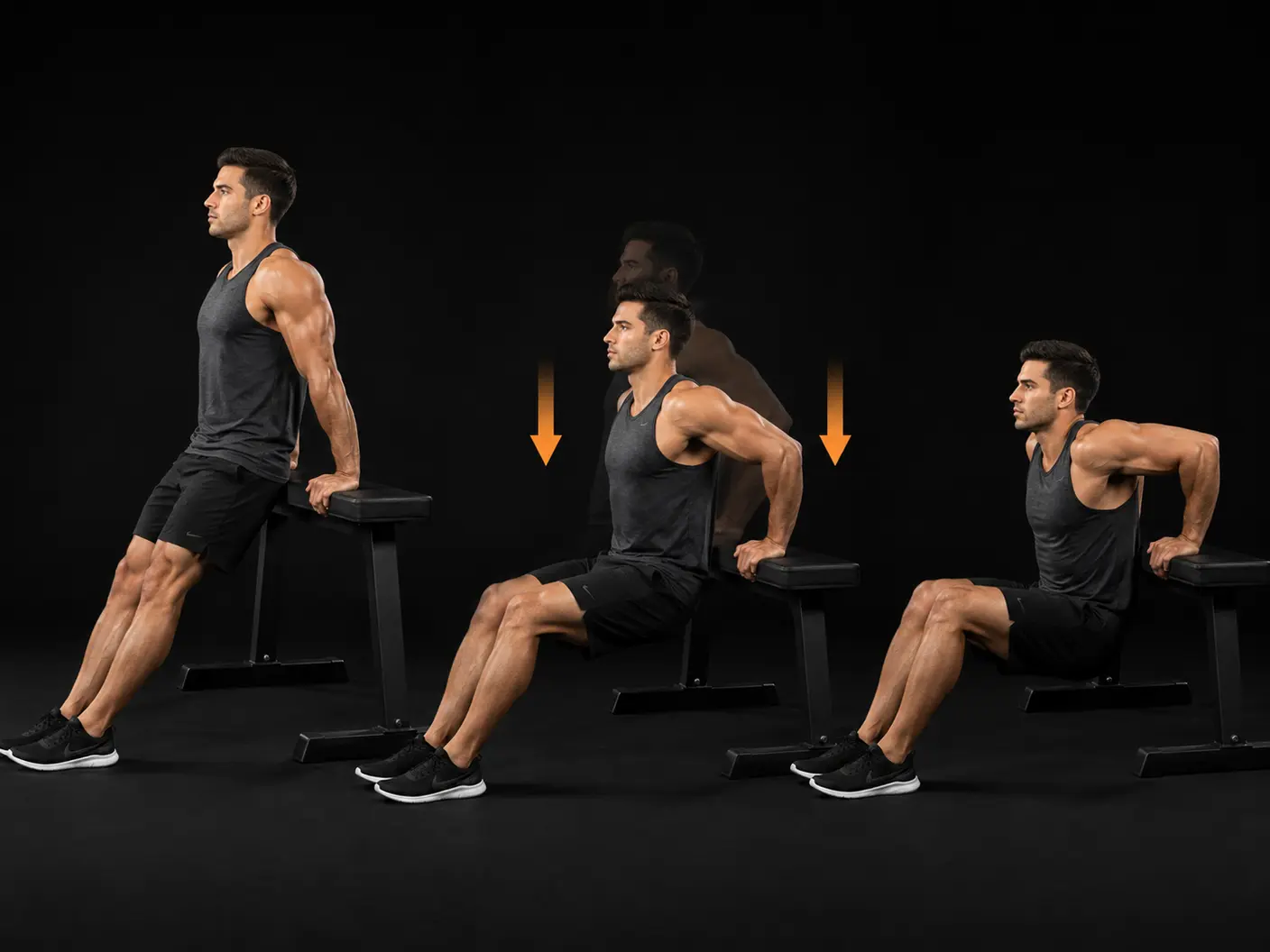
The bench dip is a foundational bodyweight pushing exercise performed using a single bench as the only piece of equipment. It trains elbow extension under load, placing the triceps brachii as the primary mover whilst the pectoralis major and anterior deltoid contribute as secondary muscles throughout the press. Its low equipment requirement and scalable difficulty make it well-suited to beginners building upper-body pushing capacity, as well as more experienced trainees seeking accessory volume for hypertrophy.
How to do it
Sit on a bench, hands on the edge beside the hips. Slide forward off the bench, legs straight or bent. Lower the hips toward the floor by bending the elbows. Keep the elbows pointing straight back, not flaring out. Press back up.
Coaching cues
- Elbows point straight back
- Hips close to the bench
- Controlled descent
- Full lockout
Why train it
- The bench dip directly loads the triceps brachii through a meaningful range of motion, making it an efficient choice for adding hypertrophy volume to the back of the upper arm.
- Requiring only a bench, it integrates easily into home, gym, or travel training environments without any specialist kit.
- The movement reinforces the elbow extension pattern that underpins pressing performance, making it a useful accessory alongside compound upper-body lifts.
- Difficulty can be progressed simply by straightening the legs or elevating the feet, allowing the exercise to remain challenging as strength develops.
Common mistakes
- Elbows flaring outward — focus on keeping the elbows pointing straight back throughout the descent and press to maintain tension on the triceps rather than shifting load to the shoulders.
- Hips drifting away from the bench — keep the hips close to the edge of the bench on the way down to reduce unnecessary shoulder stress and preserve an efficient pressing angle.
- Using a shallow range of motion — lower the hips with control until the elbows reach approximately 90 degrees, then press to full lockout to work the triceps through their complete functional range.
- Rushing the descent — use a controlled lowering phase rather than dropping quickly, as a deliberate eccentric builds more muscle and reduces the risk of excessive joint stress at the bottom position.
Primary: Triceps Brachii.
Secondary: Pectoralis Major, Anterior Deltoid.
Equipment
Good for
Easier variation
Banded tricep pushdown — removes shoulder stress if bench dips irritate the front delt.
Similar movements
Frequently asked
- What muscles do bench dips work?
- The primary muscle trained is the triceps brachii, which drives elbow extension as you press back to the top. The pectoralis major and anterior deltoid act as secondary muscles, assisting in the pushing phase.
- How many sets and reps should I do for bench dips?
- For general fitness and hypertrophy, three to four sets of eight to fifteen repetitions is a practical starting point. Rest 60 to 90 seconds between sets, and adjust volume based on where the bench dip sits within your wider programme.
- Are bench dips suitable for building bigger triceps?
- Yes — the movement places the triceps under consistent load through elbow extension, which is the stimulus required for hypertrophy. Progressing difficulty over time by straightening the legs or elevating the feet will help drive continued adaptation.
- What is the difference between a bench dip and a parallel bar dip?
- The bench dip uses a single flat surface with the hands behind the body, limiting the range of motion and reducing the involvement of the chest compared to parallel bar dips. It is generally considered the more accessible option and suits those who are not yet strong enough for full parallel bar dips.
- Can I do bench dips if I have shoulder discomfort?
- The bench dip places the shoulder in a relatively extended and internally rotated position at the bottom of the movement, which some individuals find uncomfortable. If you experience discomfort, check with a qualified professional before continuing rather than pushing through.
Want this movement in a plan built for you?
Adaptiv programmes the right exercises for your goal, equipment and experience — then adapts them as you train.
Build my programme