Barbell Wrist Curl
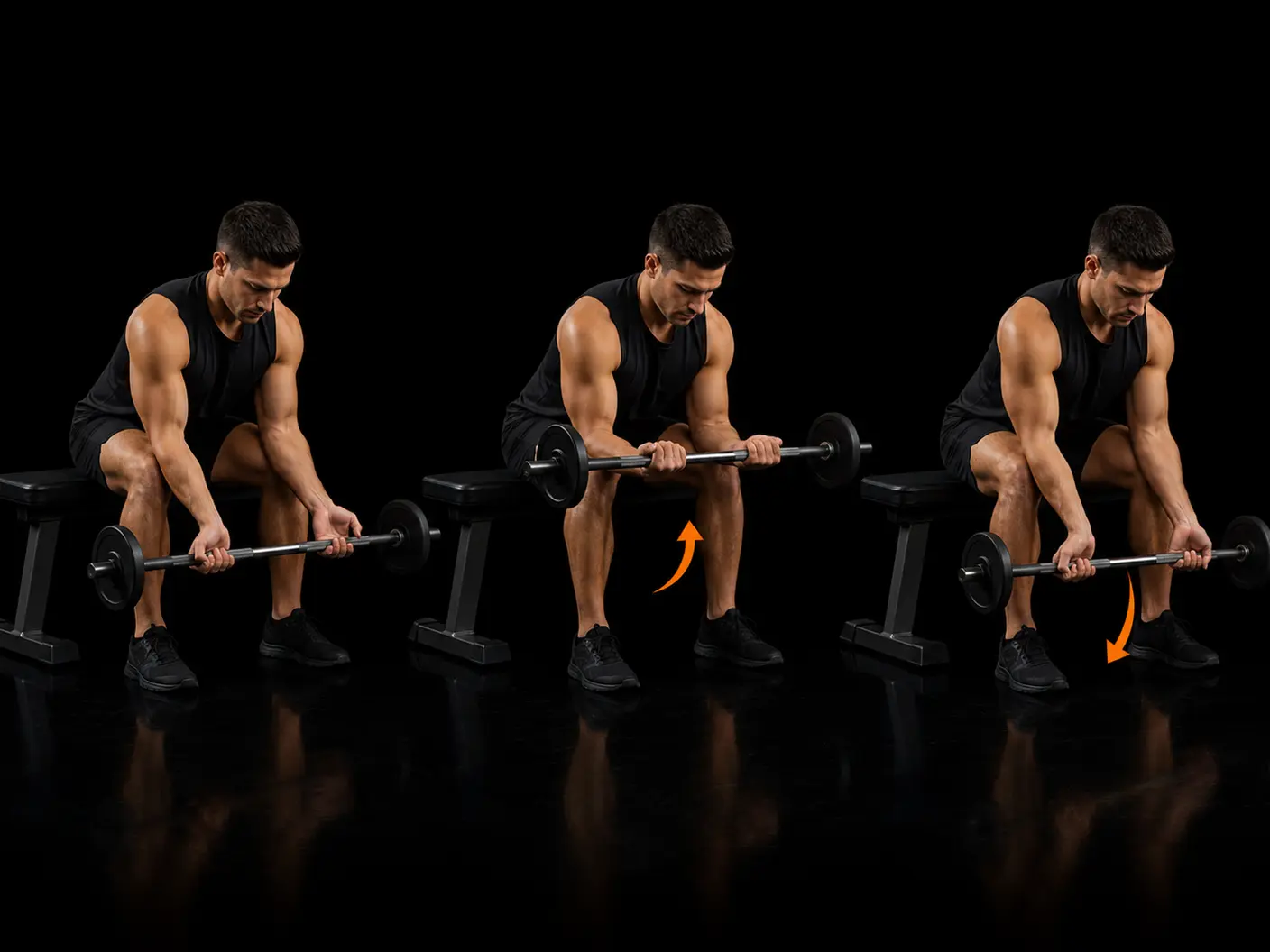
The barbell wrist curl is an isolation exercise that trains the forearm flexors through a short but deliberate range of wrist flexion. Performed seated with the forearms flat on a bench and palms facing up, it strips away any involvement from the upper arm or shoulder, placing the load squarely on the wrist flexors and supporting grip muscles. It suits anyone looking to develop forearm size or address grip endurance as part of a broader upper-body programme.
How to do it
Sit with forearms flat on a bench, palms up, hands hanging off the edge. Let the bar roll to the fingertips at the bottom. Curl the bar back into the palms by flexing the wrists. Pause at peak. Lower under control.
Coaching cues
- Full wrist flexion
- Let the bar roll to the fingers
- Strict form
- Slow eccentric
Why train it
- Directly targets the forearm flexors through a focused range of motion, making it one of the most efficient movements for building forearm hypertrophy.
- The controlled eccentric phase and fingertip roll-down maximise time under tension across the full length of the forearm flexors.
- Developing wrist flexor strength can support grip performance in compound pulling movements such as rows and deadlifts.
- Its foundational difficulty makes it accessible to a wide range of trainees, requiring minimal technical skill once the basic set-up is established.
Common mistakes
- Lifting the forearms off the bench during the curl — keep them flat throughout so the bench supports the movement and isolates the wrist joint.
- Skipping the fingertip roll at the bottom — allow the bar to roll to the fingertips on each rep to achieve a full range of motion and maximise muscle recruitment.
- Using momentum to swing the bar up — the curl should be initiated purely by wrist flexion at a controlled tempo, not by bouncing or jerking.
- Rushing the lowering phase — take at least two seconds on the eccentric to maintain tension and reduce the risk of dropping the load uncontrollably.
Primary: Forearm Flexors.
Equipment
Good for
Easier variation
Dumbbell wrist curl — allows one side at a time.
Similar movements
Frequently asked
- What muscles does the barbell wrist curl work?
- The primary muscles worked are the forearm flexors, which run along the underside of the forearm. The grip muscles act as secondary contributors, assisting in controlling the bar through the fingertip roll at the bottom of each rep.
- How many sets and reps should I do for barbell wrist curls?
- For hypertrophy, three to four sets of 12 to 20 repetitions works well, as the forearm flexors respond favourably to moderate-to-high rep ranges. Keep rest periods relatively short — around 60 seconds — to maintain metabolic stress in the muscle.
- Where should I place barbell wrist curls in my programme?
- They are best placed at the end of an upper-body or pulling session, once compound movements are complete. Programming them earlier risks pre-fatiguing the grip before heavier lifts.
- What are good alternatives if I don't have a barbell?
- Dumbbell wrist curls performed in the same seated position are a direct substitute and allow each wrist to work independently. A cable machine with a low pulley and straight bar attachment is another option that maintains constant tension throughout the range of motion.
- How much weight should I start with?
- Begin with a load that allows you to complete the full fingertip roll-down and a controlled eccentric on every rep — for most people this is relatively modest. Prioritise strict form and full range of motion before adding weight, as the joint and tendons involved need time to adapt.
Want this movement in a plan built for you?
Adaptiv programmes the right exercises for your goal, equipment and experience — then adapts them as you train.
Build my programme