B-Stance Hip Thrust
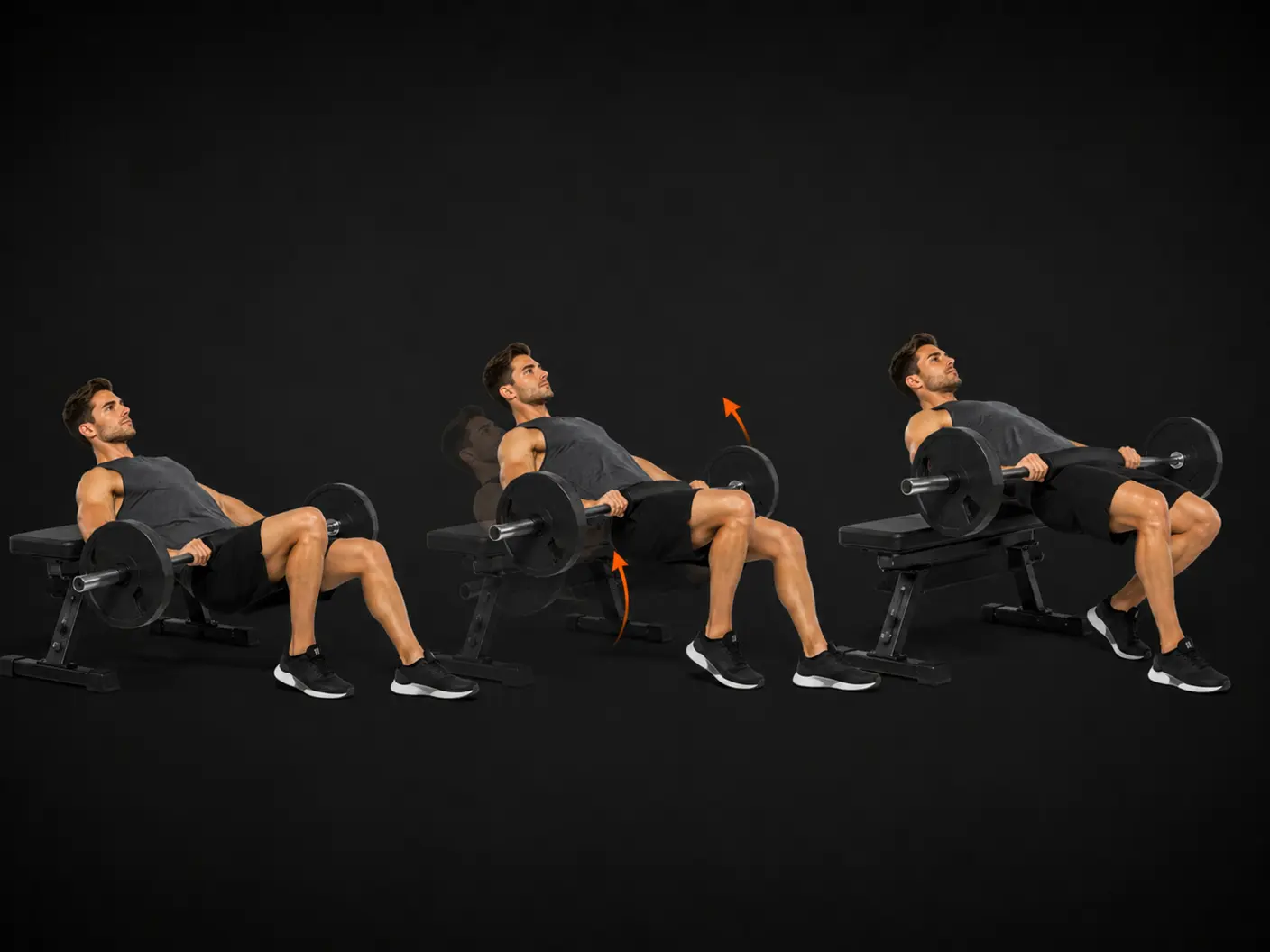
The B-stance hip thrust is a barbell hip thrust variation that introduces an asymmetrical loading pattern by staggering the feet — one foot flat on the floor bearing the majority of the load, the other acting as a light kickstand. It trains the hip extension pattern with a meaningful unilateral emphasis without requiring the full balance demands of a single-leg movement. It suits intermediate trainees looking to address side-to-side strength differences or increase glute stimulus within a bilateral setup.
How to do it
Set up as a standard barbell hip thrust. Stagger the feet: the working foot is flat on the floor with the full sole, the trailing foot is positioned with just the toe lightly touching the floor as a kickstand. Roughly 70–80% of the load is taken through the working leg. Drive through the working heel to full hip extension. Lower under control and repeat.
Coaching cues
- Load the working leg
- Drive through the heel
- Hips level at the top
- Ribs down
Why train it
- The offset stance directs roughly 70–80% of the load through the working leg, increasing the training stimulus to the gluteus maximus compared with a standard bilateral hip thrust.
- Because both feet remain in contact with the floor, it is more stable than a true single-leg variation, making it a practical stepping stone toward unilateral hip extension work.
- The movement pattern transfers well to athletic contexts where single-leg force production — sprinting, change of direction, and jumping — is a priority.
- The barbell loading makes progressive overload straightforward to track and apply over a training cycle.
Common mistakes
- Allowing the hips to rotate toward the kickstand side — focus on keeping both sides of the pelvis level at the top of each rep to ensure the working leg drives the movement.
- Pushing through the toe rather than the heel — consciously drive through the heel of the working foot to maximise gluteus maximus engagement throughout the lift.
- Letting the ribs flare at the top — keep the ribcage down and the core braced to avoid excessive lumbar extension compensating for incomplete hip drive.
- Placing too much weight through the trailing foot — the kickstand toe should make only light contact with the floor; if the trailing leg is contributing significantly, reset the foot position.
Primary: Gluteus Maximus.
Secondary: Hamstrings, Rectus Abdominis.
Equipment
Good for
Easier variation
Standard barbell hip thrust — full bilateral load.
Similar movements
Frequently asked
- What muscles does the B-stance hip thrust work?
- The primary muscle trained is the gluteus maximus of the working leg. The hamstrings assist with hip extension, and the core musculature is engaged throughout to stabilise the pelvis and spine.
- How many sets and reps should I do for the B-stance hip thrust?
- For hypertrophy, three to four sets of eight to twelve reps per side is a well-supported range. For athletic performance, lower rep ranges of five to eight with heavier loading can also be programmed, provided technique remains consistent.
- What is the difference between a B-stance and a single-leg hip thrust?
- In a single-leg hip thrust the trailing foot is completely off the floor, placing all load through one leg. The B-stance keeps the trailing toe lightly on the floor as a kickstand, reducing balance demands while still shifting the majority of the load to the working side.
- Can beginners use the B-stance hip thrust?
- The exercise is classified as intermediate because it requires a solid foundation in the bilateral barbell hip thrust first — both to manage the load safely and to recognise when the hips are drifting out of alignment. Beginners are better served by mastering the standard hip thrust before progressing to the B-stance.
- What are good alternatives if I do not have access to a barbell?
- A dumbbell or resistance band placed across the hip can substitute for the barbell in the same B-stance setup. Bodyweight or banded single-leg glute bridges are a lower-load alternative that trains a similar hip extension pattern.
Want this movement in a plan built for you?
Adaptiv programmes the right exercises for your goal, equipment and experience — then adapts them as you train.
Build my programme