Ankle Mobility Drill (Knee-to-Wall)
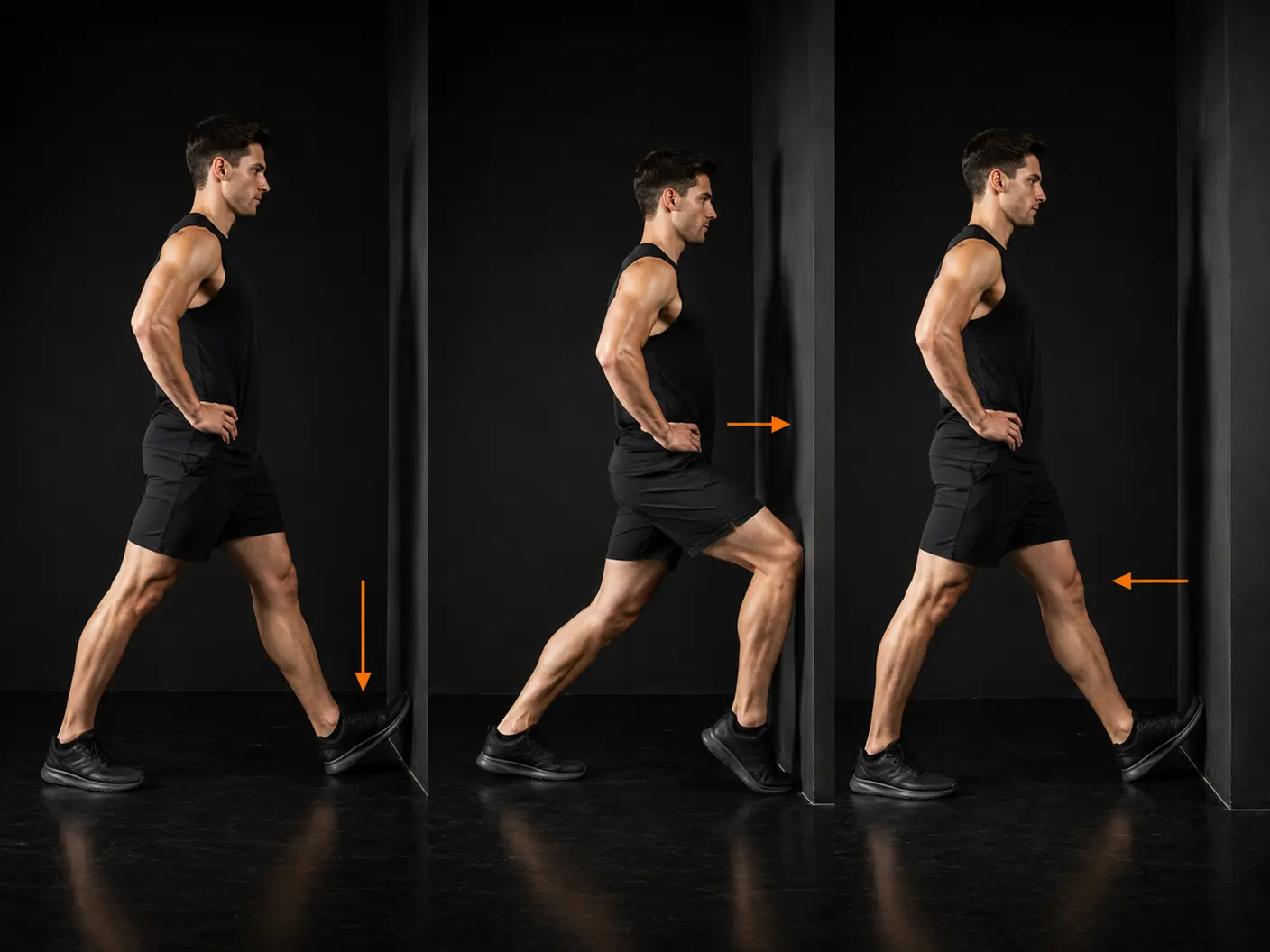
The ankle mobility drill (knee-to-wall) is a foundational movement that directly addresses dorsiflexion range — the ability of the ankle to flex as the shin moves forward over the foot. Performed in a half-kneeling position against a wall, it isolates the gastrocnemius, soleus, and ankle joint under a controlled load, making it suitable for anyone from beginners working on basic movement quality to athletes managing the demands of sport. It is particularly useful as part of a warm-up or corrective sequence where restricted ankle range is limiting squat depth, landing mechanics, or general lower-limb function.
How to do it
Kneel a few inches from a wall, working foot forward. Drive the knee forward over the toes toward the wall; keep the heel planted. Pulse 10–15 times per side. Measure progress by distance of toe from the wall where knee still touches.
Coaching cues
- Heel stays down
- Knee tracks over the toes
- Pulse into the end range
- Work both sides
Why train it
- Improving ankle dorsiflexion range directly supports squat depth and lower-limb movement quality across a wide range of exercises.
- The kneeling position allows precise, repeatable measurement — tracking toe-to-wall distance over time gives a clear and objective indicator of progress.
- Pulsing into end range provides a stimulus for both the gastrocnemius and soleus, addressing tightness across the full posterior chain of the lower leg.
- The drill requires no specialist equipment beyond a wall, making it straightforward to programme as a daily warm-up or recovery tool.
Common mistakes
- Lifting the heel off the floor — keep the heel fully planted throughout each repetition, as heel rise shifts the load away from the ankle joint and defeats the purpose of the drill.
- Allowing the knee to collapse inward — track the knee directly over the toes on every rep to ensure the ankle is working through the correct plane of motion.
- Working only the dominant or more mobile side — always complete equal sets on both sides, as asymmetry in dorsiflexion range is common and will not resolve if left unaddressed.
- Rushing through the end range — pause and pulse at the point where the knee just reaches the wall rather than bouncing through the movement, as the stimulus comes from sustained load at the limit of available range.
Primary: Gastrocnemius, Soleus.
Secondary: Tibialis Anterior.
Equipment
Good for
Easier variation
Calf stretch on a step — passive version.
Similar movements
Frequently asked
- What muscles does the knee-to-wall ankle mobility drill work?
- The primary structures loaded are the gastrocnemius, soleus, and the ankle joint itself, with the posterior tibialis acting as a secondary contributor. The drill targets the tissues that limit dorsiflexion range rather than building strength in the conventional sense.
- How many reps and sets should I do?
- A standard prescription is 10–15 pulses per side for 2–3 sets, performed either as part of a warm-up or as a standalone mobility session. Consistency across multiple days per week tends to produce more meaningful change than infrequent high-volume sessions.
- How do I know if I am making progress?
- Measure the distance between your toes and the wall at which your knee can still make contact without the heel rising. As dorsiflexion improves, you will be able to maintain heel contact from progressively greater distances, giving you a clear and trackable outcome.
- Is this drill suitable before squatting or lifting?
- Yes — because restricted ankle dorsiflexion is a common contributor to reduced squat depth and compensatory movement patterns, performing this drill during your warm-up can improve the quality of subsequent lower-body work in the same session.
- Are there alternatives if I find the kneeling position uncomfortable?
- A standing wall stretch targeting the same muscles can serve a similar purpose, though the half-kneeling position offers better control and measurability. If kneeling causes discomfort at the knee, place a folded mat beneath it and check with a qualified professional if the issue persists.
Want this movement in a plan built for you?
Adaptiv programmes the right exercises for your goal, equipment and experience — then adapts them as you train.
Build my programme