Hip Flexor Stretch
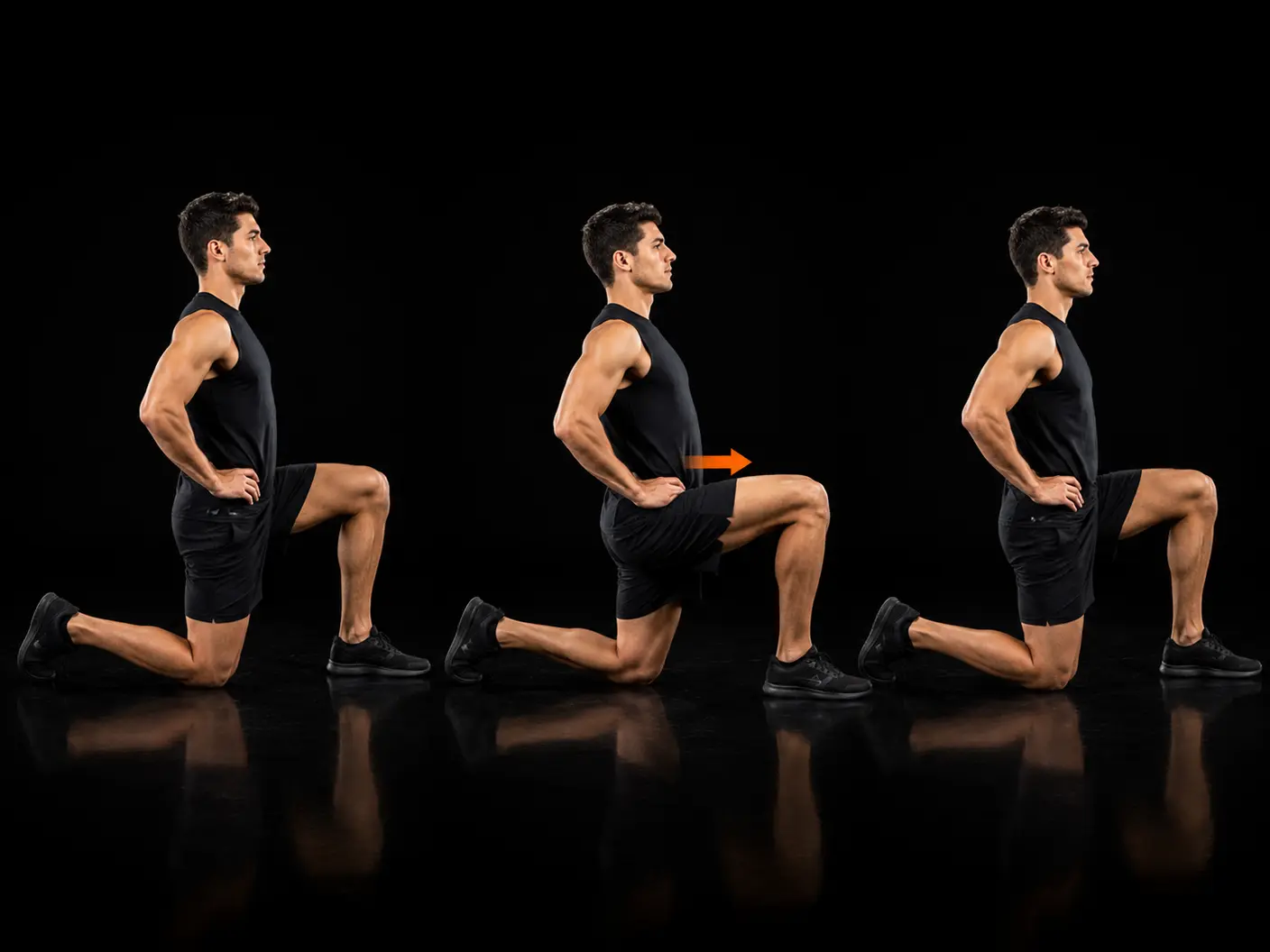
The hip flexor stretch is a foundational mobility movement performed in a half-kneeling position, targeting the iliopsoas and rectus femoris — the primary muscles responsible for flexing the hip. It trains the ability to extend the hip under a lengthened position, addressing the shortening that accumulates from prolonged sitting and repetitive flexion-dominant activity. It suits anyone from beginners building a movement practice to experienced athletes managing tissue length as part of a warm-up or cool-down.
How to do it
Kneel on one knee in a half-kneeling position (down knee on a mat). Shift the hips forward until a stretch is felt in the front of the down-knee hip. Keep the torso tall — do not lean forward or hyperextend the lower back. Hold for 30–90 seconds per side. Optionally, raise the same-side arm overhead to increase the stretch through the hip flexor and oblique.
Coaching cues
- Tall torso
- Drive the hip forward
- Do not lean back
- Breathe and hold
Why train it
- Directly targets the iliopsoas and rectus femoris, two structures that commonly restrict hip extension range when chronically shortened.
- The half-kneeling position provides a stable base that allows you to isolate the stretch to the target hip without compensating through the lower back.
- Holding the stretch for 30–90 seconds encourages meaningful change in tissue extensibility, making it more effective than brief, cursory holds.
- Adding an ipsilateral arm reach overhead extends the stretch into the tensor fasciae latae and obliques, increasing the return from a single position.
Common mistakes
- Leaning the torso forward or hyperextending the lower back — keep the spine tall and neutral throughout the hold, as collapsing out of alignment reduces tension on the target tissues.
- Failing to drive the hips forward sufficiently — shift the pelvis forward deliberately until a clear stretch is felt at the front of the down-knee hip, rather than simply adopting the kneeling position passively.
- Letting the front knee drift inward — keep the lead knee tracking over the foot to maintain a stable base and avoid placing unnecessary stress on the joint.
- Holding the breath — breathe steadily throughout the hold, as relaxed diaphragmatic breathing helps the tissue release progressively over the duration of the stretch.
Primary: Hip Flexors, Quadriceps.
Secondary: Tensor Fasciae Latae.
Equipment
Good for
Easier variation
Standing hip flexor stretch — easier to get into and control.
Similar movements
Frequently asked
- What muscles does the hip flexor stretch work?
- The primary muscles targeted are the iliopsoas and rectus femoris, both of which cross the hip and are responsible for hip flexion. Secondary muscles including the tensor fasciae latae and sartorius also receive a degree of stretch depending on positioning.
- How long should I hold the hip flexor stretch?
- A hold of 30–90 seconds per side is recommended to allow sufficient time for the tissue to respond. Shorter holds tend to produce less meaningful change in range of motion, so patience with the duration is worthwhile.
- When in a session should I perform this stretch?
- It can be used as part of a warm-up to prepare the hips for extension-based movements such as lunges, deadlifts, or sprinting, and equally as part of a cool-down to address tightness accumulated during training or extended periods of sitting.
- Can I make the hip flexor stretch more challenging?
- Yes — raising the arm on the same side as the down knee overhead increases the stretch through the hip flexor and oblique, extending the demand of the position without requiring any additional equipment.
- Is this stretch suitable for someone with lower back discomfort?
- Maintaining a tall, neutral torso is essential in this movement, and the stretch should not produce pain in the lower back. If you experience discomfort in the lumbar spine rather than a stretch sensation at the front of the hip, check with a qualified professional before continuing.
Want this movement in a plan built for you?
Adaptiv programmes the right exercises for your goal, equipment and experience — then adapts them as you train.
Build my programme