Pec Deck Machine
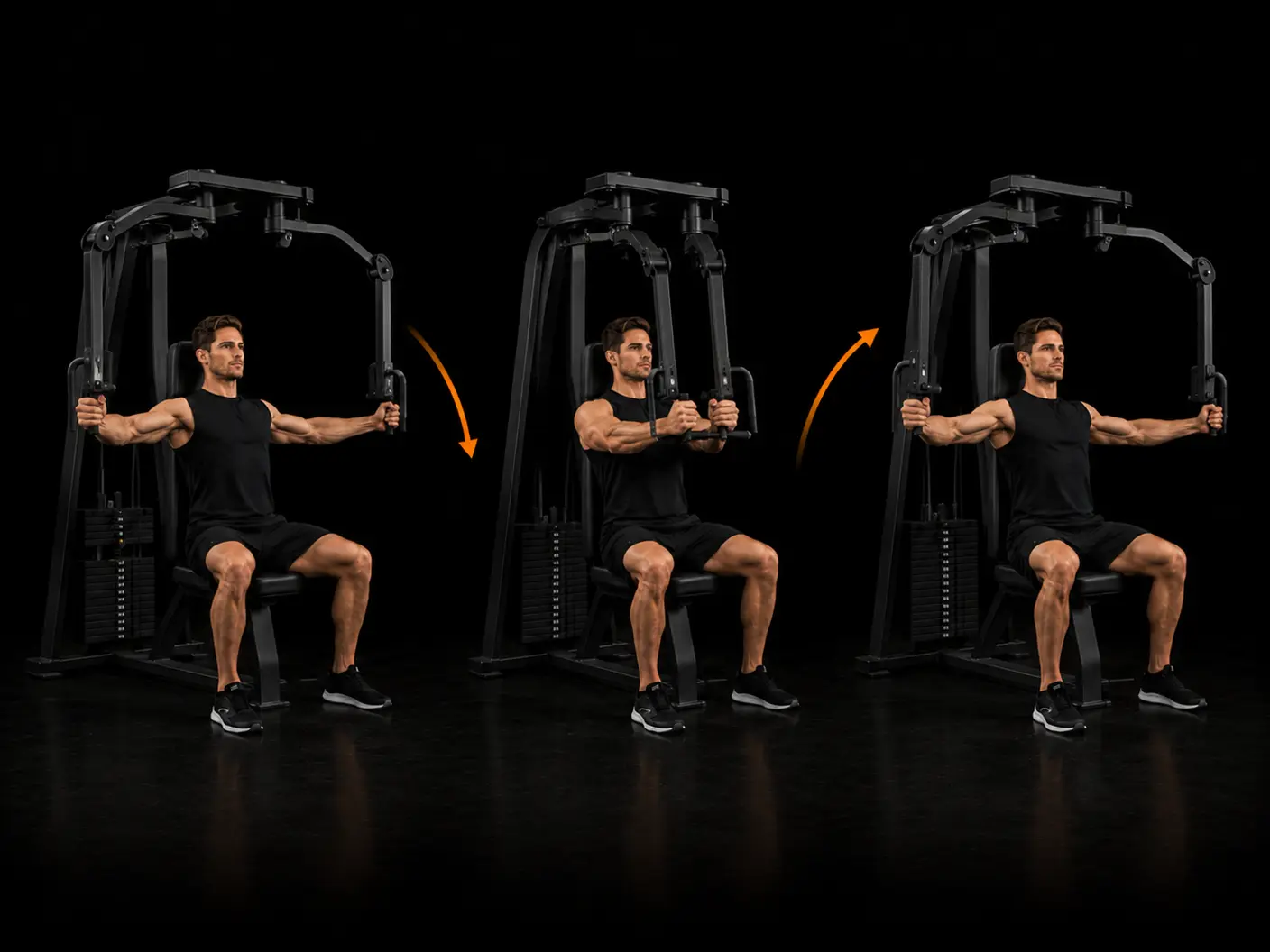
The pec deck machine is a single-joint isolation movement that trains the chest through a horizontal adduction pattern — bringing the arms together against resistance in a fixed arc. It suits lifters at any experience level looking to develop chest mass and improve the mind-muscle connection with the pectoralis major without the stability demands of free-weight pressing. Because the machine dictates the movement path, it is a reliable option for directing load precisely to the target muscles.
How to do it
Sit into the machine with the back flat against the pad. Forearms or hands against the pads, elbows at shoulder height. Press the pads together until they meet or nearly meet in front of the chest. Pause briefly. Return slowly to a deep stretch.
Coaching cues
- Elbows at shoulder height
- Squeeze at peak
- Slow return
- Stretch at the bottom
Why train it
- The fixed arc of the machine allows the pectoralis major to be loaded consistently across its full range of motion, making it an efficient tool for chest hypertrophy.
- The supported back pad removes the postural demands of free-weight alternatives, letting the lifter focus attention entirely on the contracting muscle.
- The slow, controlled return to the stretched position places the chest under meaningful eccentric load, which is a key driver of muscle growth.
- Its straightforward set-up and guided path make it accessible early in a training programme, allowing beginners to build chest awareness before progressing to more complex pressing variations.
Common mistakes
- Letting the elbows drop below shoulder height — set the seat so the elbow pads or handles align with the shoulder joint before beginning each set.
- Using momentum on the return phase — resist the weight deliberately on the way back to maximise time under tension and reduce joint stress.
- Cutting the range of motion short at the bottom — allow the arms to travel back to a genuine stretch, as this lengthened position is where much of the growth stimulus is generated.
- Craning the neck forward as fatigue sets in — keep the head against the pad and the gaze level throughout the set to avoid unnecessary cervical tension.
Primary: Pectoralis Major.
Secondary: Anterior Deltoid.
Equipment
Good for
Easier variation
Dumbbell fly — same pattern, free weight version.
Similar movements
Frequently asked
- What muscles does the pec deck machine work?
- The primary muscle trained is the pectoralis major, which drives the horizontal adduction of the arms. The anterior deltoid contributes as a secondary mover throughout the movement.
- How many sets and reps should I do on the pec deck?
- For hypertrophy, three to four sets of ten to fifteen repetitions with a controlled tempo is a well-supported approach. Prioritise a genuine stretch at the bottom and a brief pause at peak contraction over simply accumulating reps.
- Is the pec deck better than cable flyes for chest development?
- Both movements train the same pattern and primary muscle. The pec deck offers a fixed, consistent path that suits those learning the movement or training alone, while cables allow a greater degree of positional variation. Neither is inherently superior; choice depends on availability, preference, and where the exercise sits in the programme.
- Where should the pec deck sit in my chest session?
- It is most commonly used as an accessory movement after compound pressing work such as bench press, where the chest is already activated and the goal shifts to targeted isolation volume. It can also be placed first as an activation exercise if building a mind-muscle connection is the session priority.
- Can beginners use the pec deck machine?
- Yes — its guided movement path and adjustable seat make it one of the more approachable chest exercises for those new to resistance training. Set the seat height carefully so the elbows align with the shoulders, and begin with a load that allows full range of motion before progressing.
Want this movement in a plan built for you?
Adaptiv programmes the right exercises for your goal, equipment and experience — then adapts them as you train.
Build my programme