Dumbbell Pullover
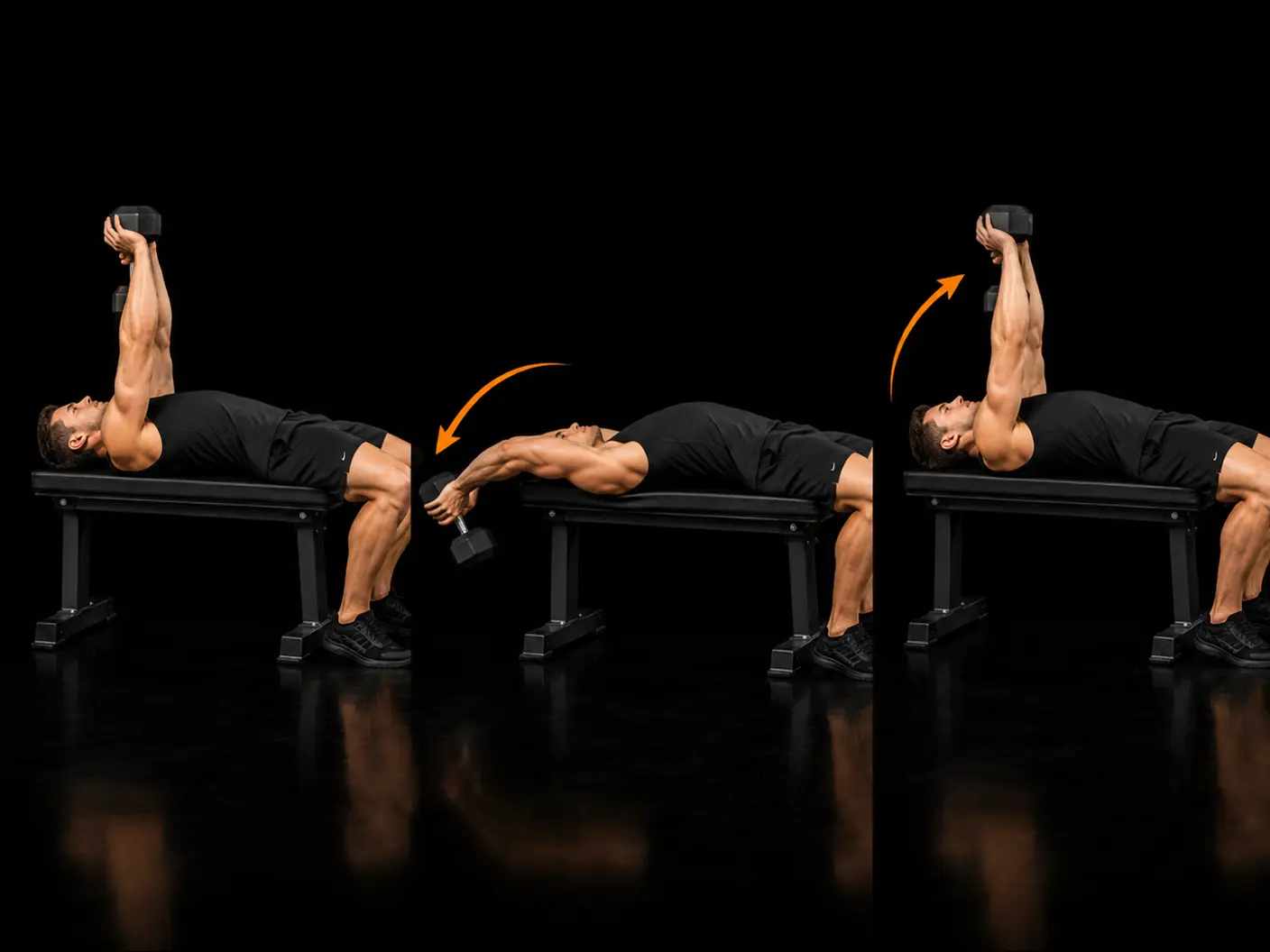
The dumbbell pullover is an isolation movement performed lying across a bench, in which a single dumbbell is arced from above the chest to behind the head and back again. It trains the latissimus dorsi and sternal pectoralis major through a long range of motion that is difficult to replicate with most pressing or pulling exercises. The movement suits intermediate trainees who have established a baseline of upper-body control and wish to develop chest and back thickness simultaneously.
How to do it
Lie across a bench with upper back supported. Hold one dumbbell with both hands over the chest, slight elbow bend. Lower the dumbbell behind the head in an arc until a deep lat and pec stretch is felt. Pull the dumbbell back over the chest using the lats.
Coaching cues
- Slight elbow bend
- Arc behind the head
- Deep stretch
- Pull with the lats
Why train it
- The long arc places the latissimus dorsi and pectoralis major under a meaningful stretch at end range, creating the mechanical tension associated with hypertrophic adaptation.
- By also recruiting the serratus anterior, the pullover supports scapular stability and protraction, qualities that carry over to pressing and overhead work.
- Training both the lats and the sternal pec within a single movement allows for efficient programming when weekly volume needs to be managed carefully.
- The fixed arc path and the requirement to control a single load with both hands makes the exercise a useful tool for developing body awareness in the upper back and chest.
Common mistakes
- Locking the elbows straight — maintain a slight, consistent bend throughout the arc to reduce joint stress and keep tension on the target muscles rather than the elbow joint.
- Dropping the hips toward the floor as the dumbbell lowers — keep the hips level with the bench to avoid turning the movement into an unintended trunk extension.
- Using momentum to swing the dumbbell back over the chest — control the return phase and initiate it by consciously engaging the lats rather than relying on the weight's rebound.
- Stopping short of a full stretch behind the head — allow the dumbbell to travel until a genuine lat and pec stretch is felt, as it is this end-range position that distinguishes the pullover from most other upper-body exercises.
Primary: Latissimus Dorsi, Pectoralis Major.
Secondary: Triceps Brachii, Serratus Anterior.
Equipment
Good for
Easier variation
Cable pullover — constant tension, easier to control at the stretch.
Similar movements
Frequently asked
- What muscles does the dumbbell pullover work?
- The primary muscles trained are the latissimus dorsi and the sternal portion of the pectoralis major. The long head of the triceps and the serratus anterior contribute as secondary stabilisers throughout the movement.
- How many sets and reps should I do for the dumbbell pullover?
- For hypertrophy, three to four sets of ten to fifteen repetitions is a practical starting point. Prioritise a controlled tempo and full range of motion over load, particularly until the arc pattern feels consistent.
- Should I lie lengthwise along the bench or across it?
- Lying across the bench with only the upper back supported is the conventional setup for this exercise. This position allows the hips to drop slightly if needed and gives the dumbbell room to travel behind the head without the bench obstructing the arc.
- Is the dumbbell pullover a back exercise or a chest exercise?
- It is effectively both. The latissimus dorsi drives the pulling phase while the sternal pectoralis major contributes meaningfully to the movement, making the pullover one of the few isolation exercises that loads the chest and the back within the same arc.
- What are alternatives to the dumbbell pullover?
- Cable pullovers performed at a high pulley offer a similar lat-focused arc with more consistent tension throughout the range. Straight-arm lat pulldowns at a cable stack are another option that isolates the lats in a comparable fashion without requiring a bench setup.
Want this movement in a plan built for you?
Adaptiv programmes the right exercises for your goal, equipment and experience — then adapts them as you train.
Build my programme