Butterfly Stretch
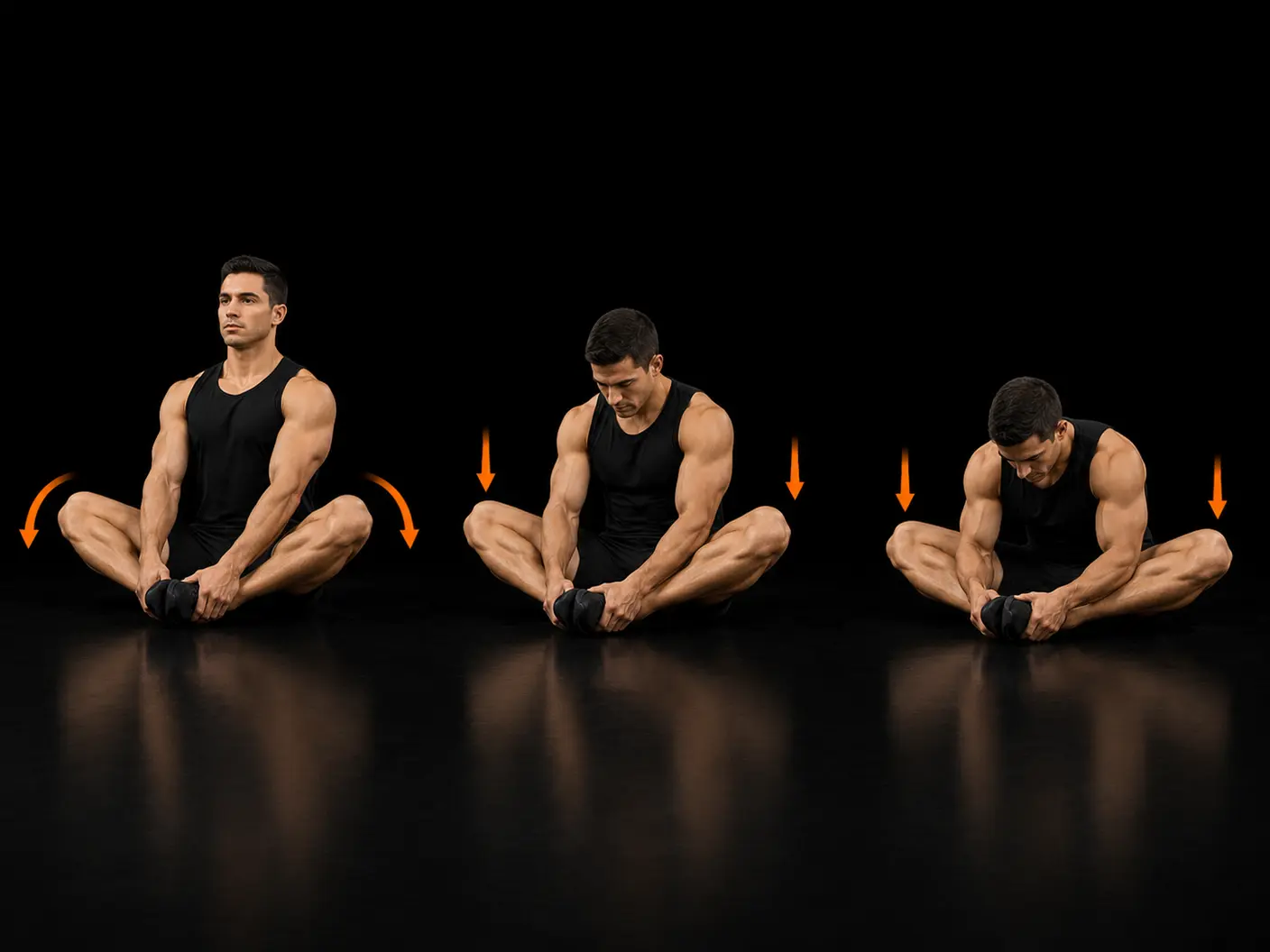
The butterfly stretch is a seated static mobility drill that targets the inner thighs and hip adductors by using the external rotation of the hip to progressively open the groin. Performed on the floor with soles pressed together and knees falling out to the sides, it trains the body to tolerate and adapt to a wider range of hip motion. It suits anyone from beginners to experienced trainees looking to improve hip mobility as part of a warm-up, cool-down, or dedicated mobility session.
How to do it
Sit on the floor with the soles of the feet pressed together and knees falling out to the sides. Hold the feet with both hands, bringing the heels as close to the hips as comfortable. Sit tall, then gently press the knees toward the floor using the elbows or gravity. Hold for 30–60 seconds.
Coaching cues
- Tall spine
- Knees drop toward the floor
- Breathe and relax
- No forcing
Why train it
- Regular practice helps reduce tension in the adductors, which can become shortened through prolonged sitting or repetitive lower-body training.
- Improving hip external rotation through this stretch can support better positioning in squatting and hinging movements.
- As a low-load, bodyweight drill it is accessible at any training level and requires no equipment, making it easy to include at any point in a session.
- Holding the position for 30–60 seconds while breathing deliberately encourages the nervous system to relax into the range, producing more lasting mobility gains than brief passive holds.
Common mistakes
- Rounding the lower back — sit tall with a neutral spine throughout, as a slumped posture shifts the stretch away from the hips and into the lumbar region.
- Forcing the knees down aggressively — use gentle elbow pressure or allow gravity to do the work, as forcing the range creates tension rather than releasing it.
- Placing the feet too far from the hips — bring the heels closer to the pelvis to increase the stretch on the adductors, adjusting distance to suit your current range.
- Holding the breath — breathe slowly and steadily throughout the hold, as exhaling helps the body relax and allows the hips to open more naturally.
Primary: Adductors.
Secondary: Hip External Rotators.
Equipment
Good for
Easier variation
Supine groin stretch — lie on your back with feet soles-together for less demand.
Similar movements
Frequently asked
- What muscles does the butterfly stretch work?
- The primary muscles targeted are the hip adductors, the group of muscles along the inner thigh responsible for drawing the legs toward the midline. The hip external rotators and groin are also engaged as secondary tissues due to the rotated position of the femur.
- How long should I hold the butterfly stretch?
- A hold of 30–60 seconds per set is appropriate for most individuals. Two to three sets performed consistently — either at the end of a session or as standalone mobility work — will produce the most benefit over time.
- Is the butterfly stretch suitable for beginners?
- Yes, it is classified as a foundational movement, meaning it requires no prior mobility experience or equipment. Those with significant hip tightness should simply position the feet further from the pelvis and allow range to develop gradually rather than forcing the position.
- Can I do the butterfly stretch before or after training?
- It works well in both contexts. Before training, a shorter hold of around 30 seconds can help prepare the hips for squatting or hinging patterns. After training, a longer hold of 45–60 seconds is well suited to promoting recovery and reducing adductor tension accumulated during the session.
- Are there alternative exercises if I find this position uncomfortable?
- A supine groin stretch — lying on your back with soles pressed together — reduces the demand on spinal stability and may be more accessible if sitting upright is difficult. A standing adductor stretch or a side lunge stretch targets similar tissues through a different loading angle.
Want this movement in a plan built for you?
Adaptiv programmes the right exercises for your goal, equipment and experience — then adapts them as you train.
Build my programme