Adductor Rock-Back
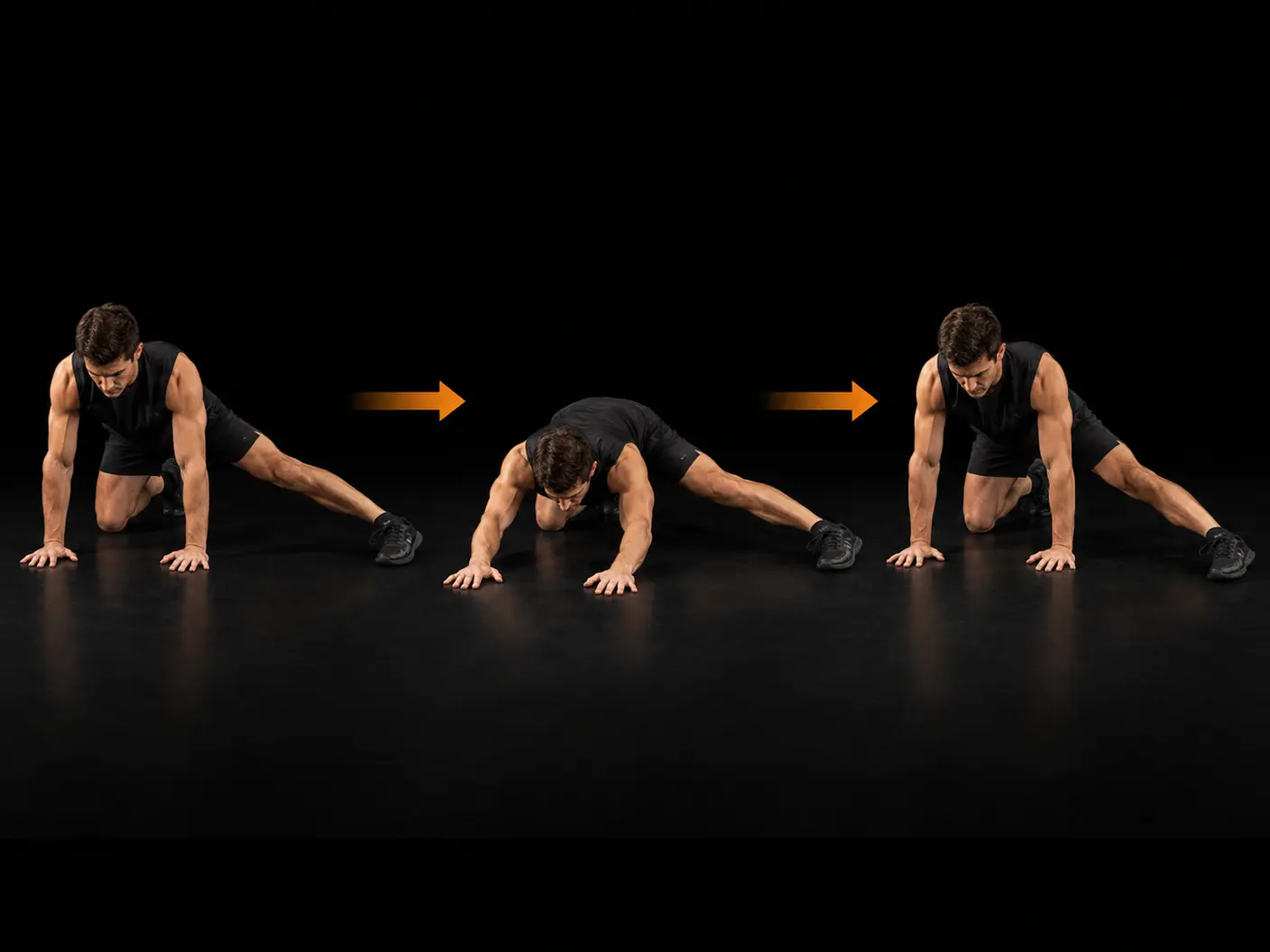
The adductor rock-back is a bodyweight mobility drill performed from a quadruped position, targeting the hip adductors through a controlled, rhythmic rocking motion. It trains the ability to load and lengthen the inner thigh musculature under low tension, making it an accessible entry point for improving hip mobility. It suits beginners, athletes warming up for lower-body training, and anyone looking to address tightness through the groin and inner thigh.
How to do it
Start in a quadruped position on hands and knees. Open one knee out to the side in a wide stance, foot flat on the floor. Keeping the spine neutral, rock your hips back toward the wide-stance heel, feeling an adductor stretch. Rock forward to neutral and repeat.
Coaching cues
- Spine neutral
- Rock back into the stretch
- Feel the inner thigh lengthen
- Breathe into the stretch
Why train it
- Regular practice encourages greater range of motion through the hip adductors, which are commonly restricted in people who spend long periods seated.
- The movement also engages the hip flexors and glutes as supporting structures, reinforcing awareness of how the hip complex works together during loaded positions.
- Because the drill is self-limiting and low impact, it can be used effectively at the start of a session to prepare the hips for squatting, lunging, or lateral movement patterns.
- Maintaining a neutral spine throughout the drill builds the habit of dissociating hip movement from lumbar movement, a foundational skill for more complex lower-body work.
Common mistakes
- Allowing the lower back to round as the hips rock back — brace gently through the trunk and keep the spine long throughout the movement.
- Rushing through the repetitions without pausing in the stretched position — rock back deliberately and allow a breath at the end range to encourage the tissue to release.
- Lifting the wide-stance foot off the floor as the hips descend — keep the foot flat and grounded to maintain the correct line of stretch through the adductor.
- Dropping the head to look at the floor — keep the gaze slightly ahead so the cervical spine stays in line with the rest of the back.
Primary: Adductors.
Secondary: Hip Flexors, Gluteus Maximus.
Equipment
Good for
Easier variation
Supine adductor stretch — lie on your back with knees bent, feet together.
Similar movements
Frequently asked
- What muscles does the adductor rock-back work?
- The primary target is the hip adductors, the group of muscles running along the inner thigh. The hip flexors and glutes are also engaged as secondary muscles that help stabilise the position throughout the movement.
- How many sets and reps should I do for the adductor rock-back?
- For a warm-up context, two to three sets of eight to twelve controlled repetitions per side is a practical starting point. If using it as a dedicated mobility drill within a programme, you can extend to three sets and focus on breathing into the stretch at end range rather than accumulating volume.
- When in a session should I include the adductor rock-back?
- It works best at the start of a lower-body session as part of a dynamic warm-up, particularly before squats, deadlifts, or any lateral movement. It can also be used in a cooldown or recovery session at reduced intensity.
- Are there alternatives to the adductor rock-back if I find it uncomfortable on my knees?
- A standing side lunge with a pause at the bottom trains a similar adductor lengthening pattern with less direct pressure on the knees. Placing a folded mat or pad under the kneeling leg can also make the quadruped position more comfortable without changing the mechanics of the drill.
- Will the adductor rock-back help with squat depth?
- Restricted hip adductors are a common contributor to limited squat depth, and improving mobility in this area can support a more comfortable bottom position over time. Consistent practice alongside other hip mobility work is more likely to produce a meaningful change than the drill in isolation.
Want this movement in a plan built for you?
Adaptiv programmes the right exercises for your goal, equipment and experience — then adapts them as you train.
Build my programme