Trap Bar Shrug
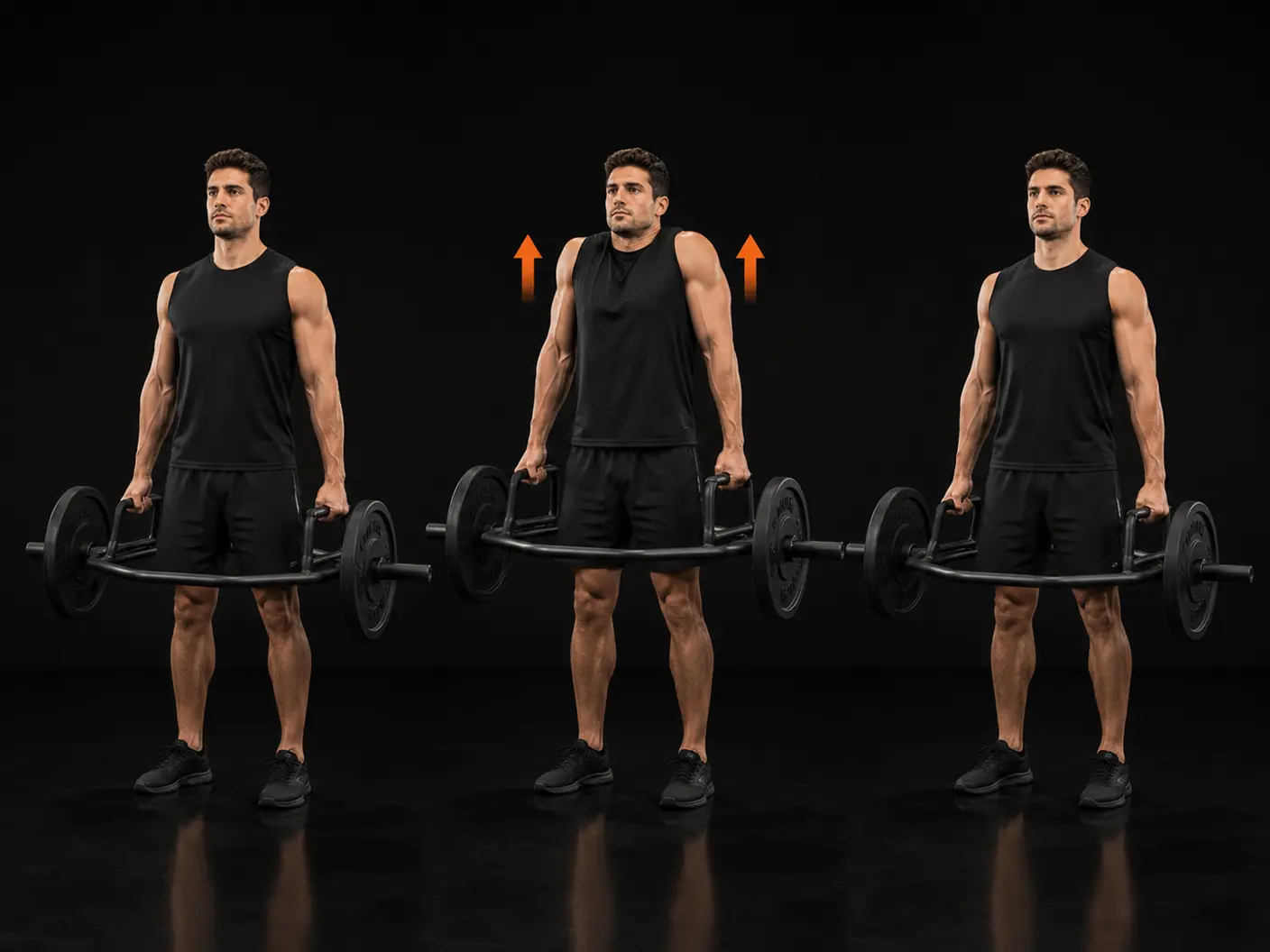
The trap bar shrug is an isolation movement that trains scapular elevation using the neutral-grip handles of a hex bar. Standing inside the bar removes the forward lean common with a straight barbell, allowing the lifter to keep a long spine and direct the load straight into the upper trapezius. It suits beginners building foundational shoulder girdle strength as well as more experienced lifters seeking additional upper trap volume without stressing the wrist or shoulder joints in a compromised position.
How to do it
Stand inside the trap bar, handles in the neutral position. Deadlift to standing. Elevate the shoulders straight up; do not roll. Pause briefly. Lower under control. Maintain a long spine.
Coaching cues
- Straight up
- No roll
- Handles neutral
- Pause at the top
Why train it
- The neutral handle position reduces forearm rotation stress compared to a pronated barbell grip, making it easier to accumulate quality sets.
- The hex bar's geometry encourages the load to travel in a clean vertical path, improving the efficiency of force transfer into the upper trapezius.
- The brief pause at the top of each rep eliminates momentum and ensures genuine muscular contraction rather than a ballistic bounce.
- Secondary work through the levator scapulae and forearms means the movement builds supporting musculature alongside the primary target with no additional equipment needed.
Common mistakes
- Rolling the shoulders forward or in a circular pattern — elevate them straight up and straight down, as rotation shifts load away from the upper trapezius and onto passive structures.
- Using excessive weight that prevents a controlled descent — lower the bar deliberately rather than letting it drop, since the eccentric phase contributes meaningfully to hypertrophy stimulus.
- Allowing the neck to jut forward as the shoulders rise — keep the chin neutral and the spine long throughout to avoid compressing the cervical region under load.
- Skipping the deadlift portion and setting up with a rounded lower back — take the time to hinge properly into the starting position before initiating the shrug, as spinal integrity underpins the entire movement.
Primary: Trapezius.
Secondary: Forearm Flexors.
Equipment
Good for
Easier variation
Dumbbell shrug — similar neutral grip at lower load.
Similar movements
Frequently asked
- What muscles does the trap bar shrug work?
- The primary muscle trained is the upper trapezius, which drives scapular elevation. The levator scapulae and forearms work as secondary contributors throughout the movement.
- How many sets and reps should I do for the trap bar shrug?
- For hypertrophy, 3–4 sets of 10–15 repetitions with a controlled tempo and a deliberate pause at the top is a practical starting point. For strength development, 4–5 sets in the 6–10 rep range with heavier loading is more appropriate.
- Is the trap bar shrug better than a barbell shrug?
- Neither is universally superior, but the trap bar version suits lifters who find a pronated barbell grip uncomfortable or who struggle to maintain an upright torso with a straight bar. The neutral handles and centred load path make correct technique easier to achieve consistently.
- Can I programme the trap bar shrug on the same day as deadlifts?
- Yes, and it is a logical pairing since the trap bar is already in use. Place the shrugs after your primary pulling work so they do not pre-fatigue the grip or upper back before the heavier compound sets.
- What is the purpose of the pause at the top of the rep?
- Pausing briefly at peak elevation ensures the upper trapezius reaches full contraction before the weight descends, removing the temptation to use momentum and making each repetition more effective for both strength and hypertrophy goals.
Want this movement in a plan built for you?
Adaptiv programmes the right exercises for your goal, equipment and experience — then adapts them as you train.
Build my programme