B-Stance Romanian Deadlift
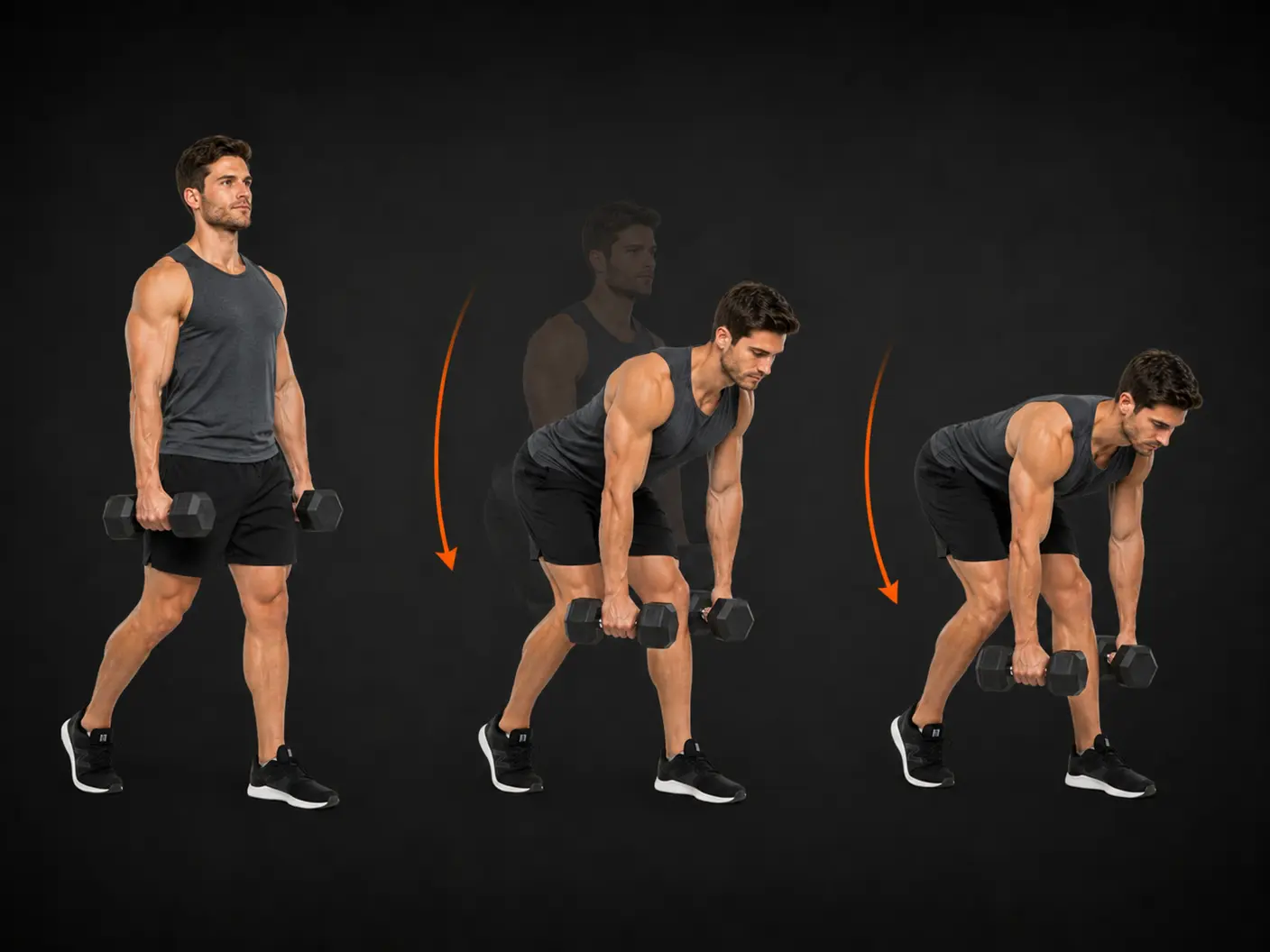
The B-stance Romanian deadlift is a hip-hinge variation that loads one leg more heavily than the other by staggering the feet into a kickstand position, placing roughly 70% of the load through the working leg. It bridges the gap between a bilateral and a true single-leg hinge, making it a practical choice for athletes and gym-goers who want unilateral stimulus without the balance demands of a full single-leg Romanian deadlift. It suits intermediate lifters looking to address asymmetries, develop posterior chain hypertrophy, or build towards more demanding unilateral movements.
How to do it
Stand with feet staggered: working foot flat, rear foot acting as a kickstand with the toes at the working heel, heel raised. ~70% of the load is on the working leg. Hinge at the hips, lowering the weights down the working leg. Drive the hips forward to return.
Coaching cues
- 70/30 weight split
- Hips back
- Long spine
- Drive through working heel
Why train it
- The offset stance creates a meaningful unilateral training stimulus for the hamstrings and glutes while the rear foot provides enough stability to allow heavier loading than a single-leg variation.
- Training each side independently helps identify and correct left-to-right strength imbalances that bilateral movements can mask over time.
- The hip-hinge pattern directly reinforces athletic mechanics such as acceleration, deceleration, and change of direction, making it a sound choice within an athletic performance programme.
- It is compatible with both dumbbells and a barbell, allowing easy integration regardless of equipment availability or training phase.
Common mistakes
- Letting the spine round at the bottom — maintain a long, neutral spine throughout the descent by bracing the core and keeping the chest proud.
- Distributing weight evenly between both feet — the rear foot acts only as a kickstand for balance; consciously keep approximately 70% of the load through the working heel.
- Allowing the hips to drop into a squat pattern — initiate the movement by pushing the hips back rather than bending the knees, preserving the hip-hinge mechanic.
- Losing contact through the working heel on the drive up — press the heel firmly into the floor as you extend the hips forward to ensure the glutes and hamstrings complete the movement.
Primary: Hamstrings, Gluteus Maximus.
Secondary: Erector Spinae, Rectus Abdominis.
Equipment
Good for
Easier variation
Bilateral RDL — removes the single-leg balance demand.
Similar movements
Frequently asked
- What muscles does the B-stance Romanian deadlift work?
- The primary muscles are the hamstrings and glutes of the working leg. The erectors, core, and ankle stabilisers contribute as secondary muscles to maintain spinal position and balance throughout the movement.
- How many sets and reps should I do for muscle growth?
- For hypertrophy, three to four sets of eight to twelve repetitions per side is a well-established starting point. Ensure you are within two to three reps of failure on each set and that the working leg is genuinely bearing the majority of the load.
- What is the difference between a B-stance and a single-leg Romanian deadlift?
- In a single-leg Romanian deadlift the rear foot leaves the floor entirely, placing 100% of the load through the working leg and demanding significantly more balance. The B-stance keeps the rear toes down as a kickstand, reducing balance demands while still creating a predominantly unilateral stimulus.
- Can I use a barbell or do I need dumbbells?
- Both are suitable. Dumbbells allow the weights to travel close to the working leg and are generally easier to set up for this variation, while a barbell can be used once you are comfortable with the movement pattern and want to increase loading.
- Is the B-stance Romanian deadlift suitable if I have a noticeable strength imbalance between my legs?
- It is commonly programmed for exactly that reason, as the increased load through one leg at a time can help bring a weaker side up over time. If you have an underlying injury or structural issue contributing to the imbalance, consult a qualified professional before programming unilateral hinge work.
Want this movement in a plan built for you?
Adaptiv programmes the right exercises for your goal, equipment and experience — then adapts them as you train.
Build my programme